You’ve spent $500 on digital ads this month. You got 47 leads. You closed zero deals.
Sound familiar?
Here’s the uncomfortable truth: real estate leads don’t convert because the entire digital marketing industry has been optimizing for the wrong metric. For years, agents and loan officers have been rewarded for driving down their cost per lead, celebrating when they hit $10, $8, or even $5 per lead. Meanwhile, their actual conversion rates keep dropping.
The problem? Cheap leads are cheap for a reason.

The race to the bottom
Every time you launch a Facebook or Google ad campaign, you’re essentially teaching an algorithm what success looks like. And for the past decade, the housing industry has been teaching these algorithms that success means clicks and form fills, not closed transactions.
When you optimize for volume, you get volume. The algorithm learns to find people who will click your ad and fill out a form. It doesn’t care if they’re serious buyers with a 750 credit score and 20% down, or if they’re casually browsing with no real intent to move for two years.
This creates a vicious cycle. Your cost per lead drops, but your cost per closed deal skyrockets. You’re spending more time chasing unqualified prospects and less time working with real buyers and sellers.
At Evocalize, we’ve watched this play out across tens of thousands of real estate professionals and mortgage loan officers over the past nine years. The agents and LOs who focus obsessively on lowering their cost per lead rarely see the ROI they expect.
The ones who track cost per closed transaction? They build sustainable, profitable businesses.
Why real estate leads don’t convert: The AI distraction
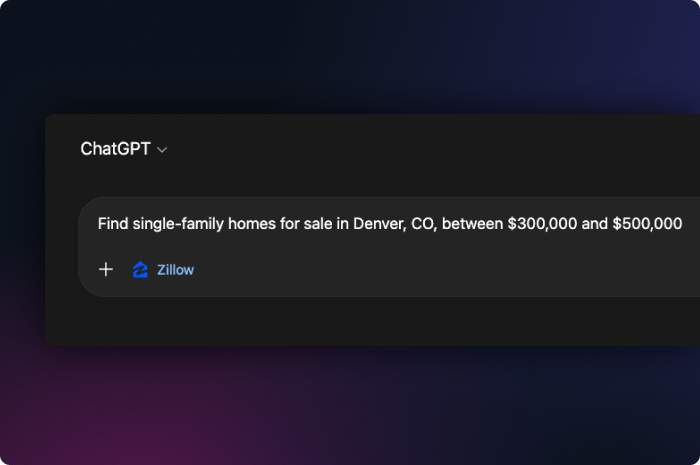
While the industry chases cheaper leads, major players like Zillow are making headlines with their ChatGPT integration. Buyers can now ask AI questions about neighborhoods, compare mortgage payments, and browse listings without ever talking to an agent.
It’s impressive technology. It’s also solving the wrong problem (at least when it comes to lead conversion).
The housing industry is pouring resources into AI-powered search and information tools. But nobody’s addressing the fundamental issue that real estate leads don’t convert at acceptable rates. All this innovation on the top of the funnel doesn’t matter if the leads coming through are window shoppers, not serious buyers.
Zillow’s ChatGPT integration makes it easier for consumers to get information. That’s valuable. But it doesn’t help agents and loan officers identify which of those information-seekers are actually ready, willing, and able to transact. If anything, it makes the problem worse by increasing the volume of casual browsers entering the funnel.
According to a recent Realtor.com survey, 82% of Americans now use AI for housing market information. That’s a massive shift in behavior. But while consumers get smarter tools for browsing, agents are still stuck with the same broken lead generation model that delivers quantity over quality.
The AI revolution in real estate is happening in the wrong place. We need AI that helps professionals identify real buyers, not AI that helps browsers become better-informed browsers.

Will AI replace real estate agents? Why the 1% trust gap matters more than you think
The solution: AI trained on value, not volume
Here’s what changes when you flip the model.
Instead of teaching algorithms to find cheap leads, you teach them to recognize value signals. Purchase intent markers. Financial qualification indicators. Urgency patterns. The behaviors and characteristics that separate serious buyers from casual browsers.
This requires AI that learns from actual closed transactions, not just form submissions. It means giving algorithms real-time feedback on lead quality so they can adjust targeting dynamically. And it demands that we stop celebrating low cost-per-lead numbers and start measuring what actually matters: cost per closed deal.
When Evocalize launched Leads Intelligence this year, we built exactly this system. Our AI agents score every lead the moment it’s submitted, predicting its value based on thousands of signals. Then we feed that intelligence back to Google and Meta in real-time, teaching their algorithms what quality actually looks like for your specific market.
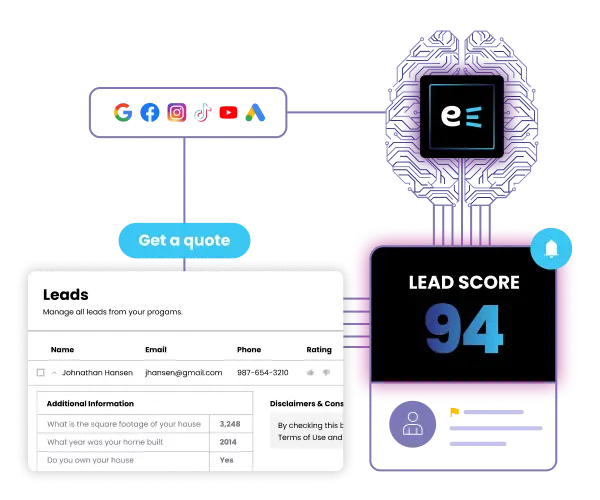
The results in the first 90 days validated what we suspected: real estate leads don’t convert when algorithms are optimized for cost instead of quality. But they do convert when AI is trained properly.
- High-quality leads increased 100%.
- Low-quality leads dropped 34%.
- High-income qualified prospects jumped 163%, and down payment capability improved 170%.
- User-rated lead quality improved 200%.
- Across all metrics, average lead quality improved 53%.
These are real professionals seeing real improvements in their actual pipelines. The system identified fake leads, filtered out browsers, and surfaced more serious buyers automatically.
The metric that actually matters
Stop tracking cost per lead. Start tracking cost per closed transaction.
If you’re paying $10 per lead but only closing 1% of them, your real cost is $1,000 per closed deal. If you’re paying $30 per lead but closing 5% of them, your real cost is $600 per closed deal.
Which scenario is actually cheaper?
The housing industry’s obsession with low-cost leads has created a bizarre situation where professionals celebrate spending less money to get worse results. It’s the equivalent of bragging about buying the cheapest ingredients while your restaurant’s food quality tanks.
When you shift your focus to cost per closed transaction, everything changes. You stop chasing volume and start pursuing quality. You invest in systems that identify real buyers early. You spend less time on unqualified leads and more time serving clients who are actually ready to move.
This is what separates professionals who thrive from those who struggle. The thrivers understand that real estate leads don’t convert when you optimize for cheap. They understand that the goal is closed transactions, not a full CRM.
What this means for you
The consolidation happening across the housing industry makes this shift even more urgent. Rocket’s acquisition of Redfin gives them control of the entire funnel from property search to mortgage closing. Compass and Anywhere are combining to create a massive brokerage network. These giants have the scale to build sophisticated lead qualification systems.
Independent agents and loan officers can’t compete on volume. But you can compete on quality.
The professionals who will thrive in the next five years are those who embrace AI as a tool for identifying value, not generating volume. Those who understand that the cheapest leads are usually the most expensive when you factor in wasted time and lost opportunities.
The technology exists today to teach algorithms what quality looks like. The data is available to score leads in real-time and optimize campaigns for closed transactions, not form fills. The results prove the model works.
The question is whether you’ll keep playing the old game of chasing cheaper leads, or whether you’ll shift to the new game of identifying better buyers.
Because in a market where only 28% of homes are affordable to the typical household, you can’t afford to waste time on leads that were never going to convert anyway.
The race to the bottom ends when you stop measuring the wrong metric.