You win a listing. You upload the photos to the MLS. You post it on Instagram. Maybe you boost the post for $50. Then you wait.
That’s how most agents approach listing promotion marketing. And it’s leaving serious business on the table. Every listing you represent is a signal to your local market. A billboard. A credibility stamp. An opportunity to attract not just buyers for this property, but sellers for the next one, and the one after that.
The agents who consistently win the most business treat listing promotion marketing for real estate agents as a system, not a one-off task. This post breaks down how that system works, what channels and strategies to use, and how to get the most out of every listing you take on.
Key takeaways
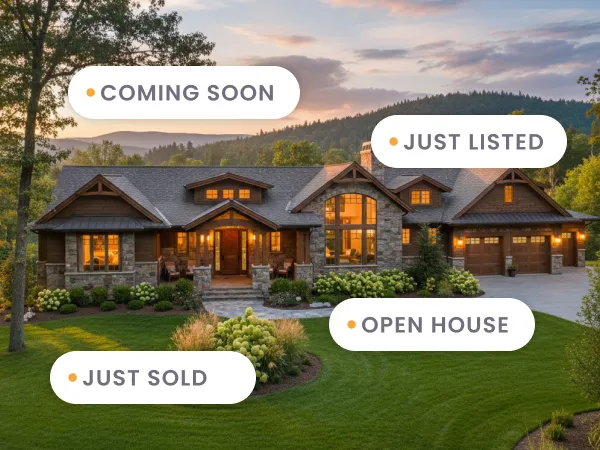
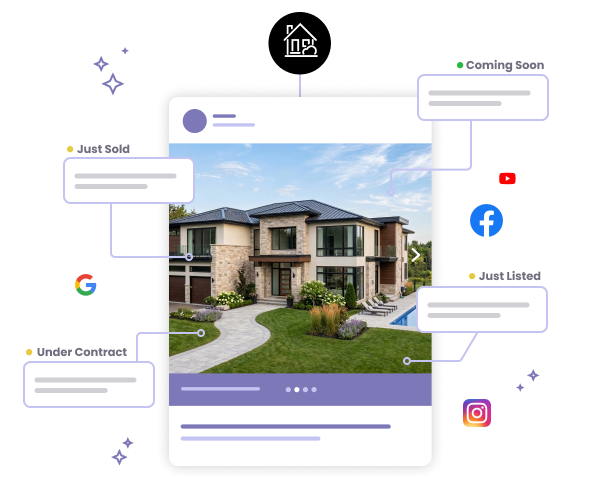
- Every listing has four distinct marketing stages (Coming Soon, Just Listed, Active, and Just Sold), and each stage reaches a different audience with a different message.
- Listing promotion marketing for real estate agents builds a local brand that attracts the next seller, not just buyers for the current property.
- Multi-channel programs that run across Google, Facebook, and Instagram outperform single-channel posts because they stay with potential clients wherever they spend time online.
- Agents who connect their MLS data to automated marketing programs spend less time managing ads and more time closing deals, with each listing building on the last.
Why your listing is more than a home for sale
Think about what a listing signals to your local market. When buyers see your name on a sign, in an ad, on a landing page, they see proof that someone trusted you to represent them. And in a market where inventory is historically tight, every listing is even more visible than it was a year ago.
That visibility is your marketing asset, but only if you choose to use it. The National Association of Realtors consistently reports that over 96% of buyers use the internet during their home search. Those buyers are seeing listings, but they’re also forming opinions about agents.
Here’s what separates agents who consistently win new listings from those who don’t: the top producers market every listing with two goals: close the current transaction and generate the next seller lead. A well-marketed listing tells every homeowner in the neighborhood: this agent gets results and gets attention.
One agent who ran consistent listing promotion and brand awareness programs for 12 months invested approximately $6,000 in marketing spend and generated $23 million in closed sales — a 100x return. His results weren’t from any single campaign. They came from the compounding effect of every listing building on the one before it.
The 4 stages of a listing’s marketing lifecycle
Most agents run a single campaign when a listing goes live. Top producers market across four distinct stages, each reaching a different audience with a different message.
1. Coming Soon
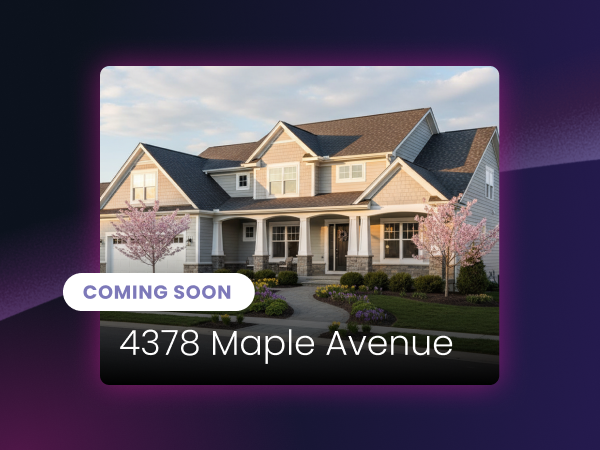
The pre-MLS window is the most underused moment in listing marketing. This is when the most motivated buyers are paying attention: actively searching, likely pre-approved, and ready to act on a property that isn’t even live yet. Paid programs need 48–72 hours to ramp up, so getting campaigns live before the MLS date is critical.
2. Just Listed
The launch window. This is when you want maximum reach across every channel. The goal is to drive as many qualified eyes to the property as possible while interest is highest. This stage should run across Google Search, Facebook, Instagram, and display networks simultaneously.
3. Active / Open House
As the listing ages, the audience shifts. This is when you re-engage people who showed interest earlier: visitors to your listing page, people who clicked the ad but didn’t fill out a form, your past database. Use this stage to drive open house attendance and create urgency around showings.
4. Just Sold
This is the most underused stage, and the one with the highest return for future business. A Just Sold campaign targeted to homeowners in the same neighborhood says: “I just sold a home near yours. If you’ve been thinking about listing, now you have proof of what the market can do.” It’s one of the most effective seller lead generation tactics available to any agent.
Which channels actually work for listing promotion marketing
Not all channels deliver equal results, and the combination matters more than any single platform.
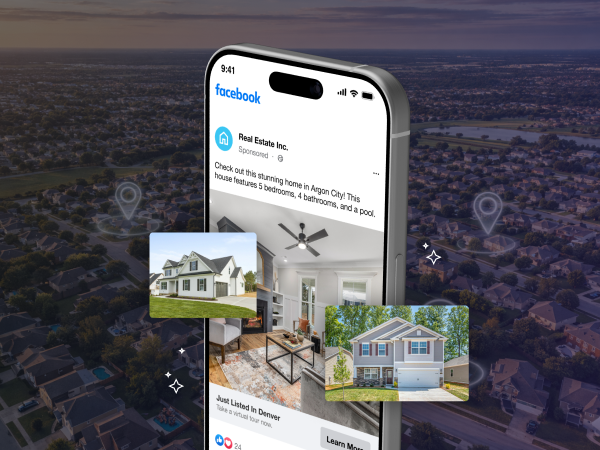
- Facebook and Instagram are visual-first platforms built for exactly the kind of high-quality listing photography agents already have. Dynamic ads can automatically pull property details, photos, and pricing directly from your MLS data, showing the right listing to the right buyer in their feed. These platforms also allow highly specific local targeting by zip code, radius, and behavioral signals like people who have recently visited real estate websites.
- Google Search captures buyers with active intent. These are people typing “homes for sale in [neighborhood]” right now. Search ads put your listing in front of the highest-intent audience at the exact moment they’re looking. This is where you catch buyers who are ready to act, not just browse.
- Google Display and Remarketing keep your listing (and your brand) visible to people who have already shown interest. Someone who visited your listing landing page but didn’t submit a form will continue seeing your ads across the web, keeping the property and your name top of mind. This is how you stay top of mind through a buyer’s often lengthy decision window.
Multi-channel programs outperform single-channel posts because of consistency. A buyer who sees your listing on Instagram, then gets a Google Search reminder, then sees a display ad while reading the news, is far more likely to schedule a showing than someone who saw one post and scrolled past.
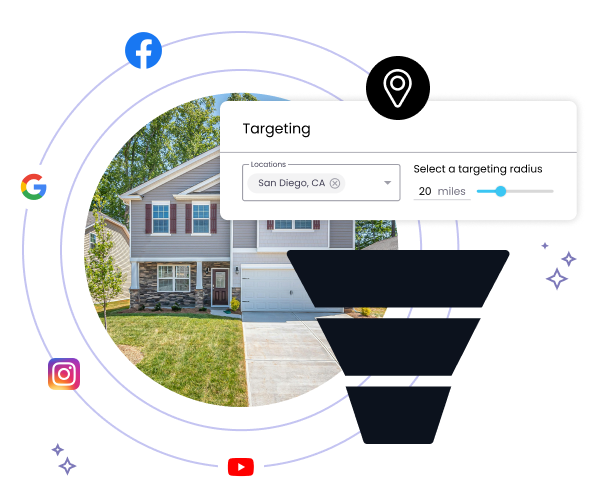
How to target the right audience for each listing
Targeting is where listing promotion marketing for real estate agents gets legally important. Fair Housing law and platform policies place real restrictions on how agents can target housing ads. Here’s what you need to know:
- Geo-targeting on Meta (Facebook and Instagram) and Google for housing-related ads operates under strict Fair Housing Act rules. Under Meta’s Special Ad Category for Housing (required for all real estate ads), you cannot target by zip code, neighborhood, city, or county. Instead, you drop a single location pin and set a minimum radius of 15 miles around it. You also cannot exclude geographic areas. Google’s housing ad policies follow similar restrictions. These rules exist to prevent discriminatory ad targeting.
- Behavioral signals are significantly restricted under housing ad policies. Meta’s Special Ad Category removes the ability to target by age, gender, relationship status, or most interest-based categories. What remains available is broad geographic reach within the 15-mile minimum radius, with Meta’s machine learning finding relevant audiences within those constraints. This is why compliance-approved audience configurations built specifically for housing outperform manual ad setups.
- Seller vs. buyer audiences still require different messages, even within compliant targeting. For your Just Sold programs, center your pin on the sold property and let the 15-mile radius reach nearby homeowners. For your Just Listed programs, center your pin on the listing to reach buyers searching in that area. The message, creative, and call to action should reflect who you’re trying to reach.
- Your existing database remains one of the most powerful and fully compliant targeting options available. Uploading a custom audience from your CRM (past clients, warm leads, sphere of influence) is permitted under housing ad policies. Someone in your database who has been thinking about selling is far more likely to call you after seeing your Just Listed program than a cold prospect. This approach is both legally sound and highly effective.
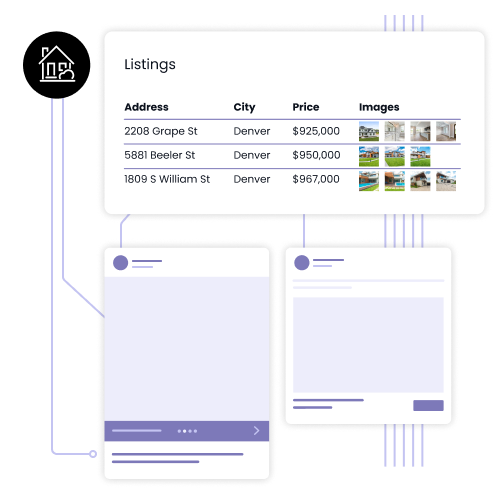
The automation advantage: How MLS-connected marketing changes everything
Here’s the honest problem with listing promotion marketing for real estate agents: it’s time-consuming to do well. Manually building campaigns for every new listing (writing copy, designing creatives, setting targeting, monitoring performance) takes hours you don’t have when you’re also managing showings, negotiations, and closings.
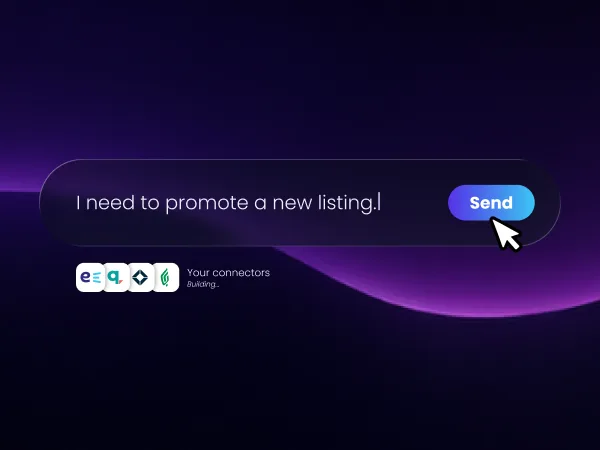
The solution is automation — and specifically, MLS-connected marketing programs that trigger automatically when a listing event occurs.
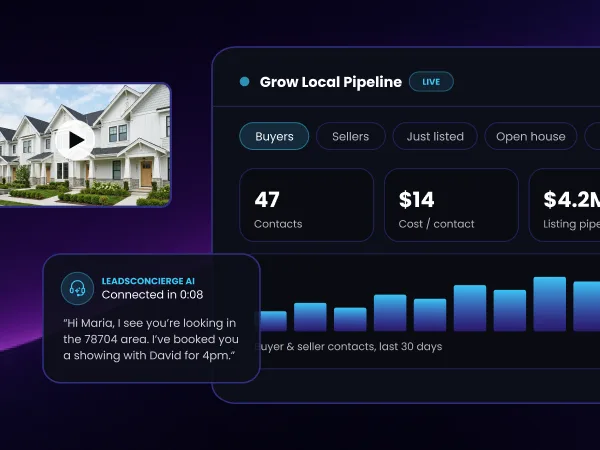
Here is how that works in practice. When an agent wins a listing, the platform takes over:
- It generates a listing video using the property photos.
- It builds a dedicated landing page for the listing with optimized lead capture.
- It launches paid social and search programs targeted to the right buyers.
- It notifies the agent’s sphere of influence: past clients, CRM contacts, and warm leads.
- It keeps the program running across the entire lifecycle, from Coming Soon through Just Sold, with dynamically updated copy and imagery.
- It engages every inbound lead instantly with AI-powered follow-up that qualifies leads, books appointments, and transfers warm calls.
That’s one listing. One button. What a full-time marketing director would do.
Platforms like Evocalize, a digital marketing growth engine built exclusively for the housing industry, connect directly to MLS data and trigger these programs automatically. Pre-tested creatives, proven targeting configurations, and AI-powered optimization run behind the scenes. The agent’s experience is a couple of clicks. And the longer the programs run, the smarter they get, improving with every interaction.
One agent using this model generated more than 40 inquiries from a single listing program, more than she had ever received from any previous listing. Her reaction: “I have never gotten so many inquiries on an ad for a listing.”
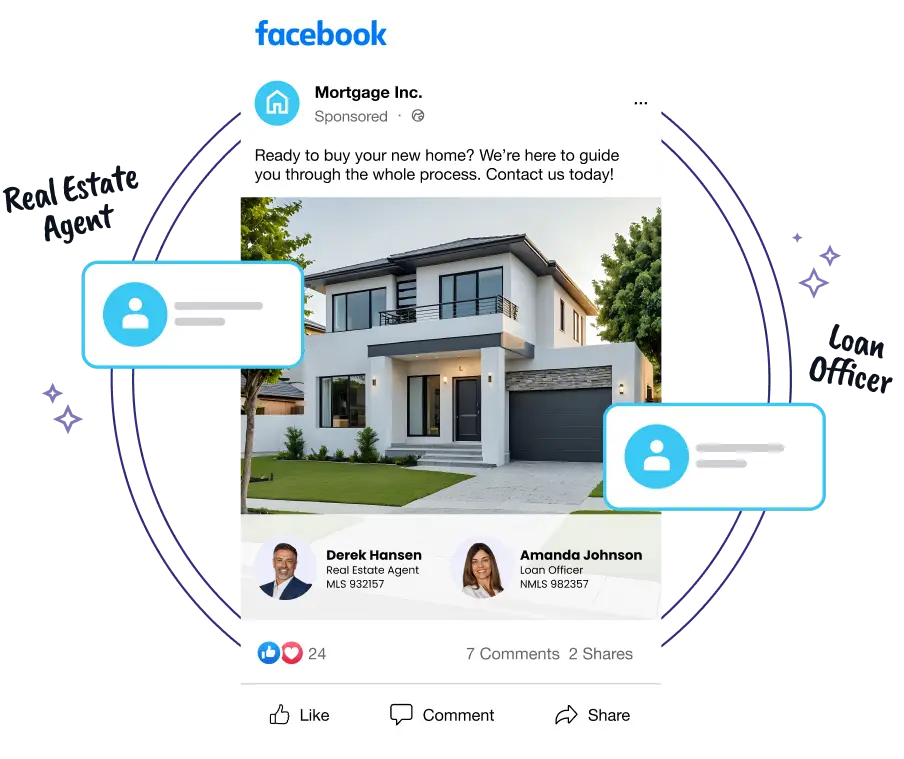
Co-marketing your listings with a loan officer partner
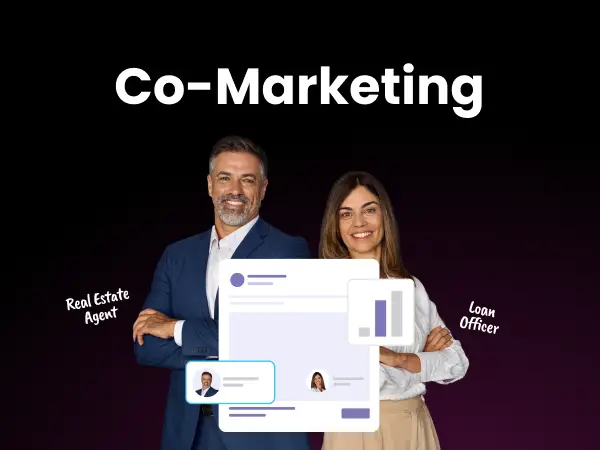
There is one more layer that most agents don’t consider: inviting a mortgage loan officer to co-market your listing with you.
Co-marketing — where an agent and a loan officer share ad costs and both receive leads from a joint campaign. The result: a listing promotion that deepens your lending partnerships. The structure is simple: both brands appear in the campaign, marketing costs are shared automatically, with cost-sharing built to stay RESPA-compliant, and both professionals receive the same leads simultaneously.
For agents, the benefits are significant:
- You run more marketing on the same budget, since your loan officer partner funds half.
- You become a more attractive partner for lending professionals who are looking for agents who actively generate business.
- Your listing gets the visibility of two brands instead of one.
Rather than just exchanging referrals, co-marketing creates a genuine partnership where both sides have skin in the game and both sides win leads.
See how Evocalize’s Co-Marketing Network works
What about Zillow and the portals?
The MLS and portals like Zillow do part of the job. Your listing will appear on those platforms, and that visibility has value. But portal visibility alone has a fundamental limitation: the leads it generates belong to the portal, not to you.
When a buyer finds your listing through Zillow, they become a contact in Zillow’s ecosystem, not yours. The portal keeps the audience data, the retargeting lists, and the long-term relationship. You get a lead that may already be talking to two other agents.
Running your own listing promotion programs alongside the portals lets you build something the portals can’t touch: a first-party audience that grows with every listing you run. Every person who visits your listing landing page, clicks your ad, or engages with your content gets added to a retargeting pool that you own. Over time, that pool compounds. The agent who has been running consistent listing promotion programs for 12 months has an audience asset that the agent who just started will need a year to build.
Portals are a distribution channel. Your own listing promotion programs are your growth engine. The strongest agents use both.

How to Compete with Zillow: Why Going Local Is Your Best Defense
FAQs
How much should I spend on listing promotion marketing?
There is no single right answer, but a general benchmark is to allocate 5–10% of your expected commission to marketing the listing. A $500,000 home at 2.5% commission generates $12,500. Spending $300–$600 on a focused multi-channel program is a small fraction of the return. If you co-market with a lending partner, your effective cost is cut in half.
How long should I run listing promotion ads?
Run programs throughout the entire lifecycle of the listing, from Coming Soon through Just Sold. The Just Sold stage is where most agents stop too early. After the sale, run a Just Sold program targeting homeowners in the same area for at least 30 days. That window is when listing inquiries are highest from neighbors who watched the process and are thinking about their own home.
What’s the difference between promoting a listing and boosting a post?
Boosting a post is the simplest form of paid promotion: you put money behind an existing organic post and Facebook distributes it more widely. It is easy but limited: targeting options are basic, optimization is minimal, and you don’t get a dedicated landing page for lead capture.
A proper listing promotion program runs across multiple channels simultaneously, uses pre-tested ad formats, targets audiences by specific behavioral signals, directs traffic to a conversion-optimized landing page, and gets smarter over time as the AI learns what works.
Do listing ads help me get more seller leads, or just buyers?
Both, depending on the stage and targeting. Just Listed and Coming Soon programs primarily attract buyers. Just Sold programs targeted to homeowners in the same area are one of the most effective seller lead generation tactics available. When neighbors see that you sold a home nearby, with strong visibility and a fast close, they start thinking about their own timing. A well-run Just Sold campaign can generate more seller inquiries than almost any other type of outreach.
What is the best digital marketing strategy for real estate listing promotion?
The most effective listing promotion strategy combines three elements: multi-channel programs across Google Search, Facebook, and Instagram running simultaneously; a dedicated listing landing page that captures leads directly rather than routing buyers through a portal; and lifecycle marketing that covers all four stages from Coming Soon through Just Sold. Agents who add MLS-connected automation to this mix see the highest returns because campaigns trigger automatically and optimize continuously without requiring manual management.
Yes, You Can Get Buyer Leads Without Listings
Stop treating your listings as one-time events
Every listing you win is a chance to run a complete marketing motion that builds your buyer pipeline, attracts your next seller, and deepens your position as the go-to agent in your market. The agents who understand this don’t just sell homes faster. They build a local brand that compounds over time. Each listing makes the next one easier to win.
Evocalize gives real estate agents the tools to make that happen automatically: MLS-connected marketing programs that launch in minutes, AI that qualifies leads the moment they arrive, and a system that gets smarter with every listing you run.