You run a Facebook ad. A few inquiries come in. You follow up, maybe close one, and then the pipeline goes quiet again. So you run another ad. Same cycle. Same results. Most loan officers live in this loop for their entire career — and they call it “doing marketing.”
It’s not. What they’re describing is running campaigns. And campaigns, no matter how well executed, will never build the kind of pipeline that funds loans while you sleep, keeps your referral partners impressed, and compounds over time.
Understanding the difference between a marketing plan vs campaign for loan officers is one of the highest-leverage shifts you can make in your business. This post breaks down exactly what separates the two, why most loan officers get stuck in campaign mode, and what a real marketing plan looks like in practice.

Key takeaways
- A marketing campaign is time-limited and single-goal; it stops when you stop paying for it.
- A marketing plan is ongoing, multi-channel, and builds on itself — audiences, brand recognition, and data compound over time.
- Loan officers stuck in campaign mode face feast-or-famine pipelines because their marketing resets every time they pause.
- Building a marketing plan doesn’t require more time. It runs in the background while you close loans.
- Loan officers who shift from campaigns to plans typically see meaningful pipeline momentum within 6 to 12 months.
What is a marketing campaign?
A marketing campaign is a time-bound, single-goal marketing effort. You define an objective, set a budget, run the effort for a fixed period, and measure the result. When the campaign ends — or when the budget runs out — the activity stops.
Campaigns loan officers run every day include:
- A Facebook or Instagram ad promoting current rates, running for two weeks
- A batch email blast to a purchased list announcing a refinance opportunity
- A Google Search ad targeting “mortgage lender near me” for a 30-day push
- A direct mail postcard drop to a specific zip code before spring buying season
Campaigns have their place. They can generate responses, test messaging, and produce short-term activity. The problem is that they reset. Every time a campaign ends, the audiences you built, the brand impressions you made, and the momentum you created disappear with it. The next campaign starts from zero.
According to Zillow’s 2025 Consumer Housing Trends Report, 22% of buyers spend six months or more actively searching before purchasing — and that’s after they’ve already decided to move. The pre-decision research window adds even more time to the equation.
What is a marketing plan for loan officers?
A marketing plan is a rolling, multi-channel strategy that builds on itself over time. Rather than a one-time push toward a single goal, a plan coordinates multiple marketing activities into a system where each piece reinforces the others and results compound the longer it runs.
A marketing plan for a loan officer typically includes:
- Always-on demand generation: paid programs on Google and social that consistently put you in front of buyers in your market, whether you’re actively working them or not
- Sphere and CRM re-engagement: structured programs to stay visible to your past clients, warm contacts, and referral partners so they remember you when someone in their life needs a loan
- Co-marketing with agent partners: joint programs where you and a real estate agent share ad costs, share the inbound demand, and show up in the market as a unified team
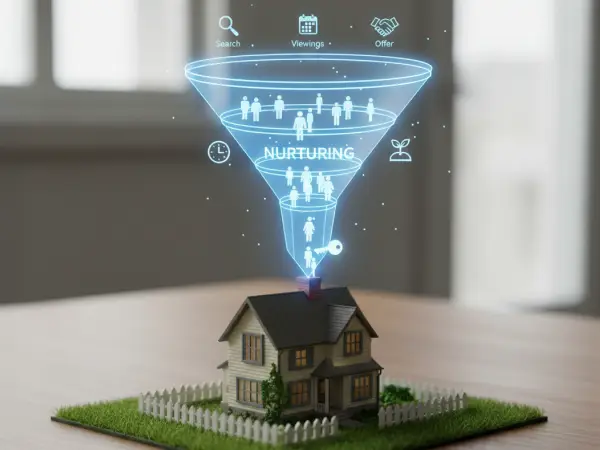
- Borrower nurture sequences: automated follow-up that keeps you present with borrowers who aren’t ready today but will be in 3, 6, or 12 months
- Retargeting programs: programs that reach people who’ve already shown interest in your content, your website, or your ads, keeping your name in front of warm prospects consistently
The key distinction: a campaign answers the question “What should we run this month?” A marketing plan answers the question “How do we build a business that generates demand and growth regardless of what month it is?”
Mortgage Lead Nurturing: Why 6-12 Months Is Your Secret Weapon

Why loan officers get stuck in campaign mode
Campaign mode isn’t a character flaw. It’s a rational response to how most loan officers experience marketing. Here’s why it happens:
Campaigns feel manageable
A campaign has a clear start date, a clear end date, and a clear budget. You run it, you check the results, and you move on. That sense of control is appealing, especially for LOs who are already managing a full pipeline, a stack of applications, and a calendar full of calls.
The results are visible (even if they’re small)
When a campaign generates even a handful of responses, it feels like success. And it is, in a narrow sense. But that activity came from a specific moment in time. When that moment passes, the responses stop coming. The campaign produced activity. It didn’t produce an asset.
Planning feels like too much work
Building a marketing plan sounds expensive, complex, and time-consuming. Most loan officers picture hiring an agency, managing multiple vendors, reviewing analytics dashboards, and spending hours every week on marketing strategy. Modern marketing plans run on systems, not spreadsheets. The perception of complexity keeps a lot of LOs stuck.
The real cost: Feast or famine
The consequence of living in campaign mode is the pipeline cycle most loan officers know too well. Business is good, so marketing falls off. Marketing falls off, so leads dry up. Leads dry up, so you panic and run a campaign. The campaign produces a burst of activity. Business picks up. Marketing falls off again.
A marketing plan breaks this cycle. Because it runs continuously in the background, the pipeline never fully drains. You stop chasing business and start building a system that generates it.
What a real marketing plan looks like for a loan officer
A marketing plan doesn’t have to be complicated. It has to be consistent. Here’s what a practical plan looks like in practice:
- A steady-state demand generation program building visibility with buyers and homeowners in your market every month. This runs continuously, keeping you present with people before they are ready to commit.
- A sphere targeting program that puts your name and face in front of your past clients and warm contacts on a regular basis. You don’t have to call everyone. You just have to stay visible.
- An agent co-marketing program where you partner with one or more real estate agent partners to run joint digital programs. You split the cost, you share the inbound demand, and you show up in the market as a team. This is also a powerful way to deepen agent relationships beyond just asking for referrals.
- An automated borrower nurture sequence that follows up with every borrower over an extended timeline. Most borrowers are 6 to 12 months away from being ready to commit when they first fill out a form. A nurture sequence keeps you present through that entire window, running automatically.
One loan officer running a set of brand awareness and sphere targeting programs in the Chicago market generated approximately $1.5 million in pre-approval volume within three months — without a large budget or a complicated setup. His own assessment: “If one of those closes, I’ve paid for my marketing for a whole year.”

Beyond Traditional Lead Generation: 4 Strategic Partnerships for Mortgage Loan Officers
The compounding advantage: Why plans beat campaigns over time
Here’s the part most loan officers don’t fully appreciate until they see it in their own numbers: marketing compounds.
Every month your programs run, your retargeting audiences grow. Your local brand recognition builds. The ad platforms you’re running on learn what a strong borrower looks like for your business and get better at finding more of them. Your sphere gets more impressions. Your referral partners see your name consistently.
None of that happens from a campaign. A campaign produces a result and disappears. A plan produces a result, then makes the next one easier to achieve.
This is why the 6-to-12-month timeline matters so much. Loan officers who commit to a marketing plan and measure results at month one or two will almost always be disappointed. The compounding hasn’t kicked in yet. Loan officers who give a plan the time it needs regularly find that their cost per lead drops, their lead quality improves, and their pipeline becomes something they can actually predict.
Consider the math: one loan officer invested roughly $6,000 in consistent digital marketing programs over 12 months and generated $23 million in closed sales — a 100x return. That outcome didn’t come from a single campaign. It came from every month of programs compounding on the previous one.
The honest caveat: meaningful pipeline momentum from a marketing plan typically takes 6 to 12 months to materialize. Marketing simply works this way. Set that expectation clearly from day one, and don’t evaluate a plan on a campaign timeline.
FAQs
Do loan officers need a marketing plan, or are good ads enough?
Good ads serve as one component inside a marketing plan. A single high-performing ad can generate demand in the short term, but it resets when it ends. A marketing plan uses ads as one input in a coordinated system that also includes nurture sequences, sphere targeting, co-marketing with agent partners, and retargeting. The plan is what turns individual ads into compounding pipeline growth.
How long does it take for a marketing plan to produce results for a loan officer?
Most loan officers see meaningful pipeline momentum within 6 to 12 months of running a consistent marketing plan. Early results (leads, impressions, brand visibility) typically appear within the first 60 to 90 days, but the compounding effect builds over a longer period, bringing lower cost per acquisition and stronger borrower quality. Plan your expectations accordingly and avoid evaluating a long-term strategy on a short-term timeline.
What’s the easiest way to start building a marketing plan as a loan officer?
The simplest starting point is to identify the three channels where your next borrower is most likely to find you: Google Search, Facebook/Instagram, and your existing sphere. Set up always-on programs for each of those, establish a basic nurture sequence for every borrower inquiry, and add a co-marketing program with at least one agent partner.
Once those three pieces are running, you have the foundation of a real marketing plan, a system that produces results without requiring your constant attention.
Can I run campaigns as part of a marketing plan?
Campaigns work best when layered on top of a plan. A rate promotion campaign, a seasonal push, or a new product announcement can all generate short-term lift. But they’re most effective when they reach an audience that already knows who you are from your ongoing programs. Campaigns amplify a marketing plan. They don’t replace one.
Is a marketing plan vs campaign really that different for loan officers specifically?
More than for almost any other professional. The mortgage buying cycle is uniquely long. Most borrowers who fill out a form today won’t close for 6 to 12 months. A campaign captures people who happen to be ready right now. A plan stays present with everyone who might be ready later, which is statistically most of your potential borrowers. For loan officers specifically, the long nurture window makes the difference between campaigns and plans especially pronounced.
Stop starting over. Build something that compounds.
Every campaign you run and then pause sends you back to zero. Every month your marketing plan runs, you build audiences, brand recognition, and a pipeline that generates demand on its own.
Evocalize is a digital marketing growth engine built specifically for mortgage loan officers. Launch always-on demand generation programs, run co-marketing campaigns with your agent partners, and build the kind of consistent local presence that turns digital marketing into a compounding asset that grows over time.