Every loan officer knows that trust matters. But here’s what most don’t fully appreciate: to build trust as a loan officer, you’re actually selling it to two completely different buyers with completely different needs. And if you fail with either one, your pipeline suffers. This is the hidden challenge that separates loan officers who build sustainable businesses from those who constantly scramble for the next deal.
The two audiences? Borrowers and real estate agents.
Both need to trust you before business flows your way. But what earns trust with a nervous first-time homebuyer looks nothing like what earns trust with a busy agent who has seen a hundred closings go sideways.
Understanding this dual trust dynamic changes how you approach your entire business. Let’s break down what each audience actually needs from you.

Build trust as a loan officer with borrowers
Borrowers are making one of the largest financial decisions of their lives. They’re anxious, often overwhelmed by jargon, and hyper-aware that a single mistake could cost them thousands of dollars or their dream home.
For borrowers, trust comes down to three things: clarity, responsiveness, and expertise. When you can deliver on all three consistently, you build trust as a loan officer who borrowers will refer to their friends and family.
Clarity means translating complex concepts into plain language. When you explain LTV as “the percentage of the home your loan will cover” instead of rattling off ratios, borrowers relax. They feel like you’re on their side, not speaking over their heads.
Responsiveness signals that you’re reliable. According to J.D. Power’s 2024 U.S. Mortgage Origination Satisfaction Study, borrowers who strongly rely on their lender’s expertise report trust satisfaction scores 133 points higher than those who don’t. That trust is built through consistent communication, proactive updates, and being available when questions arise. When you define a communication plan upfront—”I’ll email you every Friday with a status update, call you at key milestones, and text you when I need something quickly”—you remove the anxiety of uncertainty.

Cut your mortgage lead response time to 5 minutes (and why it matters)
Expertise isn’t about impressing borrowers with industry knowledge. It’s about using that knowledge to solve their problems. When rates shift or an appraisal comes in low, borrowers need a loan officer who can navigate the situation with confidence. They need someone who has seen it before and knows what to do next.
To build trust as a loan officer with borrowers, you need to be their guide through chaos, not another source of stress.

What real estate agents need to trust you
Agents operate with a fundamentally different set of concerns. When an agent refers a client to you, their reputation is on the line. A missed closing date or poor communication doesn’t just hurt you—it damages the agent’s credibility with their client and could cost them future referrals.
For agents, trust comes down to: reliability, communication, and mutual value. You have to build trust as a loan officer who won’t embarrass them when their client’s dream home is on the line.
Reliability means closing on time, every time. It means flagging problems early instead of surprising everyone two days before the closing table. Agents remember the loan officers who saved deals and the ones who sank them. One messy file can end a referral relationship permanently.
Communication with agents requires a different cadence than with borrowers. Agents want quick updates at key milestones: pre-approval issued, appraisal received, clear to close. They don’t need hand-holding, but they absolutely need visibility. A quick text when the file moves forward builds confidence that you’re on top of things.
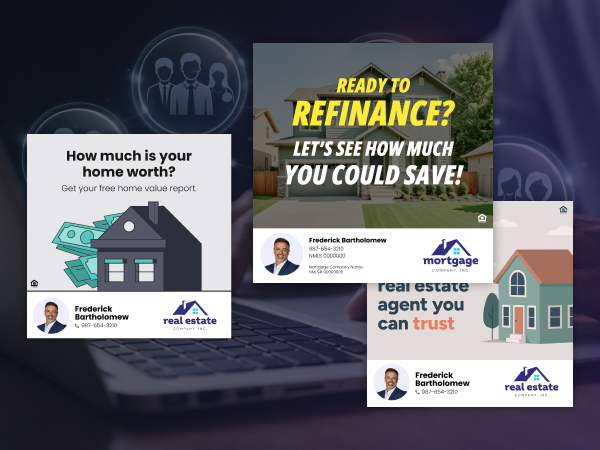
Mutual value is where most loan officers fall short. The agent-LO relationship can feel one-sided: agents send referrals, and loan officers say thank you. But the strongest partnerships work both ways. When you can bring value to agents—whether that’s co-marketing opportunities, borrower education resources, or even introducing them to prospective buyers—you shift from being a vendor to being a partner.
To build trust as a loan officer with agents, you need to protect their reputation as carefully as you protect your own.
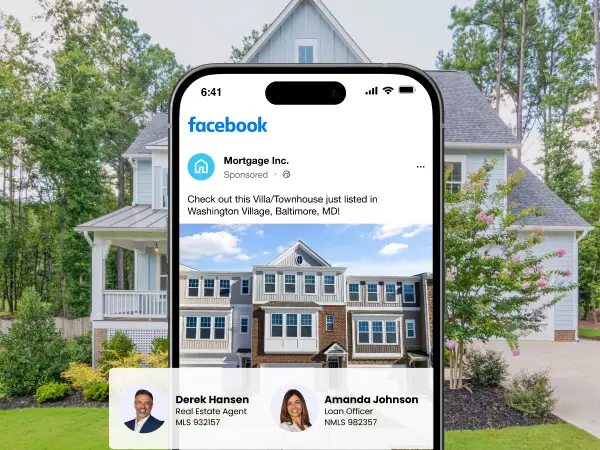
Real estate agent mortgage lender campaigns for lead generation
Why the dual trust challenge is getting harder
The relationship between loan officers and real estate agents is more complicated than it’s ever been. Industry consolidation is accelerating, with major players acquiring both lending and real estate capabilities under one roof. Meanwhile, agents are navigating their own disruption with commission structure changes and shifting buyer expectations.
In this environment, agents are pickier about which lenders they recommend. They’re looking for partners who make them look good, close deals smoothly, and bring something to the table beyond competitive rates.
At the same time, borrowers have more information than ever. They’re comparing rates online, reading reviews, and forming opinions before they ever talk to you. The window to establish credibility has shrunk dramatically.
The loan officers who thrive aren’t the ones working harder. They’re the ones who build trust as a loan officer systematically—creating processes that earn credibility with both audiences, even when they’re too busy to make every call themselves.
How consistent marketing helps you build trust as a loan officer
Here’s the reality: you can’t personally nurture every borrower lead and every agent relationship while also managing your pipeline. Something always slips.
This is where marketing becomes a trust-building tool, not just a lead generation tactic.
When you’re running consistent local marketing programs—building awareness in your community, staying visible to past clients and referral partners—you’re doing something powerful. You’re creating a presence that works even when you’re tied up in underwriting calls or fighting to save a deal.
For borrowers, seeing your name consistently in their community reinforces that you’re established, credible, and not going anywhere. For agents, watching you invest in marketing signals that you’re serious about growth and have the business acumen to be a reliable partner.
The loan officers who struggle most are the ones who disappear when they get busy and reappear when their pipeline dries up. That inconsistency makes it nearly impossible to build trust as a loan officer—with either audience. Agents notice when you go quiet. Borrowers notice when they haven’t heard from you in months.
At Evocalize, we see this pattern across tens of thousands of loan officers using our platform. The ones who successfully build trust as a loan officer in their markets aren’t running campaigns sporadically when they need leads. They’re building sustained local awareness that compounds over time—staying top of mind with borrowers and agents alike, even during their busiest months.
Marketing that runs in the background creates a trust foundation that does the heavy lifting for you. When a borrower finally needs a mortgage, they already know your name. When an agent needs a lender who won’t embarrass them, they remember you were visible and professional. That familiarity is how you build trust as a loan officer before anyone picks up the phone.
The loan officer’s opportunity
To build trust as a loan officer today means understanding that you’re not selling one product to one audience. You’re managing two parallel relationships that require different things from you.
Borrowers need you to be their calm, competent guide through a stressful process. Agents need you to be a reliable partner who makes them look good and brings value beyond just closing loans.
The loan officers who master this dual dynamic don’t just survive challenging markets. They build the kind of referral-based business that sustains itself year after year, powered by the trust they’ve earned on both sides of the transaction. Learning to build trust as a loan officer with two audiences at once is the competitive advantage most overlook.
That starts with recognizing that trust isn’t one thing. It’s two. And both matter equally.