
Loan officer burnout doesn’t usually announce itself. It builds quietly—through the early morning rate checks, the anxious email refreshes, the deals that fall apart at the last minute despite your best efforts. Most loan officers know the feeling even if they don’t call it burnout. It shows up as exhaustion that a weekend can’t fix.
The mortgage industry has long celebrated hustle culture. Work harder. Make more calls. Be available 24/7. But here’s what rarely gets discussed: working harder often makes loan officer burnout worse, not better. The problem isn’t effort. The problem is what you’re working toward.
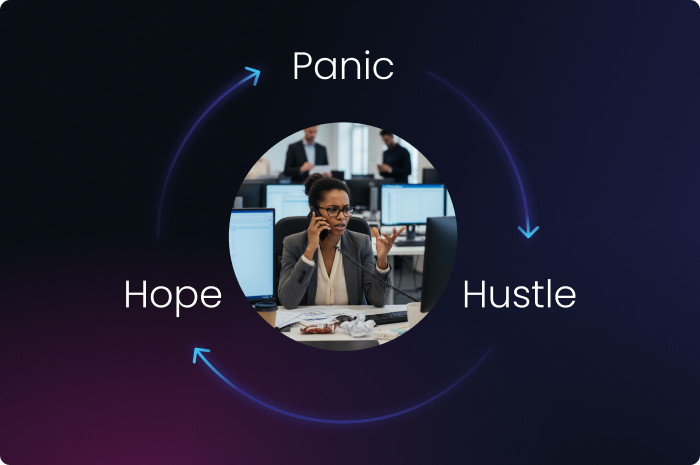
The panic-hustle-hope cycle
Talk to enough loan officers and a pattern emerges. We call it the panic-hustle-hope cycle, and recognizing it is the first step toward breaking it.
Panic: The phone goes quiet. Your pipeline starts to feel imaginary. You look at your numbers and feel a pit in your stomach. Something feels broken, even if you can’t name what.
Hustle: Panic triggers action. You make more calls. You schedule more coffees with agents. You post on social media. You work longer hours, convinced that effort will turn things around.
Hope: Activity creates momentum, or at least the feeling of momentum. A few leads come in. You tell yourself next month will be different. The crisis feels averted.
Then rates shift, a deal falls through, or an agent goes quiet—and you’re back to panic.
This cycle is exhausting because it never actually resolves. Each phase feeds the next. Hustle feels productive in the moment, but it’s usually reactive. You’re responding to fear rather than building something sustainable.
Loan officer burnout lives in this loop. The cycle accelerates during market downturns, but it exists even in good times. If your income depends on constant personal effort with no systems underneath you, the pressure never lets up.

Hustle doesn’t solve demand uncertainty
Here’s the uncomfortable truth the mortgage industry doesn’t talk about enough: most loan officer burnout stems from a single source—demand uncertainty.
The instability shows up in the numbers. According to MMI (Modex Market Intelligence), the annual turnover rate for the mortgage industry is approximately 25%. That means roughly one in four loan officers changes companies or exits the industry every year. That kind of churn doesn’t happen in careers where people feel stable and sustainable.
Nothing else matters if the phone isn’t ringing. You can be exceptional at processing loans, building agent relationships, and guiding borrowers through complex transactions. But if demand dries up, all that skill sits idle. And when your income depends entirely on funded loans—not effort—that uncertainty becomes all-consuming.
This creates a specific kind of stress. You’re essentially running a small business inside a rigid system. You carry entrepreneurial risk (no deals, no pay) but operate within corporate structures that limit how you can market, what you can say, and which products you can offer.
The hustle mentality promises a way out: just work harder. But hustle doesn’t create demand. It responds to demand that already exists. You can make a hundred calls, but if no one needs a mortgage right now, effort alone won’t change that.
This is why loan officer burnout often hits hardest among the most dedicated professionals. They’re doing everything “right”—working long hours, maintaining relationships, staying responsive—and still feeling like they’re on a treadmill.

What actually breaks the cycle
Breaking the panic-hustle-hope cycle requires addressing the root cause: unpredictable demand. That means building systems that generate interest in your services even when you’re busy closing deals, meeting with agents, or simply taking a day off.
This isn’t about working less. It’s about working differently.
Loan officers who escape chronic burnout typically share one characteristic: they’ve built some form of consistent demand generation that operates independently of their daily hustle. Their pipeline doesn’t depend entirely on referrals coming through, agents thinking of them, or having time to prospect.
At Evocalize, we’ve worked with thousands of loan officers and seen this pattern repeatedly. The ones who build sustainable businesses aren’t necessarily working fewer hours—they’ve created leverage. Marketing runs in the background. Leads come in even during the chaotic weeks. They’re not constantly starting from zero.
This shift changes everything about how loan officer burnout manifests. Demand uncertainty decreases. The panic phase hits less frequently. And when it does hit, there’s a foundation underneath you rather than empty air.
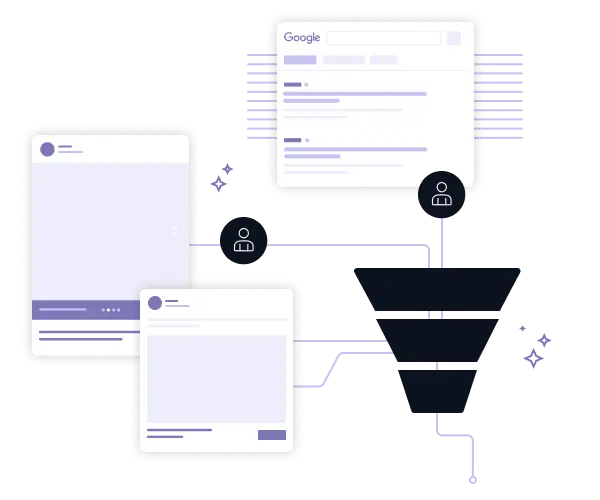
The compounding problem of reactive marketing
When loan officers do market themselves, it’s often reactive. Pipeline feels thin, so they launch a campaign. Leads come in, they get busy with closings, and marketing stops. The cycle continues.
This approach actually worsens loan officer burnout because it adds marketing stress on top of existing deal stress. You’re trying to generate leads precisely when you feel most anxious about your pipeline—which is also when you have the least mental bandwidth for it.
Effective demand generation works the opposite way. It runs consistently regardless of how busy you are. The leads that come in today are the closings of six months from now. You’re building your future pipeline while handling today’s business.
This is one reason Evocalize built a platform around automation and push-button simplicity. We’ve seen too many loan officers burn out trying to manage sophisticated marketing campaigns on top of everything else they’re juggling. The goal should be marketing that works for you, not marketing that becomes another source of stress.

Reframing the relationship with agents
Loan officer burnout often intensifies because of another pressure point: the real estate agent relationship. Many loan officers feel dependent on agents for referrals—and that dependency adds its own anxiety. Agents control introductions. They can switch lenders quickly. One messy file can damage a relationship you’ve spent years building.
This dynamic contributes to burnout because it puts your livelihood partially in someone else’s hands. You’re working hard to maintain relationships, but the power balance feels uneven.
Generating your own demand changes this relationship. When you’re bringing leads to agents rather than only asking for referrals, you become a partner rather than a supplicant. The anxiety decreases because your entire business doesn’t depend on whether an agent remembers to mention your name.
We’ve watched loan officers transform their agent relationships through this shift. The stress doesn’t disappear, but it changes character. You’re collaborating from a position of mutual value rather than hoping you stay top of mind.

Why we created the housing industry’s first Digital Co-Marketing Network
Building for the long term
Addressing loan officer burnout requires accepting an uncomfortable reality: building sustainable demand takes time. Digital leads that convert to closed loans are a long-term play. The marketing you start today may not show meaningful results for six to twelve months.
This timeline frustrates loan officers who are hurting now. But it’s also why starting matters. Every month you delay is another month of relying solely on hustle and hoping the phone rings.
The loan officers who thrive long-term are the ones who make this investment even when it’s uncomfortable. They understand they’re building their future pipeline, not solving today’s crisis. And over time, that foundation becomes the difference between a sustainable career and chronic burnout.
The hustle mentality isn’t wrong—it’s incomplete. Hard work matters. But hard work directed toward building consistent demand creates something different than hard work spent reacting to every drought in your pipeline.
Loan officer burnout is real, it’s common, and it’s often treated as a personal failing when it’s actually a systems problem. Fix the systems, and the burnout becomes manageable. Keep hustling without them, and you’re running the same exhausting race with no finish line.