Paid campaigns are a powerful tool for businesses of all sizes. But without clear objectives, even the most well-funded campaigns can fall flat. This guide will help you set measurable goals for your paid marketing efforts, ensuring every dollar spent contributes to your bottom line.
Why focus on objectives for paid campaigns? Simple: they’re your roadmap to success. Clear goals help you navigate the complex world of digital advertising, from social media to search engines. They allow you to track progress, adjust strategies, and demonstrate real value to stakeholders.
Recent data shows that businesses worldwide spent over $300 billion on digital ads in 2023. Yet nearly half of marketing professionals struggle to show the return on this massive investment. This disconnect highlights the critical need for well-defined, measurable objectives.
In this post, we’ll explore how to set SMART goals for your paid campaigns. We’ll cover audience targeting, platform selection, and key metrics to track. You’ll also learn about compliance considerations and optimization strategies. By the end, you’ll have a solid framework for creating objectives that drive real results in your paid campaigns.
The current landscape of paid campaigns
The digital advertising ecosystem is vast and ever-changing. Businesses have unprecedented opportunities to reach targeted audiences through paid campaigns. From brand awareness to lead generation and sales conversion, the potential is enormous. However, this potential comes with its own set of challenges.
Recent shifts in consumer behavior have made setting objectives for paid campaigns more crucial than ever. With users spread across multiple platforms and devices, your marketing efforts need to be precisely targeted and measurable. This is where clear, actionable goals become indispensable.
Evocalize’s platform addresses these challenges head-on. By providing customizable ad templates that are both on-brand and compliant, it empowers local operators to launch effective campaigns with just a few clicks. This approach ensures that even in a complex landscape, businesses can maintain consistency while adapting to local market needs.
Why setting objectives for paid campaigns is challenging
- Platform proliferation: The sheer number of advertising platforms available today can be overwhelming. Each platform, from Google and Facebook to Instagram and TikTok, has its own set of metrics and algorithms. This diversity makes it difficult to set uniform objectives across all channels.
- Data overload: With the abundance of data available, it’s easy to get lost in metrics that don’t truly matter. Identifying which key performance indicators (KPIs) align with your business goals requires careful consideration and expertise.
- Rapidly evolving technologies: As technology advances, new ad formats and targeting options emerge regularly. Staying current with these changes while maintaining clear objectives can be a significant challenge.
- Compliance and regulation: Recent regulatory changes, such as stricter data privacy laws, add another layer of complexity. Ensuring your paid campaigns are compliant while still meeting your marketing objectives requires a delicate balance.
- Local vs. global considerations: For multi-location businesses, setting objectives that work at both the local and corporate levels can be tricky. What works for one location may not be suitable for another.
Evocalize’s solution addresses these challenges by offering a unified platform that simplifies campaign management across multiple locations. Its machine learning algorithms optimize ad spend and improve results network-wide, making it easier to set and achieve meaningful objectives for paid campaigns.
By understanding these complexities, you’re better equipped to set clear, achievable objectives for your paid campaigns. In the next sections, we’ll dive into practical strategies for overcoming these challenges and setting goals that drive real results.

Setting SMART objectives for paid campaigns
When defining objectives for paid campaigns, the SMART framework is invaluable. Let’s break down how to apply this approach:
S – Specific. Your goals should be clear and precise. Instead of a vague objective like “increase brand awareness,” aim for something concrete:
Example: “Generate 500 qualified leads for our new product launch through targeted social media ads within the next quarter.”
M – Measurable. Ensure your objectives can be quantified and tracked:
Key metrics for paid campaigns:
- Click-through rate (CTR)
- Conversion rate
- Cost per acquisition (CPA)
- Return on ad spend (ROAS)
A – Achievable. Set ambitious but realistic goals based on your resources and market conditions:
Pro tip: Analyze past campaign performance and industry benchmarks to set achievable targets.
R – Relevant. Align your paid campaign objectives with broader business goals:
Ask yourself: How does this campaign contribute to our overall marketing strategy and business objectives?
T – Time-bound. Set a clear timeframe for achieving your objectives:
Example timeframes:
- Short-term: 2-4 weeks for testing new ad creatives
- Medium-term: 3-6 months for lead generation campaigns
- Long-term: 6-12 months for brand awareness initiatives
Putting it all together: A SMART objective for a paid campaign might look like this:
“Increase qualified lead generation by 25% over the next 3 months, reducing our cost per lead from $50 to $40, through optimized LinkedIn ad campaigns targeting C-level executives in the SaaS industry.”
By setting SMART objectives for your paid campaigns, you create a clear roadmap for success. This approach helps you focus your efforts, allocate resources effectively, and measure progress accurately.
Evocalize’s platform can help streamline this process by providing templates and tools that make it easy to set and track SMART objectives across multiple locations or franchises. Its machine learning algorithms can also help predict achievable goals based on past performance and industry data.
Understanding your audience
Setting objectives for paid campaigns starts with a deep understanding of your target audience. Without this knowledge, even the most well-crafted ads can miss their mark. Here’s how to ensure your audience insights inform your campaign objectives:
- Leverage data analytics. Use tools to gather comprehensive data on your audience’s online behaviors, preferences, and pain points. This information is crucial for setting realistic and relevant objectives for your paid campaigns.
- Develop detailed buyer personas. Create detailed profiles of your ideal customers. Include demographics, interests, and online habits. These personas will guide your ad targeting and help shape your campaign objectives.
- Map the customer journey. Understand where your audience is in the buying process. Are they just becoming aware of your product, or are they ready to make a purchase? This insight helps tailor your objectives to different stages of the funnel.
- Analyze past campaign performance. Review the performance of previous campaigns. Which audiences responded best? Use these insights to refine your objectives for future paid campaigns.
- Conduct surveys and interviews. Direct feedback from your target audience can provide invaluable insights that data alone might miss. Use this information to align your campaign objectives with actual customer needs and preferences.
- Monitor social media engagement. Pay attention to how your audience interacts with your brand and competitors on social platforms. This can inform your objectives for social media paid campaigns.
Remember, the more you understand your audience, the more precisely you can set objectives for your paid campaigns. This targeted approach leads to higher engagement rates, better conversion rates, and ultimately, a stronger return on your ad spend.

Selecting the right platforms
Choosing the appropriate platforms is crucial when setting objectives for paid campaigns. Each platform offers unique strengths that can align with specific marketing goals. Here’s how to make informed decisions:
- Match platforms to your audience. Where does your target audience spend their time online? Your campaign objectives should guide you to platforms where your audience is most active and engaged.
- Align with campaign goals. Different platforms excel at various objectives:
- Google Ads: Ideal for search-driven campaigns and specific geographic targeting
- Facebook/Instagram: Great for demographic-based targeting and visual content
- LinkedIn: Perfect for B2B objectives and professional audience targeting
- TikTok: Excellent for reaching younger demographics and brand awareness goals
- Consider the customer journey. Choose platforms that match where your audience is in the buying process. For example, use search engines for bottom-of-funnel objectives and social media for top-of-funnel awareness.
- Evaluate past performance. Analyze data from previous campaigns. Which platforms delivered the best ROI for similar objectives? Use this information to inform your platform selection.
- Budget allocation. Distribute your budget across platforms based on their potential to meet your campaign objectives. Don’t spread yourself too thin – focus on platforms that align best with your goals.
- Test and learn. Set aside a portion of your budget to test new platforms. This can help you discover new opportunities for achieving your paid campaign objectives.
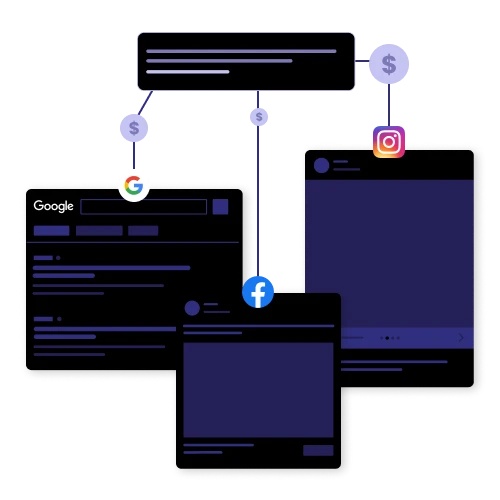
- Leverage multi-platform strategies. Some objectives may require a presence across multiple platforms. Ensure your messaging is consistent while tailoring content to each platform’s strengths.
The right mix of platforms can significantly impact the success of your paid campaigns. By aligning your platform choices with your specific objectives, target audience, and budget, you’ll be well-positioned to achieve your marketing goals efficiently and effectively.
Navigating compliance in paid campaigns
In the rush to meet ambitious marketing objectives, compliance can sometimes take a backseat. But ignoring regulations is a risky game that can derail even the most well-planned paid campaigns.
The regulatory landscape is constantly shifting. Take the FCC’s recent TCPA rules on lead generation, for instance. These new guidelines emphasize the need for explicit consumer consent in one-to-one outreach. For marketers setting objectives for paid campaigns, this means rethinking lead generation strategies.
But why does compliance matter so much?
Consider this: In the past year alone, class action suits for non-compliance have surged by 26%. Some organizations have faced multi-million dollar fines due to missteps at the individual agent or representative level. These aren’t just statistics – they’re wake-up calls.
So, how do you ensure your paid campaigns hit their targets without crossing legal lines?
- Stay informed: Make regulatory updates a part of your regular marketing diet.
- Document everything: Keep meticulous records of consent and ad approvals.
- Train your team: Ensure everyone understands the rules of the game.
- Use smart tools: Leverage technology to automate compliance checks.
Check out our TCPA guide here.
This is where platforms like Evocalize shine. Their system allows corporate teams to set guardrails, ensuring local operators can customize campaigns without venturing into non-compliant territory. It’s like having a compliance co-pilot for your paid campaigns.
Compliance isn’t just about avoiding fines. It’s about building trust with your audience. When setting objectives for paid campaigns, make ethical marketing a non-negotiable goal. Your brand’s reputation – and bottom line – will thank you.
Mastering the art of paid campaign objectives
As we wrap up our journey through the intricacies of setting objectives for paid campaigns, let’s recap the key takeaways:
- SMART goals are your North Star. They provide direction and measurability to your campaigns.
- Know your audience inside and out. Their preferences and behaviors should shape your objectives.
- Choose your platforms wisely. Each has its strengths – align them with your goals.
- Compliance isn’t optional. It’s a crucial part of your campaign strategy.
Remember, setting objectives for paid campaigns isn’t a one-time task. It’s an ongoing process that requires attention, adaptation, and agility. The digital landscape is ever-changing, and your objectives should evolve with it.
Whether you’re a small local business or a multi-location enterprise, the principles remain the same. Tools like Evocalize can help streamline the process, ensuring consistency across locations while allowing for local customization.
As you move forward, keep this in mind: the most successful paid campaigns are those with clear, measurable objectives that align with broader business goals. By following the strategies outlined in this guide, you’re well on your way to creating campaigns that not only meet their targets but exceed expectations.
So, what’s your next move? It’s time to put these insights into action. Start by revisiting your current campaign objectives. Are they SMART? Do they truly reflect your audience’s needs and behaviors? Are they compliant with current regulations?
Your path to paid campaign success starts with well-defined objectives. Now, go forth and conquer the digital advertising landscape!