On a recent episode of “The Pineapple Perspective” podcast, host Troy Hooper welcomes Justin Ulrich, VP of Marketing at Evocalize, for an insightful discussion on driving local business success through digital marketing. This engaging conversation explores the power of relationship-building and data-driven strategies in today’s competitive landscape.
Troy Hooper, representing Pepper Lunch, brings his expertise in the restaurant industry, while Justin Ulrich shares valuable insights from Evocalize’s innovative approach to local digital marketing. Together, they delve into the challenges and opportunities facing multi-location businesses and franchises.
This episode is a must-watch for business owners, marketers, and entrepreneurs looking to enhance their local business success. Justin’s experience in leveraging technology and data to drive growth offers practical takeaways that can be applied across various industries.
Key takeaways
Here are the key takeaways from this webinar around driving local business success:
- The “give, give, give” approach: Building relationships and providing value before expecting returns
- The importance of hyperlocal and contextual marketing for multi-location businesses
- Leveraging data to inform marketing decisions and drive local business success
- Using geofencing and mobile analytics to understand customer behavior and preferences
- Segmenting audiences and tailoring marketing messages accordingly
- The power of user-generated content in paid advertising campaigns
Resources
- Check out the Local Marketing Lab podcast by Evocalize.
- Watch Troy Hooper’s episode on the Local Marketing Lab.
- See Geoff Alexander’s AI image on a bike looking like Rambo on his episode.
- Read Jab, Jab, Jab. Right Hook. by Gary Vaynerchuk.
- Follow Shawn Walchef, Zack Oates, and Jim Taylor for hospitality and podcasting tips.

Transcript
Troy Hooper
Welcome to the Pineapple Perspective with Troy Hooper, sponsored by Pepper Lunch Restaurants. I have a great privilege, and I know I start all of my shows out with that, but it’s because I do get the chance to bring on friends and colleagues and peers and people I admire and respect in the industry. But I am very excited to have the gentleman, Justin Ulrich, on the show from Evocalize. Hey, Justin.
Justin Ulrich
How’s it going, Troy? Thanks so much for having me on. This should be a good one. If it’s not, we apologize to the listeners in advance.
Troy Hooper
Well, man, look, this is four years in the making, this show, meaning I’ve been pressured and pushed and wanted to do it for a couple of years now. And yet you came out with your podcast, I don’t know, in like seven minutes of thinking about it. And then you had a bunch of our friends on, including myself.
I was fortunate, I think I was number three or four or five on the show. And man, your show’s just taken off and done phenomenal things. We’ll talk about that for sure. But I’m just trying to play a little catch up, be more like you, my friend.
Justin Ulrich
Oh, I appreciate that. Super kind, although fairly inaccurate. But so far, your episodes are awesome. Very entertaining. I love the deep dives into the why behind, you know, why folks do certain things. So looking forward to it.
Troy Hooper
Good. Well, I’m gonna ask you some of those tough questions too. To give the audience a little bit of perspective, just give us that 30 second elevator pitch.
Who are you? What do you do? And who do you do it for? Because I’ve got a couple of questions. I wanna make sure the audience has a little bit of background on you before you start answering questions if they don’t know where that’s coming from.
Justin Ulrich
Yeah, sure thing. So Justin Ulrich, I lead the marketing team here at Evocalize. We automate local digital marketing based on local data. And that’s full automation of the creation and modification of ads across different platforms like Google, Facebook, TikTok, Instagram.
My background, you know, I’ve done all sorts of focuses within marketing in different industries, many different industries, but primarily have focused on channel marketing and demand gen as well as brand marketing. So it’s kind of taken all that expertise and rolling it up into a leadership role where now I have everything under the marketing purview.
It comes across my desk, which is a ton of fun. We get a lot of, it’s kind of a new brand. We recently rebranded the org. So we get a lot of freedom to do what we think resonates best with our audience. And it seems to be working really, really, really well. So we’re in a super exciting place.
Troy Hooper
Well, and you’ve been very creative with that podcast, right, a business-based podcast that even you weren’t sure made sense. But now, you know, it’s a great channel to bring potential customers on, industry peers, other people that you’re trying to learn from about the industry you’re trying to sell into. There’s just so many great benefits, but nobody does what you do that I’ve seen.
But I’ve seen you had a very creative spark of genius in that you create an AI avatar, an art piece, a true real art piece around each one of your guests. And you get the inspiration from asking them a few questions of like, what’s their hobbies? And what are they into?
And what kind of music do they like? And like, what, I don’t know, what Marvel character? I don’t know what all you’re asking these people, but man, you are putting out your thumbnail for these podcasts are insane.
I wish I could come up with something as so creative, but I can’t steal that, because that’s you and that’s your thing, and that’s really cool. But yeah, when you think about marketing, Justin knows how to market his own podcast pretty well with AI generated art around the speaker. It’s pretty cool.
All right, we’ve got a little context around who you are, what you do, where your mind comes from, what you focus on on a daily basis. Justin, first question of every show is, what does hospitality mean to you?
Justin Ulrich
That’s a very interesting question, actually, because I look at hospitality coming, not just from like the restaurant space, but personally in my life. I think there’s a lot of different things come to mind when I think of hospitality. First and foremost, I wholeheartedly believe in treating others with respect and with kindness and service, as much service as possible to help them grow, to help them achieve their goals.
When you serve others, it gives you an opportunity to not only enrich your life, but also enrich theirs, because you never know what someone’s dealing with on a day-to-day basis. You never know who needs a kind word or a pat on the back, or maybe just needs a little bit of help, trying to achieve the goals that they’re trying to achieve. And you never know what’s weighing them down.
So I do think that trying to get to know someone and kind of establish solid rapport with them, find out what they need help with, and see where it is that you can plug in into their life to try to better their situation. A couple other things, too. For me, give, give, give, give has been my approach.
I know that we haven’t been in the restaurant space from our organization standpoint for very long. So I started here in November of 2022, and about March of 2023, maybe April of 2023, started really focusing on the restaurant space because it seemed like a solid fit for us. And the challenge that we’d face from a marketing standpoint is that there really wasn’t a lot of awareness as to who we were or what we do, because we weren’t in the industry yet.
And then we also, the industries that we were in, like in real estate, that’s where we cut our teeth, we white-labeled in many instances in the past with almost all of our clients. So it was a really solid or difficult, I should say, marketing challenge to overcome. And by taking the approach of give, give, give, I established contact with as many folks as I could within the industry and tried to figure out where I could help them promote what they were doing, help amplify their voice.
And in doing so, built rapport with those individuals. And then they put me in contact with other folks within their friend groups, and the snowball just kept rolling and rolling and rolling. So when you give, you need to give without any expectation of getting anything back.
And eventually, though, it will. I’ve never seen it where I’ve gave all I had to someone or helped them out in a certain situation, and it didn’t come back tenfold. I mean, that’s just what happens.
And I don’t know if that’s just how the universe works, but that’s just how I’ve seen it work for me. So that give, give, give approach is something that displays hospitality in everything that I try to do.
Troy Hooper
That’s awesome. I can attest to that. I’ve seen it firsthand.
I’ve watched you really just grow and expand in awareness and in friendship and relationship. You’ve put in the time, you’ve put in the effort, and I hope that it’s, as you said, it comes back hopefully at least a one-to-one, but if it’s tenfold, that’s even more amazing. I can tell a story that you gave to me when I was in need of a hotel room to freshen up after a pickleball tournament, but I needed to go on stage.
I had 30 minutes from the time pickleball ended to the time I had to be sitting on stage, and I needed a spot to freshen up and change my clothes, and you were not only so gracious to give me that space, but I forgot something. You ran down and got something for me. I forget what that even was, but it was like, oh, I’ll go get it, and you ran back downstairs and took care of it.
Anyway, I really appreciate that, and you know me, but at the same time, it’s like, wait, you’re giving up your hotel room and bathroom for a guy to come freshen up in, so it really just speaks to the humanity side of what your hospitality means to you.
Justin Ulrich
To clarify, I did not hold your pants for you.
Troy Hooper
No, no, you did not.
Justin Ulrich
You were able to get dressed up.
Troy Hooper
I took care of myself. Literally, you know, I actually rinsed off in cold water, but anyway, so you told us a little bit about what your belief and where you come from in thinking about hospitality and that service mindset. Where did that come from?
Where did that develop from? How did you land where you are today in that mindset?
Justin Ulrich
I’ll take you back to when I was a kid, and then we’ll get into the professional side, but when I was younger growing up, I had tons of opportunities that I didn’t see as opportunities to help serve others, whether it was helping people like a family move in or clean up someone’s yard. I was pretty heavily involved in Boy Scouts. We had plenty of service opportunities or service projects we participated in, and at the time, almost always, like any kid would, you’d expect from any kid, going into it, it’s like, ah, I kind of have to do this thing, but afterward, I always felt great.
There’s something that comes from uplifting others that also uplifts your own soul, and so seeing, it didn’t dawn on me until I was a young adult that that was the approach that I wanted to take, and so I’ve always kind of sought out opportunities to help folks, but professionally, I didn’t have this approach initially.
When I first started in marketing, LinkedIn was fairly new. This was back in 2012, and I was thinking to myself, I’m gonna build up my network, and I’m gonna connect with as many folks as possible, and then eventually, recruiters will find me, and I’ll get opportunities, and that’s probably, I would say it’s an approach that probably many people take.
But it wasn’t until recently when I realized that LinkedIn, it’s a very, very, very powerful platform, which I always knew, but how you wield it is going to, it’s gonna exponentially bring benefits your way depending on where you focus, so I just started focusing just a ton on helping other people amplify their story, because I know how the algorithms work. It’s like you’ve got a golden hour. Whenever you post something within that first hour, you try to get as many comments and likes as possible.
Comments are most valuable, and if you can get comments, then the algorithms serve you up to more folks, and you have more impressions, and get more awareness, et cetera, et cetera, so I tried to make an effort to subscribe to as many folks that I wanted to help out, and just, whenever I saw those things come live, I’d try to comment on it, and try to repost their stuff, try to just amplify whatever it was that they were doing, and like I said, it’s paid itself off in spades.
So kind of started at a young age, and then evolves as to how I approach service as an adult and professionally, but I always try to find ways also to plug in and help. If someone needs a graphic created of Geoff Alexander sweating on a bike looking like Rambo, like I’ll do it for him, or someone needs help brushing up PowerPoints, I realize that I’ve got a skillset that most folks don’t have, and it’s on me to help others with that skill as much as I possibly can.
Troy Hooper
All right, I think I’m gonna have to send you a PowerPoint and see what your critique and opportunities are if you’re offering to do it. I absolutely resonate with that. I grew up, my father was a military man, and then owned his own businesses, and his greatest pride was that he never advertised a day in his life, and he never asked or needed to look for business.
The phone always rang because he did a great job, he took care of people, and he made sure that everything was on the up and up. So, and in construction, that’s a big deal. So, I grew up watching him do that, watching him put in the hours to make something right, or to fix something or change something if there was a misunderstanding about how it was supposed to be done, whether he was right or wrong, he was gonna fix it and not charge him and that kind of thing.
And I definitely grew up in that give mindset. We always did charitable work and grab, stop and help people on the side of the road, and certainly help feed homeless folks and do all kinds of stuff like that. I grew up in that world.
And so, it’s funny because when you talk about personal and growing up to then how it translates to business, I get asked a lot, and especially during the heavy conference season, when we’re all out there a lot, I get asked a lot, hey, what are you trying to get out of this? Why are you at so many of these things? What is in it for you?
From the distance, people understand what my job is and what we’re trying to do and understand there’s a lot of work and complexity goes into that. And they just wonder what’s with the investment of that time? It’s a lot of time and it’s time away that you have to make up for when you’re not getting the other things done during the day.
And so, I get asked that all the time and I kind of just smirk and in my head, I’m like, wow, you really don’t know, do you? You kind of don’t get it, right? And then I do try to share and educate.
It is about giving back. It is about sharing. It is about camaraderie and network, building relationships that today, I’ll say this, just happened today.
I spent a lot of time on Clubhouse in the pandemic, which has translated to some of these mastermind and round table groups that you’re a part of and I’m a part of with Shawn Walchef and others. And there was one group that was focused on women in franchising and they appreciated a few men being in there sort of give a perspective from time to time. But one of the ladies in that group, I maybe have seen her once in the last year, interacted two or three times on LinkedIn.
I think maybe shared a text message. If we’ve touched base four or five times in a year or more, I’d be surprised. And she wrote me today and said, hey, Troy, are you trying to get Pepper Lunch into non-traditional airports and universities and things like that?
And I said, absolutely. And she says, hey, I’ve got an introduction for you. If that’s something you are trying to do, I have a really good friendship or relationship with somebody in the New York, New Jersey area that runs airports.
And kind of was talking and they were kind of asking if she had come across any brands because she works adjacent in our industry. And she says, man, I know somebody. I know somebody I want to ask.
Let me see if Troy and Pepper Lunch are interested. And so now I have an introduction to the head of airports in like three cities, metro airports, to talk about potentially putting Pepper Lunch in there. So that’s the long game, right?
That’s a relationship that I built over two years ago by putting in the time, showing up, giving back, sharing authentically, getting to know her, getting to know the other people in that group, learning about them, trying to be helpful, trying to make referrals if I could. I’ve never sent her a piece of business, but it comes back, right? And whether it comes back in a week or a year, 10, it doesn’t really matter.
It’s mindset, right?
Justin Ulrich
That’s the key is if I have people say to me all the time, because I’m a vendor, right? We go to the shows and eventually we try to sell our platform to attendees at the shows. But I’ve had on multiple occasions from every show, I have people come up to me afterward, whether it’s text or whatever, or on a phone call and say, hey, I really love your style of selling because folks aren’t getting sold to, right?
And I’m like, I’m a marketer. It’s not my job to sell. So I do have the benefit of not having a quota.
Troy Hooper
That guy texts me twice a day, every day emails me too. You do hand it off, Randy. At least we knew.
Justin Ulrich
Yeah, we hand it off. But the point is, when I go to shows, I go to make friends. And it’s like, eventually conversation will happen, right?
Where they say something and it’s like, oh, then it can organically kind of lead into potentially doing business together. But by that point, you’ve already had multiple touch points and built a solid rapport and trust to where people are going to buy from you. At the end of the day, people don’t buy from businesses.
They buy from people. And so, and they also don’t remember, they remember more how you make them feel versus what you say, right? So if you can come away from the event, making people feel good, as well as just establishing that rapport, building that trust, eventually they’re going to be open to having a conversation to potentially buy from you.
Our events channel is incredible for us from a marketing standpoint because that’s the approach that I take. It is a bit of a longer game, but we’re enterprise sales or an enterprise product. So we’re not trying to sell in 10, 15 days, right?
You have to map your approach to the sales cycle. So and to us, it makes total sense.
Troy Hooper
Yeah, I agree 100%. And it’s the same, look, it’s the same in the franchise sales, which I’m focused on now. There’s some deals that are going to happen in three weeks.
And there’s some that, you know, the phone’s going to ring in 6 or 10 or 12 months later and say, okay, I’m ready. I wasn’t ready. I’m interested. I was always interested. I’ve been tracking like what you guys are doing, following you, but timing wasn’t right. And right? At the end of the day, the timing’s not right.
Same with Evocalize. Look, Pepper Lunch is going to do business with Evocalize. Randy’s trying to get me to sign a document like 10 minutes, every 10 minutes. But…
Justin Ulrich
Go sign it. We can pause.
Troy Hooper
We will. But look, it’s about timing, right? It’s about when does it fit our budget? When does it fit our need? When does it, is it a tool that matters and makes a difference in work? Yeah, absolutely. But like you said, you can’t control my timing.
You can’t control my budget cycle or my new store opening cycle or how I need to focus different things at different times. So you’ve got to be in it. Look, I’ll tell the audience that if you’ve never read Jab, Jab, Jab. Right Hook. Jab, Jab, Jab. Right Hook, Gary Vaynerchuk, it’s a textbook about what we’re talking about here.
It’s about give, give, give, and then ask. Give without expectation. Give your skills, your knowledge, your experience, your effort. And ultimately, people will want to, they’ll feel obligated to reward you when the time is right, when the opportunity presents itself.
Justin Ulrich
Exactly. That’s part of the thing that’s so great about like the podcast, for example. It’s a built-in avenue for me to promote others and promote their business.
And it’s like, it’s not just the episodes, after the episode, how many snippets we create, how many posts we push out, like across which platforms we push it. There’s just so much that we do because I want to provide as much value as possible as I’m building a relationship with someone. And eventually it’s like, hey, when the timing’s right, you can make the ask.
And inevitably, I have folks that put me in touch with, someone within their team. It’s just, it seems like a heavy lift. I think that’s why I didn’t want to do it initially, candidly.
When you think I’m going to do a podcast, it’s like, okay, I’m signing up for something for two plus years, at least, just to see if it works. And so is that where I want to put my energy? And it turns out I had some pretty good direction from some great folks in the industry.
You, Shawn Walchef, Zack Oates, Jim Taylor, plenty of others to move forward with the podcast. And I did, I just didn’t wait. I think the hesitancy is what typically causes people to stifle their own success, their own growth.
If you have like inspiration, I always say to inspiration to do something, do it. Don’t have to fully plan it out. Try something, fail fast, fail forward, figure out what works.
Troy Hooper
Just start talking.
Justin Ulrich
Yeah, just get started.
Troy Hooper
Yeah, literally lean the phone up on your laptop and hit record, and now you’re a podcaster. I mean, at the end of the day, some of us like yourself have a team. I’m very fortunate to have a full-time producer and put all this stuff together and manage all that.
But I should not have waited until I had that. I did, I waited until I had the infrastructure to support it, but I should not have, right? So I would encourage everybody, just point the camera and go, and look, it can be audio.
It doesn’t have to be a camera. Just hit record on your memo and start talking. Have a conversation with somebody in a hallway and record it with their permission, please.
Justin Ulrich
I did the first 20 episodes, 15 to 20, on my own without any help from anybody in the team. And it’s like, once you get a couple reps, it makes it a lot easier to do the subsequent episodes. And then you figure out, okay, what works, what doesn’t.
And then the challenge is, okay, how do I scale? Because this is taking up a lot of time. But once you figure out that it works, then you move forward from there, crawl, walk, run, instead of just, if you take too much time to plan it all out, set up a team, get everyone set up, and just like, you’re prolonging your start time, which, start time’s important, because they say the best time to plant a tree is like 30 years ago.
Troy Hooper
It’s learning time, right? It’s classroom. Yeah, you gotta go to 101 before you can go to 102, right?
Justin Ulrich
Exactly.
Troy Hooper
So Justin, let’s pivot into a little bit about, let’s use your brain. You have access to watching and participating and strategizing with mid and larger enterprise brands in the hospitality restaurant space, some significant brands for sure. And they’re using your platform to deploy messaging, right?
Digital advertising of some kind, digital marketing, brand building across for whatever their purpose is. Give us, what are you seeing in trends? What are you seeing that brands are focusing on?
What are they thinking about or concerned about? Just give us some top level insight as to what contemporarily is going on among brand marketing and advertising in general.
Justin Ulrich
If you think about digital marketing, the platforms or the, each platform has their own algorithms and the algorithms are designed to spend in areas that they can most effectively spend the dollars, right? They wanna spend as much as possible because that’s how they make money. The best way, most efficient way for them to do that is gonna be in markets or like big metro areas.
Think like New York, Chicago, LA, where there’s high population and they can target a certain demographic and just spend quickly, right? And efficiently, efficiently to them. It doesn’t necessarily benefit the end user.
So if you’re a multi-location business and you have locations all over the US and you’re like, oh, my Des Moines location is like struggling, right? I’m gonna put, I’m gonna give money to an agency or do it myself, maybe do a national ad campaign. Well, those dollars are gonna get spent in areas that are not Des Moines.
And so that location will continue to struggle while the other locations are seeing the love from the marketing dollars and they may not necessarily need it. So one of the big trends that we’re seeing is going to local distributed marketing. I know it’s been around for a couple of years, but now all across different industries, like everyone’s seeing the importance of local marketing.
And the challenge tends to be that local digital, pushing unique local digital to each location is difficult the more locations you have, right? It’s a scale issue. Where we help solve for that as a technology is we’re a full tech company.
It’s a tech layer that through APIs fully integrates into Google, Facebook, TikTok, Instagram, and pushes ads only in the locations that need it based on location specific data. And we do it automatically. So we don’t have anyone pushing buttons and actually creating campaigns.
So the trend there is local digital. I think I saw a stat said like 71 or 77% of ad dollars are spent on mobile. So focusing on mobile, also leveraging data to actually guide your decisions within marketing.
So the days of like throwing stuff at a wall and seeing what sticks are kind of over with, like everything from a marketing perspective, like most things, probably 90, 95% of things that you do that are impactful can be tracked and traced. So you can actually attribute results from certain marketing efforts, whether it’s through like ad IDs or if you’re using promo codes on certain ads, whatever it might be, but you can actually attribute outcomes to specific outputs.
And from a marketer standpoint, that’s gold. Cause now it allows me to understand like where to best spend my dollars and put my energy as opposed to just trying things and seeing what sticks. Data also helps you to baseline. So if you’re not baselining, but when I say baseline, it’s like taking like a kind of snapshot of where you are today without doing anything from a marketing standpoint or starting something and then getting some results.
When you baseline, then you have the ability to optimize and improve. If you’re not tracking the data, it’s very difficult to baseline. And then without a baseline, it’s very difficult to know whether or not you’re optimizing or improving.
So the really solid marketers out there are leveraging data to inform majority of their marketing decisions.
Troy Hooper
So you’re talking about CMOs and directors of marketing and creative directors. What if I’m a emerging brand? I’ve got somebody on my team or a couple of somebodies doing social, maybe somebody is managing digital ad spend, trying to optimize, maybe we’re hiring an agency or two to do some of that technical work.
What are some tips or tricks that the smaller emerging groups that aren’t yet at the point that can make sense for sort of a larger technology platform like yourself or other tools that are out there or don’t have the spend to maybe go to the agencies that do that. But what are some tips or tricks you think, you talked about hyperlocal, like what comes to mind when you say hyperlocal is add that layer of hyper contextual, right? If you’re going to target a specific micro market, not only by geography, but then the audience, right?
Can you take the same message and retool it three or five ways to talk to the different groups? Like who comes to Pepper Lunch, right? Who comes to any restaurant?
If you know who your audience segments are, the different types of people, then you can speak to them. How I speak to a Gen Alpha versus a Gen Z versus a college going or first job family starter. Those are different people.
There are different stages of their life. Their daily flow is different. College kids are in my restaurant at 9.30 at night and moms with kids are not, right?
So we have to be able to think about those sort of hyper contextualized things. Tell us what you’re seeing or what you would suggest.
Justin Ulrich
Yeah, I would just say data, data, data. Like you have to figure out, there’s so much data within your locations. It doesn’t matter how big you are.
You have to figure out how to access it. If you can get access to the data and you could start to see who’s coming into your locations, right? You could start to segment your audiences or your visitors by certain demographics, right?
Like you’re saying, Troy, if you want to target moms of young children, you can do that. If you wanted to target 65 plus in terms of age, you can do that. The more you can break up your data or at least analyze your data, the more you can figure out who is your largest target market to kind of go after in terms of segment.
So you may have 70% of people that come into your location. If you’re like a smoothie brand, you can, you’re likely going to target a much younger audience, right? If you are a health brand and you’re near like a fitness gym or something, you can segment your audience, certain demographic, right?
You’re going to be pushing different messaging to those specific segmented audiences. So whether that’s paid digital or organic or email list or whatever it might be, you’re going to want to target specific segments of visitors or guests with specific messaging that you know is going to resonate. And you want to do that on the specific channels that are going to resonate with that audience.
If you’re targeting an older audience, you might want to go on Facebook. If you’re targeting a younger demographic, you might want to go and push your marketing across TikTok, create more video content, right? It all just, if you look at the data at the core of everything that you do, that will help drive who you’re talking to, what you’re going to say to them, when you’re going to say it in their journey, right?
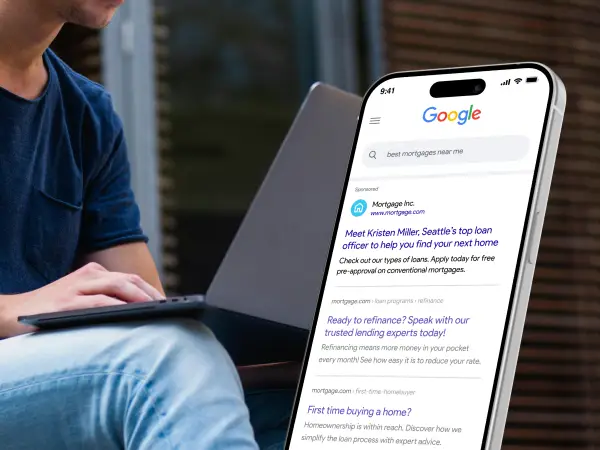
Are they searching for you? Are they searching for Best Burger Near Me? Then you could serve up an ad within your specific radius of your location, targeting that audience that you think is going to resonate with the message that you give them for the free promo or whatever it might be with regards to your ad.
Data is at the core of everything. And if you can leverage that data to segment folks locally, you’ll be in great shape. The other piece to consider is you want to think of your segments, think about their customer journey or what the path from discovery to purchase is going to be to bring them into your location.
So some may be that they’re going to search, like I said, on Google, they might search Best Burger Near Me. Some may search on, like they may look up, you know, certain things on TikTok or different platforms. You want to make sure that, that you’re inserting yourself into the part of the customer journey that makes the most sense.
Other folks, they may be a little bit older, maybe a loyalty program that involves more email outreach might work better for them. It’s just a matter of testing new things within each one of these segments, seeing what works and moving forward. But gone are the days of, of, you know, peanut butter spread, one size fits all.
You’re going to leave a lot of opportunity on the table if you take that approach.
Troy Hooper
Yeah. I think it’s awesome value that you’re giving. It’s important.
I know I’ll add to that, but say, if I’m listening to this and go, okay, what data? Where am I getting data? How do I know who my customers are?
Well, I’m going to go real old school and then we’ll go real tech for you. Real old school is you sit in your damn restaurant for five days straight at lunch and dinner or whatever day parts you serve. And you have a scratch pad with sort of teenage years, you know, just break people down into like five-year increments, maybe some different demographics, men, women with, you know, ethnicities, et cetera.
Are they wearing suits? You know, are they wearing athleisure? Are they whatever you could literally do this in analog.
If you had to just get a sense in a more of an anecdotal way. But what we did at Pepper Lunch as an example is we use geofencing. We use mobile enabled geofencing.
And so we geofence when I first started, one of the first things we did was we geofence and this data exists. There’s so many people who sell this, so many platforms who provide this at different price points and different things. But we did a program that gave us four years, it looked back, gave us four years of data on every person with a cell phone that walked into every Pepper Lunch.
We then analyzed because it had mobile analytics, it told us how far they drove to get there, where else they shopped, ate, where they lived because the phone stops moving after midnight, right? Theoretically, where they work, where they may have been for six or eight hours at a single trunch. And so it gives you sort of that it’s anonymized.
We don’t know it’s Susie Smith, but we know that the white female, 24 to 30 years old, blah, blah, blah, comes to Pepper Lunch three times a month, you know, and does these other things. And so when you do that across the entirety of your customer base for four years, you get a pretty big data set, but you also get some information, right? You get a lot of information that surfaces from that.
Then we, when we, one of the pieces of information that surfaced from that was where else these people ate, where do Pepper Lunch customers also go? Well, we learned a few things. One, they go to a few of the brands that we thought might be competitors.
They also went to brands that we didn’t think of as competitors, but they had share of wallet. They were where these people went. They also went to these other kinds of brands.
So that gives you a lookalike audience. Well, then we geofence those five brands, the five most popular brands that Pepper Lunch people also eat at, we geofence their facilities for four years. And so we learn more about daytime, day parts.
When do they come to Pepper Lunch versus go to that brand? You know, do they come to Pepper Lunch every Tuesday? Is that like a cadence in their life that has something else influencing it, right?
All kinds of sort of real niche stuff. But one of the big things that it told us was that 50% of the people that eat at a U.S. Pepper Lunch are under 30 years old, 55% are under 35, 50% are under 30. So when you think about marketing, Justin, that tells you a lot, right?
It says people under 30 who like movies, love and romance books and Asian food and culture, no surprise there, who also eat at these five other brands who go to this type of gym, who work in these type of jobs, who drive these type of cars. That gives you a lot of information, doesn’t it?
Justin Ulrich
Tons of information. And you can leverage it however you want and get as granular as you want. You know, when you say like they go to these other establishments, they may not even be food.
We talked a little bit about the, the gym example, if I’m a smoothie company and I know that folks are going to this gym, that gym around me, right? I can approach those folks and say, Hey, let’s do some cooperative marketing together. You know, do you mind if I put some cards and flyers or something in your locations?
Do you want to split some marketing budget and do some co-op ads, ad spend on some promotions? There’s so many things that you can do, but I love that you track that data with the look back for four years. That’s incredible.
But it all goes to show like the data is important and data should guide your decisions. Even if you’re small, you can, like you mentioned, Troy, you could go at it from an analog approach. Or you can even take, like, if you get a hunch, like, let’s say you did monitor something for five days.
Okay. Let’s try this thing, develop a hypothesis. And what you think the goals or the outcomes are going to be, you know, to your outputs and then try and test things.
If you’re small, that you’re nimble, right? So you don’t have to worry about big brands and, you know, compliance and like, you know, alignment with the corporate brand and stuff. If you’re relatively small, you may already be connected to that team and you may be able to quickly get assets or quickly get what you need to try and test new things, which is what growth’s all about.
The more, the faster and the more that you can accelerate your learnings, the more impact you’re going to have in terms of growth on the year. You mentioned, Troy, if I have someone that’s coming back every seven days, well, what can I do to try to get that audience to come back in six days? Because then if I can do that, I might be able to get one more visit per month out of that audience.
And what would that look like from my revenue perspective? You know, if you have the data that you could segment out and make actionable, you’re in a much better spot than if you just try throwing stuff at a wall.
Troy Hooper
Yeah. And by the way, it’s very easy to spend really bad money on marketing, but I think what you just eliminated there made me think of, you know, I’ve heard Gary Vee talk about this a lot lately, which is sort of that performance marketing informed by social. So we’re all doing social, right?
Every restaurant, every business in America is doing something on social. And if you’re really active on social, there’s a lot of lessons in there, right? What are people saying in the comments?
What questions are they asking? Well, that tells you what your information is not answering, right? Your website or your social media page or your link tree, whatever is not answering those questions.
How do we make that information more available? But, you know, to take a really high performing social ad, something that did really well, and then retool it, maybe repackage it into a spend, you know, Gary’s out there screaming $500 bucks, like just test $500, run a $500 Instagram or Facebook or whatever, you know, LinkedIn’s a bit more as an entry level, but, run a small paid ad and see how that does, but use the free organic data, which is, Hey, this social media post did 5X. What are average social media posts? Does that, what was it?
Read the comments. Oh, what resonated with people was the following information within that post. They really liked this, that, or the other, right?
So then you can turn that into a small paid ad. If that small paid ad does really well, you could put a promotion behind it, a promotional code, a coupon. You could do all kinds of things to incentivize and now really drive feet into the door, right?
Justin Ulrich
You don’t always have to test big. That’s a great point. The other thing is a perfect example of this is Dave’s Hot Chicken.
Like they’re growing gangbusters hand over fist every year. I think they had, I could be wrong on this, but I think they have 144% growth year over year. But one of the things that they do is they take their organic content that that converts or engages really, really well, and they promote it as a paid ad, just like you’re saying Troy.
So they, and those types of ads resonate very highly with their target audience. And it’s able, they’re able to basically test what works before they’re actually running any tests. Cause it’s all user generated content as well.
And that type of content actually resonates typically a lot better than brand generated content because there’s an authenticity to it nd there’s social proof that comes with it that you typically don’t get from brand created assets. So that’s another thing to consider.
How can you leverage organic user generated content across your paid channels to drive even more engagement?
Troy Hooper
Justin, I’m not surprised. We’re running pretty long on this show today. A couple of things I want to get done before we wrap up, tell everybody what Evocalize is and does and who it does it for and how a little bit about how it does what it does.
Justin Ulrich
Yeah. We typically work with multi-unit brands that have a hundred or more locations, and we take all their data from a local perspective and give them the ability to either centralize their marketing at scale. So if you think of like publishing 5,000 ads instantaneously in the markets that actually need the ad spend, that’s what we help you do.
We also give those tools to any franchisees or local operators if you choose to do so. So folks can log in, run a campaign in a couple of clicks. I’ve literally had my 11 year old do it.
It’s super easy which is what’s so exciting about the product, but so you can manually activate instantaneously across Google, Facebook, TikTok, Instagram. That’s Google Search, Google Display, YouTube, with a couple of clicks or instantaneously behind the scenes based on, for example, your sales data. If you’re trending low year over year on weekly comps, automatically ads can launch and turn off when you’re back within the range of where you want to be.
Just, we think we could really do anything based on any local data at all.
Troy Hooper
Yeah. That’s phenomenal. It’s really cool.
I’m looking forward to testing it out here very soon and trying it. Don’t worry, uncle Randy, we’re coming. We’re going to get this done and start to deploy some Pepper Lunch stuff through you guys as well. Looking forward to it.
Justin, two things. One, I’m going to ask you a couple of silly questions and then we’ll close out by making sure people know how to find you, and find Evocalize.
Some fun questions like to wrap up, know a little bit more about you. These are the, I’m kind of asking the same questions of the same, you know, a little bit, but I think they’re interesting, at least for me anyway. What was the last concert you went to?
Justin Ulrich
Ooh, Mumford and Sons.
Troy Hooper
I knew that answer. We asked that in another…
Justin Ulrich
We did that at Fiddler’s Green in Denver a few years ago, but we need to go to concerts more often.
Troy Hooper
Yeah. We’re going to get you back to your concert. You live in the greater Charlotte area. You get a few concerts that come through the arenas and stadiums. Come on, man. You got to get, you got to get down there to Taylor swift, take the kids.
Justin Ulrich
Oh, they would love that. My wife would love it too, for sure. Yeah. My bank account wouldn’t love it, but.
Troy Hooper
Listen, my wife and I have watched a couple of movies lately. We haven’t done that in a while. So I’ll ask you, what’s your favorite movie all time?
You know, something in the top five. Doesn’t, I’m not going to hold you to being favorite, favorite of all time, but what’s the top movie that, you know, tells us a little bit about what you like.
Justin Ulrich
I love Lord of the Rings movies. I love Marvel movies. Avengers End Game was awesome. Yeah. Anything like action adventure. I love that it pulls from the nostalgia of, you know, just watching these cartoons and reading comics and stuff when I was a kid and it’s come to life. It’s super cool. And my kids love it too.
Troy Hooper
Very cool. Yeah. Nice fantasy genre generally. Got it. All right. Last question.
What’s the best meal you’ve had in the last six months or so you’ve been traveling a lot, gotten out to some different cities and towns, been going out with folks to dinners after these conferences, what’s the best meal you’ve had?
Justin Ulrich
I have a couple that come to mind instantly. I just love sugarfish in New York. They used to be right by our office. And I worked over at Evero. I’d go there as much as I possibly could. And just get – really anything there is incredible.
Chilean sea bass, probably from Papadeaux. That’s one that comes to mind right away. That is an incredible dish.
Troy Hooper
Nice.
Justin Ulrich
Yeah.
Troy Hooper
Very cool. All right. Where can people find you and Evocalize? You’ve got a podcast, you’ve got a business, you’ve got your personal brand. Where can we all connect with Justin?
Justin Ulrich
Yeah, for sure. You could find me on LinkedIn, Justin Ulrich, or maybe under Justin C Ulrich. It’s I’m just the coolest looking one. So just use a discerning eye.
And then you can find Evocalize. We’re just @Evocalize across all the different social platforms as well as our podcast, the Local Marketing Lab.
We talked a lot about local marketing. We get incredible tips from folks just like Troy. He was our third guest, incredible episode, but we’ve had many, many C level execs from multiple organizations across multiple industries. So check that out. That’s on LinkedIn as well as on our website, Evocalize.com under resources and then on any podcast platform that you typically frequent.
Troy Hooper
Awesome. Justin, it’s been an awesome pleasure. I knew it would be an easy conversation. I knew it would run longer than expected and that’s okay. Glad to have you look forward to tracking how your thesis around hospitality and give, give, give continues to respond to you in many folds. So we’ll be keeping up with you and look forward to working with the Evocalize here soon to myself. And so glad to have you. Thanks for your time.
Justin Ulrich
I appreciate you having me on. Thanks Troy.
Troy Hooper
Thank you for listening to the Pineapple Perspective. If you loved today’s episode, leave a review and a five-star rating. I look forward to welcoming you back next time.
Show More Show Less