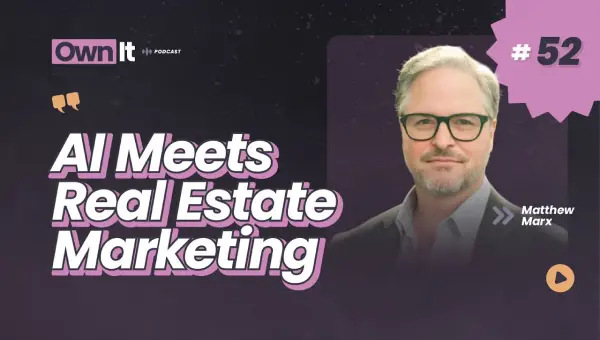
Are you ready for the new FCC rules on lead generation? In this webinar, we dive deep into the upcoming TCPA changes that will reshape digital marketing in 2025. These regulations will significantly impact how businesses collect and use customer data, making it crucial for marketers to adapt their strategies now.
Join Evocalize CEO Matthew Marx and Dustin Owen, VP of East Division Sales at Waterstone Mortgage, as they break down these complex changes and offer invaluable insights on developing compliant lead generation strategies. Whether you’re in real estate, mortgage, or any other industry relying on digital marketing, this webinar is a must-watch.
Key takeaways
Here are the key takeaways from this webinar around compliant lead generation strategies:
- The new FCC rules close the “lead generator loophole” and require one-to-one consent for marketing communications.
- Automated texting and calling without prior written consent will no longer be compliant.
- Businesses need to document the entire chain of consent for each lead.
- The changes affect not just new leads, but also existing CRM databases.
- Email marketing is not covered by these new regulations.
- The definition of “use of technology” in marketing is still unclear and may be subject to future legislation.
What you should do now
- Audit your existing leads: Review your CRM database and identify leads that lack proper consent documentation. Consider reaching out to these contacts via email to obtain the necessary permissions. Or, use automated technology before January 2025.
- Update your lead generation forms: Modify your forms to include clear, one-to-one consent language that specifies how you’ll communicate with leads.
- Explore compliant lead generation methods: Focus on organic growth strategies like content marketing, social media engagement, and referral programs to generate leads compliantly.
- Consult with legal experts: Discuss these changes with your legal team to ensure your marketing practices align with the new regulations.
- Train your team: Educate your marketing and sales teams about these new compliant lead generation strategies and the importance of proper documentation.
- Invest in compliant marketing tools: Consider using platforms like Evocalize that can help ensure your digital marketing efforts remain compliant across multiple locations.
- Plan for the transition: Start implementing these changes now to avoid scrambling as the 2025 deadline approaches.
By taking these steps, you’ll be well-prepared to navigate the new TCPA landscape. Remember, developing compliant lead generation strategies isn’t just about avoiding legal issues – it’s about building trust with your audience and creating more meaningful connections.
Watch the full webinar recording to get a comprehensive understanding of these changes and how to adapt your marketing strategies accordingly. Don’t let these new regulations catch you off guard – start preparing your compliant lead generation strategies today!
Resources
- Connect with Matthew Marx and Dustin Owen on LinkedIn.
- Check out Matthew’s ChatGPT FCC TCPA Advisor (need access to ChatGPT 4).
- View part 1 about the legal insights of the TCPA updates.
- Follow TCPAWorld for information and news about the TCPA changes.
- Learn more about the FCC changes with short clips from other experts.
- Watch the general overview of the new FCC rules.

Transcript
[Matthew Marx]
I thought maybe we should just do quick intros and just take a moment before we dive into this, like dicey, tricky topic and try and digest it and have a hopefully fun and good conversation with the crew. You want to lead us off?
[Dustin Owen]
Yeah, I’ll go ahead and get things started. So hello, good morning or good afternoon, depending on where you are dialing in from here in the US. I am going to use today, honestly, Matthew, here’s what I was thinking about, I’m a mortgage dude at heart, right?
Like at the end of the day, I’m a 20 year veteran of the mortgage industry and I am sales and marketing. Started as a rookie LO. Today, I run a pretty large division and I talk about my experiences on a podcast that, you know, tens of thousands love to listen to and tune in and download, and I was thinking what would be fun, and this came about with our prep that we did a week ago is I think I represent everyone who is on today’s call.
And with that, you’re the subject matter expert, you’re the guy who has a lot of great marketing ideas of your own that we probably should be implementing, you have a technology that we should learn about, but more specifically, you also know about these new legislative and regulatory changes that are going to be impacting us.
Yeah, right? Who likes compliance? Not it, but nonetheless, we need to make sure that we keep ourselves and our companies out of hot water.
So I’m going to ask you to kick off, what are these regulatory changes? And I’m probably going to pepper you with questions as if you were a guest on the Loan Officer Podcast, and I’m going to do so from a framework of, Hey, we’re in sales. We run mortgage companies for a living. We are mortgage loan originators. What should we be doing? What should we be looking out for?
And then when allowed, I may interject some success stories on ways that I have had success and my branches have had success lead generating where this type of compliance wouldn’t even impact us. Cause maybe our lead generating tactics are grassroots and less, how I say it politely, less evasive when it comes to like technological regulatory potential issues. How does that sound?
[Matthew Marx]
Yeah, I love it. I love it. You represent the people and we’ll do our best to represent the law and some tactics that we can get around it.
I mean, first and foremost, Dustin, look, there’s some big changes coming in and, you know, the industry trade groups expect us to cost billions of dollars in lawsuits and fines and not enough people are talking about it. And so independent of our company or I think yours or anyone else individually, we just want, there’s a lot going on in the market, right. And housing has been hit by a couple of punches over the last few years, right.
And we just, we want to make sure people are aware of this one coming up in January. So, yeah, I think it’s a great approach and look forward to getting started with that. Maybe I’ll just introduce the topic in a little bit more detail, give the 101, you know, version of this thing and a little bit of history, and then we can jump into a riff? Does that, that sound okay?
[Dustin Owen]
Yeah, that sounds perfect. But I want you to clarify for the audience. One thing for me, you said “in the industry”, when you speak of in the industry, you’re thinking like telecommunications industry, the advertising marketing industry, less, it’s less specific to the silo of mortgage, but obviously it’s going to impact mortgage.
But when you’re saying industry, you’re saying, look, anybody who lead generates online or runs ads to consumers online, whether that’s Facebook, whether that’s in our industry, it could be Bank Rate. It could be Zillow. It could be Lending Tree. Anyone who is doing that, we need to be aware of these changes that are taking place.
[Matthew Marx]
Yeah. And specifically I’m talking about, we do a lot of business with Evocalized for both the technology platform to generate leads, both for the marketplaces, like you mentioned, and for mortgage companies, real estate companies, the biggest brokerages in the world, all the way down to individual agents and loan officers that work underneath those franchises. So specifically I’m talking about housing, given that this is the lion’s share.
You look at the folks who are attending lots of folks from legal representing lenders at the executive levels, all the way to individual loan officers and individual real estate agents on the attendee list. You’re listening, trying to make their way. Right.
And, this does affect every lead generating industry out there. So this isn’t a specific law. And I think I’m really glad you make that point. This is not a law that affects specifically housing. Yet, it will have a massive impact on the housing industry. So we’ll, we’ll try and focus there where we can.
[Dustin Owen]
Perfect. And before I wind you up and let you go, you made a very key point. It’s housing. So it’s mortgage companies. Cause you represent mortgage companies, have clients who are mortgage companies, but it’s also the clients of mortgage companies. Like as a lender, I’ve always viewed, I have clients and I have customers.
My clients are my referral sources and the bulk of my clients are realtors. Right. So this is impacting the clients we serve. And I think it’s important for all of us to be great partners to the communities and the clients we serve. Then we need to also have this knowledge. So on that note, Matthew, let’s wind you up and let you go.
And I’ll maybe raise my hand or interject if I feel like there’s something I want you to reiterate or tie down because it’s that important, we should be taking note of it.
Background about the TCPA
[Matthew Marx]
Let’s go, baby. Okay. So in terms of just giving you a little bit of background, I’m going to way back to the era where we had phones attached to the wall and long cords wandering around the houses.
And some of you are, you know, won’t even remember that era, but if you rewind all the way back to 1991, the basis for what we’re going to talk about today started way back then. And that’s when the Telephone Consumer Protection Act, TCPA, was first passed. Now this was a different era.
And so I just want to give a little bit of background on why this thing exists to begin with. You don’t know anything about it. And then I’ll talk about the changes that are coming forward. Before we get into a riff, 1991 started to have a problem with spam calls. But if you remember that era, it wasn’t a spam call to your personal device. It was a spam call to your house.
And so all of your phones started ringing, ring, ring, ring, ring. You didn’t have caller ID and say you had to pick it up to answer the phone. And so government got involved and said, we need to nip that in the bud and have some rules around how and when you can call and what you can do in terms of calling someone’s house.
And so that’s the basis for the TCPA. And it was actually based on some laws that went way back to the early 1900s, but that’s the basis of this law. Now, fast forward to today, we’re all walking around with our device, right?
And so this is a pretty rich environment to contact people via text or via via phone. And if you haven’t been living under a rock over the last, you know, five, 10 years, you’ve gotten an increase in texts and calls from all kinds of folks trying to get your attention right on this device. And so we have the “do not call list” – also administered by the FCC and the TCPA. It’s been in place for a while.
Problems still kind of getting worse for consumers. And so the basis for action here was trying to nip that in the bud a little bit or manage it. So your phone isn’t ringing as a consumer, as a person, off the hook as much as it is today. And so that’s the basics.
And so in this talk, we’re going to talk, you know, I like to talk about it all, but we’ll really, I think, Dustin, try and focus on the working group that was formed about three years ago, that in December of last year, passed an order that closed what we call the “lead generator loophole”.
And this impacts not just marketplaces and lead generators. It impacts anyone who does marketing, anyone who’s going to call or text a customer using any kind of technology associated with it. And so that’s specifically what I love for us to like riff on the impacts of that. Because that goes into effect in January of 2024 (corrected to 2025). And you know, a lot of people need to start thinking about it now in order to be ready for it then.
[Dustin Owen]
Yup. And that’s January 2025.
[Matthew Marx]
Yes, sorry. 2025!
[Dustin Owen]
Yeah, 2025, but we need to start implementing it as soon as September of this year. No, perfect. And great context with giving us a little bit background on the TCPA.
So where do you want to take this right now? Cause I can pepper you with questions and my questions are going to come purely from the mortgage companies who utilize CRMs, because when we utilize CRMs, we’re also utilizing text messaging as a part of our prospect follow-up systems. We’re using them as a part of our in-process follow-up systems.
And even as a way to contact past close clients to try to get them to hop on a phone call with us or one of our representatives is any of this legislation going to prevent me from utilizing text messaging as a form of my – let’s call them drip campaigns, right? I want to have a drip campaign to help capture and close the most amount of leads. Is there something that I need to start doing differently going forward?
[Matthew Marx]
Yes. So I feel like you’d like teed the ball up to, to hit it. Thank you. So yeah, I mean, there are a lot of impacts, right? So we like to start thinking about how do you get the customer information? How did you get it back when you built your database?
When you started building your database, how did you get the contact with the consumer? Because that’s what this ruling talks about. What did the customer see? What was the context of the advertising? The FCC actually calls that “logically and topically related”.
And then what was the consent form or what did you tell the customer you were going to contact them? Who was going to contact them? And then what all of that, impacts what you can do with the lead downstream and you have to be able to prove this entire chain for any lead that you’re working via technology.
So, let me back up a little bit. The changes that we’re talking about here, there are two. There are a bunch of changes, but there are two main changes. The way the world used to work for anyone generating a lead. You could, and a lot of the portals and marketplaces work this way, the FCC calls them lead aggregators. So just think about when you hear that kind of technical term, they’re talking about a marketplace.
What is a marketplace or lead aggregator?
[Dustin Owen]
Yep. And when you say a marketplace, I think Zillow, I think Lending Tree, I think Bank Rate, I maybe even think BoomTown or one of those other lead aggregators that are typically more real estate focused, but those real estate agencies and brokerages ask us, the lenders to partner with them. Is that what you mean when, when you’re talking about the marketplace?
[Matthew Marx]
Yes. So I try not to name too many names. Cause I bump into my clients when I do…
Yeah. But, so I think, yes, anyone who generates a lead and then sells it, we’re talking about as a lead aggregator. The way they used to work, by the way, up until this ruling, they would run marketing out there and they’re generally running marketing to acquire customers just like everyone else tries to do.
So they’re marketing on Meta, Facebook and Instagram. They’re marketing on Google. They’re marketing on TikTok. So they’re going out and marketing to get people to their site in order to fill out a lead form. They get people to fill out their lead form for some kind of purpose, like mortgage rates. Right. Or real estate interest. I’m interested in buying or selling a home.
And then the lead aggregator, whoever it is – some of the folks you mentioned, fall into this camp, right. They would take that lead and then they’d sell it to a bunch of people. Right.
And those folks were kind of hidden, right? So they were behind the scenes on like other website pages listed in a long disclosure form list. And they had to be there named, but they could be kind of obfuscated if you will.
Two main changes of the new FCC rules
What this ruling has changed is two things. One, when any marketing is done, that marketing has to have advanced one-to-one consent with the seller providing the service before you collected their lead. Right.
So what that means is I need to – and the FCC actually gave an example of a checklist form with company names on it that were blank and the marketing that comes in before the consumer submits a lead, the consumer needs to explicitly check a blank checkbox to say, I want that company to contact me. I want that company to contact me before you gather their information and before you then sell it.
So that’s a pretty big change to how these companies used to operate. By the way, that requirement isn’t limited to lead aggregators that that requirement is limited to everyone. That’s called one-to-one consent. So if I market, I need to gather the lead first, the seller of the service to be able to contact me. That’s one.
And two just quickly. Cause it connects with this topic. The marketing that you did has to be logically and topically related. That’s like contextual, right? To the lead and to the lead provider that the lead is being sold to. So meaning I can’t advertise rates and then have someone submit a lead for real estate services, right?
Or for travel services or anything else. That’s not directly related or logically and topically related to the advertising I’m doing. Yeah. And you have to be able to prove that entire chain.
[Dustin Owen]
Yeah. So in that case, you’re telling me there’s for the consumer, great news, no more bait and switch, right? You’re not going to click a link that says I want information on mortgage rates and all of a sudden your information is getting sold to a moving company, a furniture company and a utility company.
[Matthew Marx]
That’s exactly right.
How do the FCC rules impact the leads I have?
[Dustin Owen]
Okay. Now I want to circle back quickly because I asked the question, I mean, we’re talking about marketplaces and lead aggregators and, you know, something, if we have time, I would love to discuss is, you know, there may be some people on the call. They’re like, well, maybe we need to change our business practice. Maybe we need to stop generating leads that way. And maybe there’s alternative ways to generate leads.
Or nope, we want to continue doing it, but we’re on this call to make sure that we can do it compliantly and legally. And I asked you the question regarding when we do generate a lead and I’ll give you a very pointed example. I built a relationship with a hundred realtors.
Let’s just say I’m Joe Blow the LO in Orlando, right? And I generate 50 leads a month through my friends, my family, my past clients, and the realtors and builders that I serve. And those leads come to me. Sometimes it’s like, Hey, Dustin, call Matthew Marx. I met him yesterday. He’s looking to buy a house and he needs to get pre-approved for home financing.
Now I’ve never spoken to Matthew Marx. I spoke to the realtor who had spoke with Matthew Marx and the realtor told Matthew, I need you to get pre-approved. If I’m any good at my job right now, not only am I going to be calling Matthew, emailing Matthew, I’m going to text him, then I’m also going to put him into my CRM and my CRM is going to put them on some kind of a 270 day drip campaign that includes email and text message.
What do I need to know about this new FCC rule that may or may not prevent me or alter how I currently operate?
[Matthew Marx]
That is a fantastic question. So, and yes, that is impacted. So let me, first, I forgot to say this at the beginning of the talk and that I, and I rarely forget this, but please talk with your attorneys.
We’re trying to get you enough information. We are not your attorney. So for everyone listening, we’re trying to, Dustin and I are trying to get you information to get you more educated and educated enough to have this great conversation with your council.
And so we are not your attorney, but we know a lot about this space because we live it. Right. So we’re just trying to get you and do kind of a PSA and get you out there, get you educated. So I was remiss. I forgot to intro with that Dustin. So I just wanted to, as I thought about it, I wanted to make sure folks heard it.
Every situation is a little bit unique, but to answer your specific question. The FCC does not specifically outline that situation. However, the express written consent law to use technology, this is a key – to use technology in any way to reach out via text or phone (we’re not talking about email here yet. By the way, that may come, there’s some discussion), but we’re talking about text and phone.
To anyone, you have to get express written consent in order to put them into automatic text or phone marketing platforms in order to message them, or you are not in compliance according to the FCC. Now we don’t think – again, we’re not your attorney – we don’t think this will be the first place that the FCC looks.
They’re looking, we think for malicious actors to begin with but, there are lots of trial lawyer attorneys class actions that are forming. In fact, I had a family member who’s a fairly new realtor, get a letter sent that is threatening legal action based on an automated text that was said allegedly, related to the TCPA law violation that we’re talking about here. So this is already happening in the liability exists for exactly the use case you mentioned.
It seems crazy. I know to folks that are practicing. I know it seems crazy, but you have to protect yourself because you’re liable at the LO or agent level, people in the middle who are managing leads are liable, and your parent brokerage, who’s actually technically the service provider, the consent needs to go to the person provided the group providing the service. And that’s the mortgage bank or the real estate brokerage providing the service. They actually need to be named in the consent form. That’s pretty clear at this point.
Not just the agent, the agent is considered a telemarketer according to the FCC here. So I went a little bit further than you asked Dustin, but that’s like, yes, you have to have prior written consent in order to message anyone in your CRM database via automated text or automated phone, and you have to be able to prove the entire chain of actions that I talked about earlier.
Is your cell phone considered ‘automated technology’?
[Dustin Owen]
So last clarification, because I’m hearing some key words that you’re putting in here, automated, and you’re using the word technology. So this may be debatable is this thing right here that I’m holding up is that technology [Dustin holds up his cell phone].
That is, is me using my two thumbs to call you going to be considered automated? Is me using my two thumbs or me actually, I’m a talk to texter. So I’m probably hitting a button and I’m like, Hey Matt, you know, period. This is Dustin. Period. Checking in on you. Is that deemed automated in using technology or is that a carve out?
[Matthew Marx]
It’s definitely not a carve out, but one thing I want to make clear, if you’re the service provider and you pick up the phone and you call the contact or you text the contact yourself, we think the industry thinks the leading TCPA attorneys generally believe that’s fine. It’s human to human. It’s not governed by this law, right? As long as you respect the Do Not Call list and the other laws that are in place. Right.
However, and the FCC name some things like automated dialers, automated texters. Right. But the use of technology writ large is what’s written into the law. And so these are things that we think are going to be legislatively decided over the course of the next few years.
And so this is the difficulty in this law for all of us who are practicing on the street in terms of complying. So that’s why I say talk with your attorney. I wouldn’t be super worried if I’m practicing, I’m an agent or I’m a loan officer using my cell phone to call.
I would be very worried if I have on any kind of automated drip, any kind of automation involved in this process because the industry TCPA trade groups and industry advocates think this is going to be a multiple billion dollar, maybe tens of billions of dollars of lawsuits next year, based on this.
[Dustin Owen]
Wow. Cause there was once a time that I could purchase leads and I could have a technology with a campaign built in that when the lead came in, I was allowed to – not allowed to – I coached and taught and practiced. I would call them twice, email them once, text them once.
Then I’d put them into the campaign. And over the next 90 days, the campaign would slide dial them and leave them a voicemail. The campaign would text them. The campaign would send them emails. And then I would wait for somebody to respond or engage. And once they engage, then me, the human would slide back in. You’re saying no more dialing?
[Matthew Marx]
That’s been our best practice for years, right? Yeah. You can’t do it anymore.
Unless you get prior written consent and can document the entire process. And that’s really what we’re evangelizing because your CRM database, if you can’t document that entire chain and prove it when challenged, then you’re at risk for doing all of the best practices Dustin, you just talked about. So we got to change fundamentally what we’re doing, unless we go get, and you have to get re-consent from your existing CRM database.
And by the way, come January, you can’t message those folks in order to get consent using – so you can’t use technology to get reconsented in order to get written consent for the new required consent laws.
What about my exisiting leads in my CRM?
[Dustin Owen]
So a couple of thoughts on this, like as a professional who helps run, grow, build mortgage companies, my first solve for some of it is pretty easy when I’m, or one of my loan originators or mortgage brokers, is doing a pre-application or pre-approval, a pre-qualification, whatever you want to call it, we already have certain consents going on, right? We call them e-consents or consenting for us to do X, Y, and Z. One of those is deliver documents electronically. One of those is to pull their credit.
So obviously an easy new workflow is to just to add a third or fourth consent at that time period. The problem with that time period is that that’s 50% of our leads. Half our leads don’t make it to that point. Yet, we still want to be able to market to them and stay top of mind with them. And right now, talking to you, I haven’t figured out a way that we could do so. And won’t sit here and watch you guys watch my wheel spin, trying to figure it out.
And then the other clarification I wanted, I hear you loud and clear when you’re like, look, I’m not your attorney and I’m not giving you legal advice and I can’t imagine that what we’re trying to do is nefarious, but I have a thousand past clients in my database. These are men and women that I’ve helped obtain home loans over the past two decades.
And I currently like to text them with market updates. I like to invite them to past client events. I like to do annual mortgage reviews for them. You’re telling me that if I don’t have a written consent, a document where they’re consenting for me to, cause I don’t want to do it myself, I want my CRM to do it, that I’m going to be a whole lot in the dark gray?
[Matthew Marx]
Yeah, exactly.
[Dustin Owen]
Okay.
[Matthew Marx]
And in my way, in your earlier example, Dustin, if you’re at the point where you’re getting other consents, the question I would ask you is have you already contacted them via electronic means using technology before you got to the point where they’re filling out the disclosure forms, because if you have, then you’re in violation, you can’t use automated technology to solicit the consent to contact in an automated way.
If you know what I mean? Cause it’s chicken, chicken before egg. Right. And so that’s the complication that we have.
And that’s, again, a lot of the urgency we’re talking about and independent of Evocalize, like the industry, we don’t want – the housing industry is under enough pressure. Like, as you know, very, very well. I know. We don’t want additional pressure from lawsuits. It’s coming though. So you have to have to prep for it. And that’s why we get so animated and excited about this thing.
What should you do now to prepare?
[Dustin Owen]
So then where do we go from here? Like what what’s next? What do we need to be doing and preparing for?
[Matthew Marx]
Yeah. So I think one, if you, one, you mentioned your existing CRM database. You need to gain consent from your existing CRM database.
If you’re going to use technology to do that – meeting, not call people or email, you can still use email. So again, this is telephone and text. Right.
[Dustin Owen]
And this is automated telephones?
[Matthew Marx]
Automated telephone. Automated text.
[Dustin Owen]
Like, so it’s automated pre-recorded message that’s going out to hundreds, if not thousands, that is going to require the consent and automated text messaging was is going to need the consent. But I can send an email blast to my thousand past clients and I’m compliant. And I can, as a human being, pick up my phone and just make hundreds of dials every day, every week, and I’m still compliant.
[Matthew Marx]
That’s right. So, it’s specifically related to the, again, this gets into your, when you flashed up your phone and you say, if I use my two finger, two thumbs, is that a violation? We don’t know that yet for sure. Right. That’s going to be legislated. So the use of technology in its fullest tightest definition, we don’t, no one knows. Right.
I was on, I did a webinar with the leading TCPA attorney, Troutman Amin, Eric Troutman, he calls himself a TCPA czar. TCPAworld.com actually is a great resource. He publishes for free out there on this subject.
And he said, we don’t know exactly what tech, and he’s worked on the laws and trying to help the industry deal with the laws out there. And so no one really knows what use of technology means, but we generally think it’s, we know it’s not email and we know email is not covered. And we generally think it’s more focused on the automated dialing systems and that kind of thing.
Certainly from an FCC approach, I think risk of violating their rules and getting sued by them. I think that’s pretty clear.
Individual lawsuits though. That’s an interesting one because the class action attorneys tend to, as we know, sweep all these folks together, get one violator and wrap them all together. And that’s going to have to be legislated out.
[Dustin Owen]
A kind of sidebar question, and you probably don’t have the answer and it’s going to be speculative if you do, but I’m curious with the conversations you’re having with the circles that you run in, I mean, what happens when companies are using offshore third-party virtual assistants? Is, I mean, is there a way?
Cause I personally am spammed by real estate investors eight times a day with someone calling from out of the country. And I know they’re utilizing technology to get those phone calls out and those text messages out.
Is our regulatory and compliance rules, are they going to be able to somehow, I guess, police or monitor that, or is that still going to be almost like a workaround or a loophole?
[Matthew Marx]
So there are other, and I think we’re kind of coming to the end, so we should summarize for folks. But I think this is intended for 30 minutes.
But to answer your question, there are actually other parts of this law that this working group assembled that apply to the telecommunications companies that try and tighten down and give them more freedom and obligation, frankly, to tighten down on some of these, especially internationally oriented calls and texts and spam that the industry thinks is going to have a pretty big effect on that kind of thing, Dustin over time.
And the telecommunications providers, the text providers are all scrambling to comply, just like we’re scrambling to comply, you know, as a technology that lets you lock this down for a franchise system and make a – insures compliance for any marketing that you do. They’re all scrambling to make sure that they’re locking down and complying with those types of things.
Seismic changes coming here on all of these things, Dustin, and, you know, again, we got to keep, get people educated. So I really appreciate you, you know, coming on and helping to use your voice, to educate folks on this.
[Dustin Owen]
No. Yeah. I love this. Thank you. There’s a question in the chat box from, from Craig Baggins and Craig wrote:
“I’m a real estate broker. We download a list of state exam students from the real estate commission website. We then have three ISAs or inside sales associates who text the applicants by hand using their fingers, not auto dialers. The ISA is attempt to book recruiting interviews. Will this be compliant under the new rule?”
[Matthew Marx]
So, with the caveat being the technology question, what is the definition of technology that Dustin mentioned earlier? Craig that’s the key to know here, right? So everything from using your fingers to storing data in a CRM, what is considered technology is going to be legislated.
That’s a difficult one to get around, right? Like, I don’t know how you don’t use your fingers to dial right. Or a telephone to call. Right. So I kind of tend to think that’s safe. I just want to make sure, you know, like no one really knows what technology means yet.
I would first make sure if you’re not already, you probably are, make sure you’re balancing this across anyone you call based on the do not call list, right? So that’s one, because if they’re on the do not call list, unless they’ve given you express consent, and I think the term on that is six months, but unless they’ve given you express consent, you can’t call them, right? So, from that perspective, you need to bounce everything against the do not call us.
And second, if they’re going into a database, my worry would be, although your use case sounds okay, if you haven’t gotten documentation on the lead generation practices, the consent forms, the contextuality along the way, someone else is going to pick that lead up and use it without consent in a way that’s not compliant, even if you are.
So those are the things you worry about. But I think from your use case, I would feel pretty good about that given people are calling manually today, as long as you’re respecting the DNC list.
[Dustin Owen]
Perfect. And, will you just reiterate when does this go into effect again?
[Matthew Marx]
January of 2025. Not 2024. January of 2025, Dustin. And so, you know, less than six months. And if you need your CRM database to get up to speed, you need to regenerate leads. I’d encourage you to look at compliant ways to do that and document the entire chain.
And if you’re a parent company and your individual loan officers or agents go and do their own marketing or do their own, and they generate leads that they can’t document compliance for top to bottom, you can be liable.
There are lots of lawsuits, Allstate, Keller Williams, lots of folks out there that are subject to allegedly and a lot of folks have settled for tens of millions, hundreds of millions of dollars, on these already, they’re liable for the actions of their individual agents. You might consider locking down or prohibiting the independent marketing, except through your tools that you know, that are validated or compliant with this law.
[Dustin Owen]
Perfect. Matthew. Thank you. Sarah, I see you unmuted yourself. I’m imagining we’re out of time. I’m going to go ahead and hand it over to Sarah to see if she needs to close us out.
[Sarah Van Wagnen]
Thank you guys so much. Thank you everyone for being here. Thank you, Matthew and Dustin. This is a super helpful information. I learned a lot myself and if anyone has any more questions that weren’t addressed on this call, please let us know.
We will be sending out a follow-up email to every attendee with a recording of this presentation, as well as contact info for Matthew and Dustin to answer any questions. And thank you guys so much. Have a great day.
[Dustin Owen]
Thanks for having us.
[Matthew Marx]
Thanks y’all.
Show More Show Less