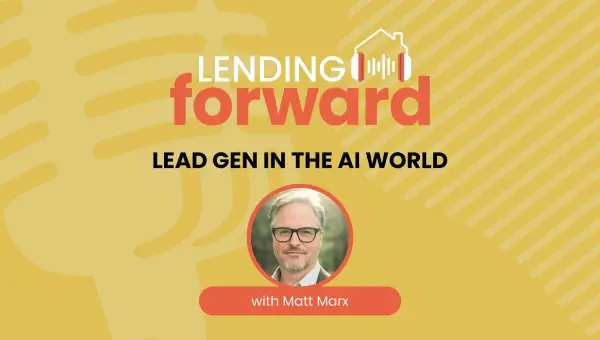
This episode of Side Inc’s Own It podcast dives deep into the game-changing intersection of AI and real estate marketing. Join hosts Hilary Saunders and Spencer Krull as they sit down with Matthew Marx, CEO and co-founder of Evocalize, to explore how artificial intelligence is reshaping the industry landscape.
Real estate marketing with AI is no longer a futuristic concept—it’s here, and it’s transforming how agents and brokers connect with clients. This conversation is a must-listen for anyone in the real estate industry looking to leverage cutting-edge technology to boost their business.
Matthew Marx shares invaluable insights on how Evocalize’s AI-powered platform is democratizing sophisticated marketing techniques, making them accessible to agents and teams of all sizes.
Key takeaways
Here are the key takeaways from this webinar around real estate marketing with AI:
- AI-driven marketing automation is leveling the playing field for small and medium-sized real estate businesses
- Always-on marketing strategies to maintain consistent client engagement
- How AI can help real estate professionals navigate complex regulatory landscapes
- Data-driven decision making in optimizing marketing campaigns across multiple platforms
- Company culture in driving innovation in AI and real estate marketing
Resources
- Connect with Matthew Marx on LinkedIn.
- Learn more about the recent TCPA FCC changes for lead generation.
- Check out more episodes from the Own It Podcast.

Transcript
Matthew Marx
When you’re a small business or medium-sized business, you’re a team, right? You’re a small broker. You don’t have the money and you certainly don’t wanna waste the margin that you spend with hiring these big teams of marketing people to run advertising.
So what we thought was, what if we could apply technology to the problem, make it turnkey, lower the cost barrier and let people run these sophisticated marketing firms without having to hire an agency or become a digital marketing pro.
Hilary Saunders
Welcome to Own It. This week, we’re diving into high-performance marketing with Matthew Marks, the CEO and co-founder of Evocalize, also known as Digital Campaign Builder. I personally love this company because much of our Side community uses it and swears by it.
He’s helping small businesses, especially real estate agents, use AI to run marketing like the big guys without the crazy costs. We’ll talk automation, always-on strategies and why the human touch still matters. Buckle up, it’s gonna be good.
I’m Hilary Saunders, joined today with my fellow swimming co-host, Spencer Kroll.
Spencer Krull
Hello, Hilary.
Hilary Saunders
And you know why I mentioned that? Because I’m so excited. There’s some, I don’t know how to even put it into words, but there is a camaraderie, familial understanding of the craziness of swimmers and our guest, Matthew Marks, CEO, co-founder of Evocalize, also formerly known as Digital Campaign Builder or DCB, is also a swimmer.
So I wanna just take a moment at the top of the podcast and recognize that. Welcome, Matthew. Thank you so much for joining this craziness that we’ve created.
Matthew Marx
Thanks Hilary, appreciate the intro. You know, I think it’s just the latent smell of chlorine on your skin or the slight green in your hair. You know, what is that?
Hilary Saunders
Or maybe that like changed our brain chemistry. Maybe we should look into this. Perhaps chlorine and swimmers, that’s changed our brain chemistry.
Spencer Krull
I mean, still to this day, because I go to the Y and I swim and I also go to another gym where I swim once in a while. And there’s just that thing about when you hit that room and you’re like, oh yeah, like now I’m feeling good. It’s not over chlorinated.
There’s like a weird comfort. It’s probably the way people feel like if they’re from another country and then they smell some dish being cooked somewhere.
Hilary Saunders
I was just in Eugene watching the Olympic trials for track and field. And there’s that competitive edge that immediately when I got home, I was like, I need to go swim. It’s so silly.
Matthew Marx
That’s super cool. Well, it reminds me of the 5:30 AM wake up call throughout high school. And then the beginning of college, it’s like, you know, 5:00 AM hits the alarm bells ring and you’re racing for the pool. So that was, you know, I always think about rubbing the sleep out of my eyes when I get ready to swim.
Hilary Saunders
Yes, I love it. Well, we have a lot of other things in common too. So first of all, thank you for joining us on Own It.
I wanna dive right in. And if you would be so kind to explain to the listenership, what does Evocalize do? What is your why? And then we can go from there because we have so many things to cover.
Matthew Marx
Awesome, love it. So yeah, again, thanks for having me on. Evocalize, we founded Evocalize to solve a problem.
It’s a marketing automation platform or technology specifically geared toward what we call demand generation. And the real estate industry that’s generally leads that we want to turn into transactions, right? That we want to make ourselves commission and want to turn sides, right?
But in general, we serve multiple industries. So what we do is we apply technology, automation and AI, sorry to use the term, that we use automation and AI to take what’s something that’s a very, very complicated, really high performance digital marketing. I mean, we think about digital marketing that the best centralized companies do in the world like in Amazon, right?
We think about what do they do for digital marketing? Well, they work on what channels are we targeting? Are we targeting Google search?
Are we targeting people in Meta, Instagram, Facebook, YouTube, TikTok, where are we going to find people, right? And then what are we doing? What audiences, who are we trying to reach? What bids are we offering? What creative are we using? So there are all these variables for great digital marketing.
And what we’ve tried to do is boil that down, simplify it so that experts centrally, like Side has done with their Digital Campaign Builder, experts can build best practices that basically gear themselves to the right way to do something like market a home or try and get listings, right? But the agent doesn’t have to think about any of that, right? It’s all done for them.
So they can customize it a little bit, connecting their data in market and just focus on results. And so that’s really what we’ve focused on. We started in real estate and then moved into other industries as well, but real estate was our starting point, it was our bread and butter and we love it. So that’s a little bit about what we do.
Spencer Krull
Is AI helping you move into other industries as well because now you have the pattern down, so AI can figure out here’s how you sell a car or here’s how you do a house?
Matthew Marx
Yeah, actually, Spencer, we had so much experience in residential real estate. We actually started out with building an infrastructure for the portals to use to generate their leads that they then bundled up and resold to the real estate industry. So we’d run hundreds of millions of dollars of lead generation and actually down way below in the stack lead generation, as I mentioned earlier, how are we generating return on investment or contribution margin to the portals?
That’s where we started. So we had so much data from real estate, but as you start to move across industries and move to mortgage, we have a number of the top lenders using our technology now and all of their loan officers, right? And now we have restaurants and fitness companies and other folks.
When you start to move, you don’t know the patterns and we haven’t had, it takes so long to test at that level, tens of millions, hundreds of millions of dollars. You have to rely on other things. And one of the things we found that’s a great tool, generative AI is great for automated copywriting, automated image generation, video compilation we’re starting to do.
You can now start to move and take folks’ data in different industries very quickly, whereas before it just took so much time to test and learn before you entered.
Hilary Saunders
Well, and there’s so much information being thrown at us. Say I’m a listing agent, right? And I want not just to potentially get leads for a new client, but I want to feature this gorgeous property out there.
Practically speaking, how do I even start thinking about an ad spend or I’ve got a budget or do I decide what a budget is? Like what is the practical start here? And this is how it kind of trickles through to the end.
Matthew Marx
Yeah, I mean, I think about the first thing that we encourage folks to think about is the objective, right? What are we trying to do? So if the objective, for instance, is leads that turn into quality leads that turn into sales, right?
I want to start with that. So I start with what am I trying to accomplish? And that’s when every program that we set up starts with that.
They’re all single objectives. So you can’t have multiple objectives in the media world. You have one, right?
And then there are supporting objectives that go along with that, but the one objective is generating. So that’s the first thing I think about. And then the second thing I would think about is we really don’t want to be point in time just running one listing here and there.
You can, the system supports it. We actually have folks that have generated leads in the real estate industry that have turned into large transactions where agents have spent like a dollar, literally a dollar running a listing. They’re pretty crazy, actually, stats.
But it’s not really the right way to go about it. The right way to go about it is to think a little bit longer term, right? To think in the term of months.
So there are things you can do, right? So you can run subscription programs so that you’re always in market in all the channels in a light way, right? So you really need to think about doing that because your sphere, sphere is valuable in real estate, but the definition of sphere is interesting, right?
So is sphere just the people that you know, just the people who know you in the neighborhood? Do you want to broaden that? Do you want to grow that?
Do you want to grow your database? We know as you grow your database past 200, 300, 400 folks, we know from the data that all of a sudden you become, your agents on your teams become viable agents and productive members, and they can support themselves right in just by the virtue of nurturing those leads. So how do we get more of them?
Well, the first start is being in market. The second start, the second portion of that is start with some automation. So Hillary, if you have million dollar listings, you may want to spend $100 on that listing versus middle of the country, we can get away with a little bit less.
And so the recommendation varies a little bit, but my biggest encouragement would be set up a marketing program, set up in a DCB and Side’s land, set up an automation so that you’re doing this stuff in a recurring basis. You don’t have to go push the button every time. You’ve set up a automation with AI to be able to do it for you.
And you’ll get much further by always being on, doesn’t have to take a tremendous amount of money. It can be on the order of $100, $200, $250 a month at a start. If you’re a higher producer, we scale up to tens of thousands, hundreds of thousands of dollars a month for folks who are doing a lot.
But that’s a little bit of the kind of meta level guidance I would give in terms of running these marketing programs. But the price of the home generally correlates to the area it’s in, which generally correlates to the media competition, like Mercedes trying to get in front of, BMW trying to get in front of that same consumer online. And so you can think in terms of correlation with home price, with commission and with media prices.
Spencer Krull
I’ve got a question for you. And I’m going to go back to your past for a moment to bring you to the future, right? So I was listening to another podcast that you were on and you were talking about how you study genetics in school and that one of your dreams was to do genetic crops.
Like I think you said broccoli and cactus or something, which actually I know that Hillary and I both enjoy odd vegetables. So I think that’d be a cactally or whatever it would be would be great or a brocticus. But you talk about how you wanted to change the world.
You wanted to save the world. And so here you are doing something where you’re on the cutting edge, right? You’re kind of on the genetic end of AI.
And was that, did you get into this to try to change the game or did you see a gap that was somewhere? I’m always fascinated at how someone decides to do what it is that they do.
Matthew Marx
Yeah, no, it’s really embarrassing factoid for my past. Thank you. I like it.
Spencer Krull
I love that.
Matthew Marx
Yeah, you know, it was idealistic kid out of high school had no idea of the science. I’m like, well, it’d be great. If you plant broccoli all over the African deserts and feed the continent, right? But obviously a little harder to do. So I ended up in technology. But no, I mean, your point holds.
Look, we’re not curing cancer but what we are doing is supporting folks, businesses who have invested their life and depend on the success of their business. And I think it’s the reason we started this business. We’ve just taken our last company, marketing tech company public.
And we started experimenting with, in the media world historically, the way folks have run sophisticated media programs that I described earlier was they would hire a digital media agency and that agency would have some built-in expertise. And then they would hire a lot of people out of college to kind of press buttons all day long and to try and generate marketing demand for you. And that’s fine.
In fact, that’s kind of getting disrupted too but that’s fine at the central level where folks have millions of dollars a month to spend in marketing. But when you’re a small business or medium-sized business, you’re a team, right? You’re a small broker business.
You’re a team, right? You’re a small broker. You don’t have the money and you certainly don’t wanna waste the margin that you spend with hiring these big teams of marketing people to run advertising.
So what we thought was, what if we could apply technology to the problem, make it turnkey, lower the cost barrier and let people run these sophisticated marketing firms without having to hire an agency or become a digital marketing pro, right? Which is not what we want folks to do. We want folks to be meeting out, shaking hands, at open houses.
We want people to be closing business, right? And so that’s really why we do what we do. We feel like it’s, again, an overused term, apologies, but democratizing this great marketing and media.
And if we could do that, we could start to help to move the industry a little bit further beyond kind of, and they have their place, but a little bit beyond the print mailer dependence and the park bench and the bus, you know, bus sign.
Hilary Saunders
There’s also a different generation, right? Wouldn’t you say? Like there is definitely the time and place and customer base for the direct mailers and the newspaper ads if, you know, in the very small towns that still read newspapers, which I live in.
And there is the clientele who is the younger generation who just is on their phones or on computer searching. And so to your point, what is it that you have created or done to protect the user from the bigger regulatory system that’s out there? Because that can be very scary and daunting, I think, from an agent perspective.
Like, I don’t even know, you know, what do I need to be aware of or how am I protected from the FCC or whomever else? That’s a lift.
Matthew Marx
Yeah, it is. And you know, it’s too much to expect for a small business. In fact, so I, and I won’t get too geeky on the subject, but I’d spent a lot of time now talking and trying to educate and bring awareness to this.
You mentioned the FCC, the FCC’s TCPA, our Telephone Consumer Protection Act, changes that are being affected, or actually being enforced, they’re actually technically already in effect, but the changes that are being enforced coming in January of this coming year, I spent a lot of time talking about that because folks aren’t aware of this one-to-one consent requirement that’s coming up with the contextuality of the request and the group who calls and the fact that there’s liability for breaking these rules. And a lot of current lawsuits from the agent themselves, personal liability all the way up the stack to the parent brokerage, right?
People don’t understand that, Hillary. And so I think it’s, so I spent a lot of time talking about that. We can protect folks collectively by coding those rules into the flows of a system like this as we’ve done with DCB, right?
So now you can have the disclaimer form. You’re making sure that the representative broker name is in the consent form, the group providing the service, not one of the agents, just one of the agents providing the sales action associated with it. But the dissent, when you look at this rulemaking body, this working group that was convened by the TCPA, there was one dissenter.
There was a working group that voted last December on these changes to law. There was one dissenter on this commission and the dissenter didn’t dissent because they wanted more spam out there in the world. They dissented because they were worried about its effect on real estate agents and loan officers in the mortgage world.
That’s the reason they said we should hit pause on this thing. And they didn’t hit pause, they passed it. And so this is, you mentioned, I think there are two halves to this.
One is marketing and business success, right? We wanna drive people’s business and we wanna protect them from getting themselves and their parent, their partners and parent companies in trouble from a legal liability perspective.
Hilary Saunders
My brain is having like one of those moments where I’m like, oh my gosh, like light bulb brain blowing up emoji situation. Just because something you said, which is you can take the feedback or the data of what is actually working, whether it be clicks or interactions or whatever, and then use that information to better help your customer the next iteration or the next time to be more successful in what they’re doing or make changes. Just look five years ago in our industry, there was no data coming back.
I mean, we got clicks on Facebook and that was revolutionary. It was like, look how many people interacted with your Facebook thing. But can you break down even farther, Matthew, what each piece or part of the platform does?
Because you’ve got a lot of different pieces of it and they work so cohesively, but maybe there’s a better way to just explain the different parts of it.
Matthew Marx
Yeah, yeah. So we’re effectively a tool that agents teams can log into and have their data already populated for them, all the best practices populated for them for a best-in-class marketing, cross-platform marketing program that like something just like and as effective as a portal could run, but you click a button, you’re asked a couple questions to validate and you hit go and it automatically publishes that marketing in the best way possible across all these channels. As a part of that, Hillary, one of the things that we allow people to do, and this is where the training comes in, you can click a button and auto-copyright based on your data, all of your marketing for it. You can click a button and auto-generate imagery and videos now, right?
And so that then becomes a part of the mix that’s sent out into the ecosystem that consumers look at, buyers and sellers potentially look at, and vote on by clicking on generating leads, so they’re voting. And so what we do is we look at what was all the messaging for everyone that sent out these media messages, marketing messages across all these channels. We look at what did those words say and which of the ones worked best against which characteristics.
And those train the model, so the next time you say generate copy for my listing, the next person in your network, in the Side network, that says generate listings, the system is smarter and it uses the intelligence of the prior campaigns for everyone in the Side network. That’s the other important point. This isn’t just a one-to-one improvement.
This is every person in the Side ecosystem trains the system so it makes everyone better and develops basically a Side moat on top of that, that the marketing through Side has been trained by all these experts running all of their marketing and it’s better than you can get if you go and try to do it on your own somewhere else.
Spencer Krull
And the analysis of what’s succeeding that, is that done by AI as well? So that’s taking the data and analyzing it that way.
Matthew Marx
Yeah, that’s right. So the success metric, what in geeky terms we call the response variable, right? The response variable is, okay, what did someone do that was a positive action to say this is good?
And what did someone to do potentially to say this is a negative action? For us, what we look at, because again, we’re running media, like think about advertisements, you might see an Instagram or TikTok. If someone clicks on the ad, that’s okay.
If someone comments or interacts with it, that’s maybe a little bit better, as long as it’s positive. If someone generates a lead and says, I wanna learn more about this property or about you as an agent, because you seem like you know this area, that’s a stronger signal. So each signal that we get lower and lower down, it’s closer to the transaction, becomes better and better.
The ultimate sign for us is when in some cases we can get really far down. So we can get transaction information, we can get agents to tell us whether the lead turned into money. And then we can do that, we can train the system with, okay, these actions on this ad made this much money or didn’t make this much money.
And that whole chain then over time, in this copywriting example, trains the system next time we’ll feed in, hey, this text that we wrote on this ad was highly successful. So in terms of the entire stack rank of actions, right? And so every action has a value.
And so we would train the model and say, write more like this. And so every time the system is saying, write more like this, write more like this, it naturally devolves and gets smarter over time. And so that’s what I’m trying to talk about if that makes sense.
Spencer Krull
Yeah, and does it also measure one platform against another platform too? Like this is better on this, yeah.
Matthew Marx
Yeah, and it’ll actually look at like relative weightings of platforms too, right? And we use that information and the platforms work together interestingly well. Google search is very low in the funnel, people go and search and then they click and convert.
Some other channels, website advertising, for instance, people are familiar with, you’re like your ad on random websites, very high in the funnel. It’s like a digital billboard floating around. But all of those in meta and TikTok are kind of in the middle.
So all of those things kind of work together to work someone down. You need seven to 15 touches of a customer to get them across the line, to submit a lead, to do a transaction with you. Google has published research for the last 20 years on this.
And so you just need a lot of touches. And so that’s why I talked about always being in market earlier to Hillary’s question. You need to be there for folks.
And that’s how you start to market like a portal does, right? Again, what we do for portals versus what a lot of agents do, which is I’m gonna market this listing and I’m gonna go away and I’m gonna spend 50 bucks and I’m gonna go away. It’s fine to do that if you’re just trying to show your client that you’re marketing their property, but you’re not gonna develop a repeatable grow your business model in that way.
Hilary Saunders
I’m curious if in your experience, you have seen whether a particular platform, digital platform does better than others in either engagement or responsiveness. I’m just curious.
Matthew Marx
Yeah, so again, they generally serve their own purpose, but I’m happy to walk through kind of how they work. We have a, I don’t wanna get too ad geeky. So I’m thinking of like the right abstracted word, but if you think about websites, as I mentioned earlier, we call that in advertising, we call it display advertising, right?
So how do we go out and serve an ad on a website maybe your consumers are looking at in your local area? We can do that, right? That’s very awareness based.
Again, it’s like the digital billboard or the park bench, right? So it’s good to get your people start to say, wow, Hillary is everywhere. And so that’s good, right?
So that Google, we do most of that through called Google Display Network. And that’s just the largest network in the world of websites that you can run advertising. You can do remarketing in that, which means if I tie in my website data, I can follow someone around the web, right?
Which everyone has been followed around the web. If you don’t know the term remarketing, that’s what it means, right? So that’s very high.
It’s kind of awareness. It’s the digital park bench as I think of it. And then in the middle, you have Instagram, old blue Facebook.
Yes, people still use it. You have TikTok, it’s pretty close to the middle. It actually works fairly well in performance, especially for higher dollar properties, luxury properties.
And then you have a YouTube, you have Gmail, you have a number of these, what Google calls Google Demand Generation kind of placements or properties in the middle. And those are all serve both awareness and conversion. So you can get both awareness, you’re going and finding new people, but you’re also getting leads because they have so much data on those platforms that they’re able to target the right customer or predict who’s gonna convert.
And so you’re able to get pretty good performance. And then at the bottom of the funnel, it’s more costly, but you can get Google search, right? And that’s how do we go Google search?
And then there’s a hybrid called Google Performance Max, PMAX at the bottom. And then those two are very performance oriented. So we do a lot of scientific stuff for the agent on that.
So we’re pulling in data from providers like ATTOM Data, neighborhood information. So we’re able to say, develop keyword lists for your local neighborhood automatically for you that have neighborhoods in them and sub neighborhoods and local areas and parks versus schools versus just I’m advertising in Seattle, Washington, right? So those are things that really impact the performance.
And I could go pretty deep in that. I won’t now to save your sanity, but those are kind of how the general platforms work. We’re experimenting with Amazon, which is another kind of middle so far.
It’s right in the middle with Meta and YouTube and the ones I talked about earlier. So we really like these middle layers because you can get cheaper cost per lead. You can kind of get in front of the portals if you do this the right way.
And you can kind of control your own destiny in terms of demand generation at that level the most.
Spencer Krull
I wanna shift gears slightly because you’re building an industry. You’re building your own business. And this is obviously, I know that it’s all AI, right?
But there are a lot of people behind the scenes and what you’re doing, especially as you’re going to different industries. What are you doing to attract the people that you need? There’s a lot of competition for engineers and programmers and whatnot.
Just curious what you’re doing to build a company culture that people wanna come work with you.
Matthew Marx
That’s a great question. So I think first and foremost, we’re, we value transparency. Like if I’m asked about anything about culture and I’m moderating a panel for the NAR here, one of their working groups in a couple months on culture and the company.
And so I was thinking about it last week and starting to prep for it. Transparency, can we carry out a radical transparency, like good or bad? I want to, we want to tell folks everything, right?
And now that can create bounciness, right? So especially with less senior folks who haven’t been through cycles. I mean, I was, I went through the .com cycle and then, you know, I got the gray hair, right?
I went through the .com cycle and then I went through the financial crisis. I had front row seats to both of them. And so I know these cycles happen.
They come and they go and the cycles are roller coasters, but some folks don’t know that. Right. And so I think transparency is probably our biggest pillar in trying to find people.
I think responsibility, flexibility, adaptability, frankly, are some of the greatest strengths of humanity. And so we look for that when we look for folks. And then for us in terms of employees, specifically Spencer, we look for referrals, like referrals are gold for us, like maybe many industries.
But if I can find folks that my team has worked with before, worked with in the past, and we can pull them in 10 times out of 10, right, that is a slam dunk. So I don’t know if that answers your question, but that’s how we think about culture and attracting. I think, you know, we just won Washington’s, we’re headquartered here in Seattle, Zillow building right behind me, actually out the window.
We just won Washington’s best place to work for our size category. So we really pride ourselves on that. And we feel like that attracts people who want to come in the door.
Congratulations. That’s awesome.
Hilary Saunders
I think company culture is one of those things that we speak to a lot about with our guests, because with our our partners at side, they are creating their own companies. And with that comes team culture. And I think you can never stop learning how to have a better culture or a more authentic culture.
And that shows then trickling down to what we were talking about earlier, marketing and really showing the community or your potential clients, why working with me would be different from, say, working with Spencer. It’s not saying better. It’s just different flavor.
Spencer Krull
It’s better. I was going to say, if you’re working on referrals, there’s no way I’m going to that company.
Matthew Marx
You’re Spencer. Come on. We’ll put you in the CEO seat.
I’ll work for you. I was blown away, actually, having been to the side by side conferences last year and speaking, humbled to be speaking at your conference. I was blown away by the culture that you all have.
I the passion that folks had there at the event. And I was I was really in awe of what you guys have built. So so I should I should be asking you questions.
Hilary Saunders
Well, we appreciate that. Thank you. I think it boils down to really being passionate about what we do and being passionate about what you do and how you’re helping, you know, business owners, small, medium and large is very admirable because just the average individual agent out there on the street, it is very daunting on how to grow your business.
And I think that results in the industry numbers of 80 percent of new agents fizzle out because it’s not an inexpensive business to be in. You have to put a lot of your own money into running your business. And what you’ve created is a very effective and financially affordable way to do that.
So congratulations on your success.
Matthew Marx
Thank you. Due to partners like you.
Hilary Saunders
I love it. I want to know, you know, before we close up, I want to know what your big, hairy, audacious goal is for you personally and also for the company.
Matthew Marx
Big, hairy, audacious goal. Well, also known as a BHAG. All right.
I’ll take it. I’ll take a swing at the BHAG. So I think, you know, from a I often come at these things from a geeky angle because I’m an engineer and product guy by training.
Right. So I think it I think if we can, we’re getting closer every day. But I think if through the use of technology and and generative AI is playing a big role in that, but AI in general is I think if we can evolve to an automated agent, an agent, a technology agent, an AI agent that works on behalf of a real estate agent to do their marketing and then comes to them with questions proactively versus the agent having to take the initiative to go in and start something, they kind of kick off the sequence and the agent is operating and they say, hey, do you want to we have this opportunity?
Do you want to spend, you know, $50 and we think you’ll get, you know, a thousand dollars in in commissions from this $50? Like that’s really our aspirational goal. Like we’re we’re marching along the path.
I think it’s doable. I think it’s doable in the short term. But that’s really from a from a like technology and product.
That’s what we’re trying to do. And then from a company perspective, I think that’s that’s needed in every industry. Right.
If you think about we’re talking a lot in real estate now, but we think a lot about how can an agent like an AI agent like that empower a real estate to to work with a loan officer in a RESPA compliant way to market together to then. And so we think about that, just those two industries. And we think about a lot of industries that way.
Right. Like your local restaurant and the movie theater. And like, how do we how do we let people work together as a we’ve called our tool internally a collaborative marketing platform.
And that’s really how what we want it to be is this interactive experience that that ties businesses and people together to market with customers and to customers versus having to go solo, think about what to do, go do it. There’s people are too busy for that. So that’s that’s really what we’re thinking.
And from a company perspective, I’m a little bit old school. I was describing this to a candidate just yesterday who was kind of doing a final interview for I’m old school. I kind of think of the company’s development like buildings around the world with like a localized signs on them, you know, like building a big, longstanding business.
I think so much is virtual now. We’re like half virtual as a company. But but that’s how I think a little bit of the company as we go.
We took our last company public. So that was kind of a fun ring the bell moment for the founders. I wasn’t a founder.
I was on the leadership team. And so that was pretty fun. That might be for fortunate enough to be a milestone along the way.
That’s awesome.
Hilary Saunders
I love it. Well, Matthew, thank you so much for being our guest. We could talk about digital marketing, I think, for another hour.
It’s just so much to learn. So I’d love to save a spot on a future episode and we can chat about how things have changed and what you’ve learned and what people can actually implement further as you guys are growing your tool set, if you would be so kind as to say yes.
Matthew Marx
Wouldn’t love to. And we can talk about more swimming in the episode.
Spencer Krull
If we can get AI to do the laps for me, I’d be even happier. So we’ll.
Hilary Saunders
Well, thank you again. We appreciate you. And if you would be so kind as like and subscribe and follow us at own it, we would love it.
And we’ll see you in another episode coming down the pipe.
Matthew Marx
Thanks, Spencer. Thanks, Hilary. Appreciate you having me on.
And I’m already a subscriber. Love it.
Hilary Saunders
Thank you. Join us next week. We are bringing on a special insider guest, Steve Capezza, president of side for a very deep dive into the future of real estate brokerages.
He has such a unique viewpoint, which is based in years of real estate industry experience, but with a tech focus twist. We’ll talk about how independent locally owned businesses can scale beyond their wildest dreams, the evolving role of tech and what it really takes to build a brand that stands out. Trust me, you do not want to miss this episode.
Show More Show Less