



Summary
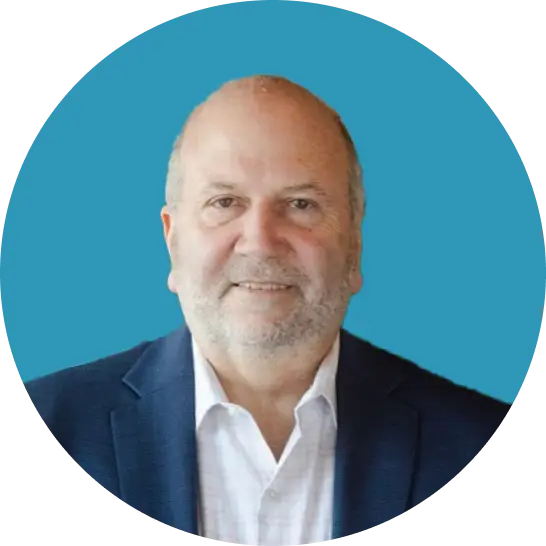
Are you ready to take your local marketing strategy to the next level? In this episode of the Local Marketing Lab, restaurant executive coach and author Monte Silva shares his powerful “create connect collaborate” approach to business growth. With over 25 years of hospitality experience, Monte unveils marketing tactics that have helped countless businesses thrive in the new economy.
Create, connect, collaborate: A pathway to success. Monte Silva emphasizes that the key to business growth lies in this three-step process. By creating valuable content, connecting with your community, and collaborating with strategic partners, businesses can exponentially increase their reach and impact. This “create connect collaborate” strategy has been pivotal in doubling Monte’s own business revenue.
Balancing digital and physical marketing. In today’s digital age, Monte stresses the importance of combining virtual and in-person marketing strategies. He shares innovative guerrilla marketing techniques that can drive significant traffic to local businesses without breaking the bank. From leveraging social media to engaging in community events, Monte provides a blueprint for a well-rounded marketing approach.
Quality before quantity in marketing. One of Monte’s key insights is the importance of ensuring product quality before heavy marketing investment. He cautions against promoting a subpar experience, emphasizing that marketing should only amplify an already excellent product or service. This approach ensures that marketing efforts lead to repeat customers and positive word-of-mouth, rather than wasted resources.
Monte’s “create connect collaborate” philosophy, combined with his practical insights on guerrilla marketing and product quality, makes this episode a must-listen for any business owner looking to elevate their local marketing game. Whether you’re in the restaurant industry or any other local business, these strategies can help you crush the new economy.
Key Takeaways
Here are some topics discussed in the episode around “create connect collaborate”:
- Effective guerrilla marketing techniques for local businesses
- Importance of community engagement in marketing
- Balancing virtual and in-person marketing strategies
- Leverage personal branding to boost business success
- Product quality before heavy marketing investment
Let’s make sure that your product is solid. Let’s make sure the people that you have can execute, grow your business.
MONTE SILVA
Resources
- Connect with Monte Silva on LinkedIn.
- Learn more about Monte Silva’s coaching services.
- Check out Monte’s book “Shift Happens: 7 Proven Strategies to Help Your Restaurant Crush the New Economy“.
- Listen to an episode of the Restaurant Success Club podcast.
Other shout-outs
- Shawn Walchef: Follow for great examples on how to tell your brand’s story.
- Christian Fischer: Helped Monte publish his book. Follow Christian to learn more about how he helps people write their own book!
- Maverick Theory: Consulting talent agency for restaurants.
- Jay Ashton: Canada’s Restaurant Guy, helped Monte launch his podcast.
Transcript
Justin Ulrich
What’s up everyone, and welcome to the Local Marketing Lab, where you get real-world insights from industry pros to help you drive local revenue and local for growth. This podcast is brought to you by Evocalize – digital marketing tools powered by local data that automatically work where and when your locations need it most. Learn more at evocalize.com.
Well, what’s up? And welcome to the Local Marketing Lab. Joining us in the lab today is a guest with over 25 years of hospitality experience. He’s a restaurant executive coach, host of the Restaurant Success Club podcast, and author of Shift Happens: Seven Strategies to Help Your Restaurant Crush the New Economy. Monte Silva, thanks for joining us in the lab, my friend.
Monte Silva
Hey, Justin, great to finally connect with you here. Hey, it was also great to see you in person in Atlanta last…yeah, earlier this month.
Justin Ulrich
It was cool. Yeah, it’s funny, like, you, you meet all these friends and make all these friends online digitally, but when you get to meet folks in real life, it’s like, it’s not only just solidifying the relationship, but it’s a lot of fun. It’s almost like you’re seeing a bunch of celebrities, you know, that you’ve never met in person. So, yeah, it was good meeting you.
Monte Silva
Well, I don’t know about. You’re a celebrity, you know, that’s one of the reasons why I love going to those events, and at conferences and stuff. But it’s really the relationships, and you get to know people through social, you know, through the virtual world. And so that’s a great thing.
It’s just something that, you know, that produces a great kind of developing of the relationship. But until you really meet them in person, there’s just nothing like that. You know, it’s a lot to do with what we’re going to talk about today in marketing. Right. There’s virtual marketing as well as that interpersonal thing, and I don’t think anything really beats that.
Justin Ulrich
Yeah, 100%. 100%. So I guess to start things off, why don’t you tell us just a little bit about your journey and what you’re focusing on kind of more recently.
Monte Silva
Yeah. Thanks. So I grew up in the restaurant business. Started off washing dishes at 15 and worked my way through all of the back of the house positions, all the front of the house hourly positions, and at 27, decided to go move to the Caribbean after seeing the movie Cocktail.
And I ran a bar in the Caribbean for a year and a half and somehow survived that and came back to the states and then decided that I really wanted to make the hospitality industry, you know, my thing in life. And so got into restaurant management, moved to Southern California, opened up some restaurants for Chevys Mexican Restaurant, worked my way through from bar manager to assistant KM to service manager to head kitchen manager, which is kind of the trajectory you have to take to become a GM.
So by the time you’re a GM, you know how to do everything, which is awesome. Had a great mentor there, Tom Bryan, and then followed him to another company. Was a GM for him for a couple years before moving into being a general manager for Wolfgang Puck. And I ran restaurants for him in southern Cal and Las Vegas, and then in 2005, moved to Nashville and really, really honed by craft there.
I did go through burnout working for Wolfgang. I was running two restaurants simultaneously and working eight to four in one restaurant, five to midnight in the other six days a week, and it just kind of took its toll. So I took some time off, worked for him in Vegas at a lower position that allowed me to kind of clear my head, and then reemerged in Nashville and ran restaurants for Fleming Steakhouse. Jeff Ruby Steakhouse.
I was the GM and then the director of Ops for Acme Feed and Seed, which was the 31st highest grossing restaurant in the country, became their director of Ops. Covid hit a little while after that, and Covid happened for me, and it got me into the Florida area. Was the managing partner for a restaurant in Florida while I built up my coaching business, Monte Silva Coaching. So I’m in Tampa now. I have a wife, a son. I coach soccer on Saturdays, and I’m able to work with restaurant groups through the week.
Justin Ulrich
That’s awesome. Yeah, we go to. We have four kiddos, and we get soccer games every Saturday. We’ve got two or three kids playing, depending on the week. But anyways, I appreciate you taking us through that. And then what is, I know that recently you’ve launched this new book of yours, so if you want, you could tell us a little bit about that and kind of the things that you highlight in there.
Monte Silva
Yeah. So I read a lot. I’ve got my library right here, and there’s a lot of great authors, a lot of friends that have written books in the last couple years, and so it’s kind of fun to kind of work with them and pick their brain. And so I have a new book called Shift Happens: Seven Strategies to Help Your Restaurant Crush the New Economy, and what I learned.
So, in that brief description of my career, as I hit burnout and went through a divorce, I really realized that we did a lot of things wrong. I grew up in the industry where, you know, if you didn’t saute that fish right, the chef would throw a pan at you and a lot of yelling and screaming, and I realized that there are at least seven myths I identify, seven false beliefs that really hurt our industry and almost destroyed it.
And Covid kind of came and kind of shook a lot of people and made us reevaluate some of that. Some of the new labor markets with millennials and beyond have helped change the way we look at taking care of our people. And so this book really is. I identify seven false beliefs that almost destroyed us, and then I replace those with seven strategies.
I don’t want to just be the thermometer that tells you that it’s hot or something’s wrong. I want to be the thermostat that’s helping change it. And so using this book allows me to go way broader than just my coaching clients to be able to help the industry really get back on track.
Justin Ulrich
Very cool. Within those strategies, do you talk or how much do you touch on marketing?
Monte Silva
A little bit. There’s one false belief that marketing is expensive. Most of what I talk about is the false belief of you have to underpay your people to be profitable, that restaurants are bad investments, that you have to work 70 hours a week to be successful. A bunch of those things. But marketing is one of them.
Where marketing used to be very expensive in the old model, you know, we used to have to pay for a radio ad or a tv ad or a billboard or, you know, a bus bench or something. And, you know, we had to hope and pray that somebody would come in, that a food critic would come in and critique our restaurant and give it a really high score.
And it’s really shifted to, you know, kind of went through kind of guerrilla marketing, and I talk about that in my book. Some of the things that I did at Chevys and some of the other restaurants, to really minimize the overhead of marketing and really gain a massive impact and get a really great ROI. And then I move to what people are doing now.
Justin Ulrich
Yeah, it is interesting. Right now, we live in a time where we’ve never had the capability to do as much marketing, as much reach on your own as we do today. Whether you’re focusing on organic social media, building out content, highlighting folks in your neighborhoods or in your communities, co-marketing, or collaborating on different content with other folks within your community.
But also, there’s the paid side of things, too, where it’s relatively easy to, if you know who you’re going after, you know, you segment your audiences, you know who you’re targeting, relatively easy to get ads served up in front of them at the right time in their journey, whether they’re searching for something on Google or whatever it might be. We have the capability now that we’ve never had before in the past.
Monte Silva
Yeah, for sure. It’s interesting because with that, there’s way more chatter, obviously, and white noise and so learning how to navigate through all of the chatter. It used to be, hey, if I just get on a TV show or a commercial or something, then I’m good, right? Because people are watching.
But now with just the constant bombardment, you know, we all have things that we do, and a lot of it’s really great, but there’s a lot of noise out there that you, you know, Gary Vee talks about this. You gotta post ten times a day if you want anyone to really see who you are because of, just because of the amount of being pulled in multiple directions.
Justin Ulrich
Well, and they say, you know, if you have followers, like, only 1.5% of your network sees any given post that you push out there. So if you think about it, like, man, I’ve got a banger post, I want to get in front of everybody, and potentially only 1.5% of your followers are going to see it.
So, you know, and the algorithms are shifting to be more towards, you know, they’ll pick up the content that’s more engaging and similar to other content pieces that are out there that perform really well. But still, even if 1.5% of folks are seeing what you post, that means that your posts, you could actually post the same thing multiple times, maybe every other week or something like that.
Or the idea of, you know, exhausting your audience really doesn’t apply in this instance, because you could post ten times a day, like Gary Vee says, and not only are you getting in front of more folks, odds are folks who aren’t really following you aren’t going to see more than one. And if they are following you, they are for a reason. So they won’t mind seeing more than one post.
But you also have the ability to accelerate your learnings the more that you post. So you can see what types of content actually resonate with your audience, what works, what doesn’t, and do more of what works.
Monte Silva
Yeah, I think that it’s really easy to have this attitude, and I think that a lot of people that market, you know, younger people that are marketing restaurants, they think, oh, you can’t bombard people. It’s one post a day. Right? But the reality is that I probably have, on my social media, I probably have 20 to 50 people that engage regularly with me and, like everything I write.
And so they’re seeing, they’re probably seeing too much of me. Right. But they’re also there to support. There’s people in the industry that are supporting what we do and want to be part of that and are okay if it pops up on their feed regularly. Whereas, you know, I have 31,000 followers, 31,400 and something followers on LinkedIn.
And I guarantee you if 50 or 60 of them are, like, watching everything that I do, that that’s, that many other people that are out there that aren’t going to see that if you’re not posting regular. And so I think you just have to kind of put that idea in mind that if someone’s seeing your post ten times a day, then they probably are really rooting for you and supporting you. And so, you know, don’t get caught up in your strategies based on your 10 to 15 loyal people.
Justin Ulrich
And it brings up a good point, too. Like, those who are following you, they follow you for a reason, because they like you. They like your brand. And so this is like for the listeners out there, if you work for a brand, it doesn’t matter what industry you’re in, you know, try different types of content. So not fully branded content that seems like a commercial.
You know, if you follow Shawn Walchef, he always says be the show, not the commercial. So if you’re able to highlight different stories, you know, within your brand to get people to see, you know, maybe a peek behind the scenes or get them the ability to learn a little bit more about your brand’s personality or the stories of the folks that work at your different locations. Right.
This type of content really resonates with folks and it will bring them in even deeper to your brand in terms of get them to becoming brand advocates and then they want to share your content eventually, which is something, again, that we’ve never had the ability for folks to share content in the past.
This concept of virality, very new, in its infancy, so being able to take advantage of that is massive for the brand. And in order to do that, you’re not going to get there, I should say, by creating just brand focused commercial style content.
Monte Silva
Yeah. You know, and I think it’s important from my journey, and I’m much older than you are, but after the, you know, after that initial thing of, you know, radio buys and stuff like that, we got into more guerrilla marketing. And there’s a couple things that I did that were super helpful that I’d like to share to the audience. But the thing is, there has to still be some kind of a combination of virtual versus in-person to really be successful.
Some of the things that we did before the virtual social media just expansion is that we really got involved with our community. We joined the chamber of commerce. We didn’t just, we weren’t just aligned on the chamber of commerce as a business. We actually attended the mixers and networking opportunities and got to know people.
And so then when they would come into my restaurant, they would already know me. They would see a familiar face. They would feel welcome. There was already a relationship established, and I think that’s important to do.
And then looking for ways to drive specific traffic. When I worked at Chevys, we were in a parking lot of a major mall, and Robinson’s May, which is a very big, it’s like a Macy’s or, you know, something like that, and Neiman Marcus kind of a thing. They would do these one, these full page ads in the LA Times every time they were doing a 24 hours sale.
And so I went to the general manager of the rest of the store and I said, hey, what are you doing to make your events festive? And he’s like, well, what are you talking about? And I said, well, wouldn’t it be fun if it was like a party and people were coming in and they were taking their time shopping? They weren’t rushing because it was a fun experience for them.
And he said, well, what do you have in mind? And I said, I’d like to set up a little table, give away free chips and salsa and balloons to the kids and really just, you know, make it more fun. So, yeah, by, you know, doing that, where we’re providing a fun, festive environment, then it makes it great for them. It slows down the shopping experience.
And what it does for us is we would give the chips and salsa to our guests, and then they would walk around, and then when they would be done shopping, they’d be like, wow, this chips and salsa are really good. I’m addicted. Let’s go to the restaurant, and then we would give balloons away to the kids, and the kids would walk through the rest of the mall with the balloon, and you’re a dad, you know, every kid sees that balloon. It’s like, oh, I want a balloon.
And they don’t know that Robinson’s May has free balloons. So everybody at the mall goes over there. And we increased our revenue about 25% to 30% every time we did one of those on a Saturday. And it cost me chips and salsa and balloons. So that’s one way of kind of being involved with the local community and really driving people to your restaurant.
Another time, I worked a deal in Nashville with a BMW dealership where we gave them gift cards at half price for them to give $100 gift card to everybody that purchased a BMW the month of December. And then it drove traffic to, we shared valet with a high end Italian restaurant, and we were flipping from kind of a hipster restaurant to a high end restaurant, but we hadn’t really gotten attraction yet.
So when BMW started pulling up and coming into our restaurant instead of next door, their friends are like, hey, where are you going? Oh, we’re going to check out this restaurant. And so there’s a way to drive kind of that guerrilla market and traffic that really works well.
And I think that should still be part of every restaurant strategy, along with, you know, joining the chamber and being engaged and going to networking events and maybe doing fundraisers for the community and being engaged with, you know, the local charities and stuff like that. And I think that if you can do that and then also work on the virtual stuff, you really make a much bigger impact when it comes to marketing.
Justin Ulrich
Yeah, 100%. Are there any brands out there that you think do local marketing really well? That it could be within restaurant? It could be outside a restaurant?
Monte Silva
Yeah. I mean, Shawn, right? We talk about Shawn Walchef all the time. Yeah, guy’s everywhere.
Justin Ulrich
He gets it. What I like about. Sorry, just to touch on Shawn real quick, what I like about his approach is with his story. If you haven’t heard it, if you’re listening. He basically realized that, like, he thought if he were to get on the news or do some of these traditional marketing things, that he’d all of a sudden get all this traffic.
And after a while, he realized that people aren’t. No one’s telling his story. People aren’t coming to his restaurant like he thought, and he needed to develop a way to tell his own story to get the word out there to drive traffic on his own.
So from a local marketing standpoint, he thought outside of the box, developed a media company, and got his name out there, leveraging his own, his own ability to create media and content and stuff like that. But yeah, he’s got tons of traffic now, and he’s starting to grow to multiple locations. So it’s a really cool story.
Monte Silva
Yeah, that brings up another point, right? There’s brand marketing is very different than location marketing. I’m working with one of my clients, Secret Sandwich Society. They have the brand, and then they have licensed locations. And the licensed locations want traction coming into the restaurant, right? They want to see that people are engaging and coming in and spending money.
The brand wants that, but they also want to make the brand so recognizable that when they do go to a new location, then there’s automatic, you know, traction. You don’t have to start over and build that up.
And so if you think about McDonald’s, you know, everyone knows what the golden arches are. It doesn’t mean that every time you see golden arches, you’re going to pull in, but maybe two days later, three days later, you’re thinking about a burger, and in the back of your head you remember the golden arches, you know, and if you like McDonald’s more than I do, then you might go, you know.
So I think that’s important is understanding what is brand marketing or what is traffic marketing, right. To get brand awareness versus driving people into the restaurant is super important. I think that that’s something that Shawn did with Cali BBQ Media as his brand and Cali BBQ locations, you know, and he’s got this really good balance about doing both of those.
I learned, in 2010, I think it was. I learned that, you know, I’m a brand, you’re a brand, right. We watched people like fixer upper with the, you know, Chip and Joanna Gaines. We watched my buddy Robert Irvine with Restaurant Impossible and those other shows, even Duck Dynasty, some crazy duck dudes that make duck calls are out there making it happen.
And so I had the opportunity, a restaurant that I was rebranding from a hipster pizza kind of place serving PBRs to a very upscale restaurant where we were overnighting fish from Honolulu. We were a great craft cocktail program, got a great wine list. We were providing top notch service and hospitality, and I had to rebrand that.
And so we wanted to do a Chardonnay and a cabernet that was a restaurant branded wine. And so I picked that out. But because we were still in kind of the transition of transitioning to this upscale restaurant that was going to be known for wine, the distributor said, look, you got to buy a pallet of each, and that’s a lot of money, and we don’t want to get stuck with it. So we, like, we want your name on there.
And I said, well, this is. It’s not about me. This is about the restaurant. But they weren’t going to do it just for the restaurant because I had the brand identity when it came to wine. And so in really large print, it says boundary private selection Chardonnay. And then in very small print in the front, it says, hand selected by Monte Silva.
And then on the back, because the wines I ended up picking came from where I grew up in California. The winemaker created a little story. You know, we talk about stories about how I grew up in Santa Rosa and Sonoma county, and this wine was very stylistic of the wines from where I grew up and where I lived. And I was excited about bringing them to my new friends in Nashville. And so it was a really cool marketing thing.
But I realized, hey, I’m a brand, too. Right? And so I think it’s important if you’re a restaurant owner or, you know, have your own business, that you figure out how you can leverage your own personal brand as well as the brand that, you know, that’s part of your business.
Justin Ulrich
Yeah, I hundred percent agree with that. I would say the most important thing you can market is yourself. So whether you’re, you know, trying to just network or establish new opportunities for yourself or even market your own business, right. When you go around and you meet people within your community, you stop into different establishments within maybe a five mile radius of where your store, your restaurant’s at.
You introduce yourself, you get to know them on a personal level, and people like to do business with people. So if they like you, that’s part of their engagement with your personal brand. If they like you, they’ll want to do business with you. So, yeah, the most important thing you could market is yourself, 100%.
I guess with that, Monte, I just gears a little bit. You’re very well known within the restaurant community. Like you said, you’ve got thousands of followers just on LinkedIn alone. But what I think others don’t have a chance to see is your off-work side, which you said that you coach your five year old son’s soccer team, is that right?
Monte Silva
Yeah. Yeah, I do a lot of coaching clients, restaurant clients, and my son.
Justin Ulrich
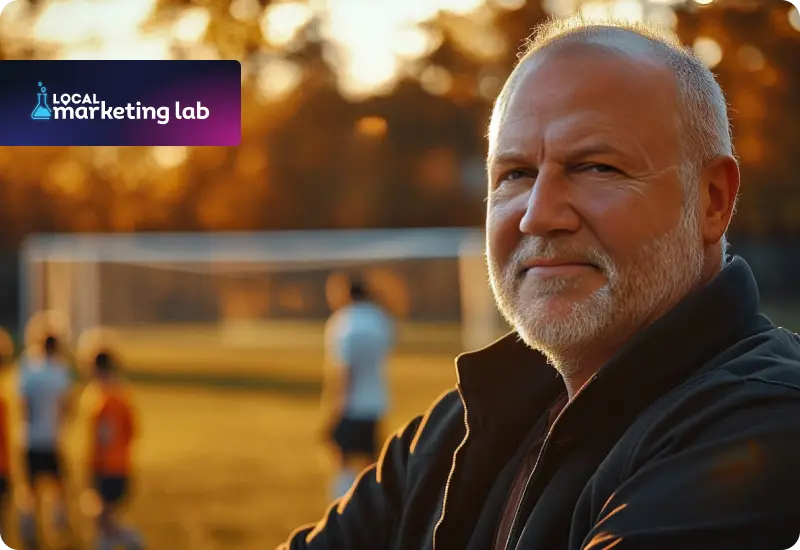
Yeah. Well, I thought it might be fun to drop you into AI and see if I can crank out a shot at you coaching a game. But it looks kinda, it looks, it looks kind of similar.
Monte Silva
Yeah.
Justin Ulrich
Are you like, have you seen the movie Kicking and Screaming with Will Ferrell?
Monte Silva
Oh, if it’s Will, I’ll go see it.
Justin Ulrich
It’s Will Ferrell. And it’s an older one, Will Ferrell. And Mike Ditka is his neighbor or his dad’s neighbor, but there’s like a rivalry between him and his dad as soccer coaches. And Ditka gets involved. It’s pretty funny. An old one that I think people forget about.
Monte Silva
That’s funny. You know, one of the things that we were talking about prior to this call is, you know, when, when listeners are struggling to drive growth at the local level, you know, what’s that I do to encourage them. And I think that we make the mistake that, and some of this, you know, we don’t have to be perfect.
When I started doing videos to promote Monte Silva Coaching, you know, I sucked, just like all of us did when we started. Right. But when it comes to your restaurant, right. If you’re, if you are marketing something, you’re making a promise to the people that are watching. And I think it’s really important in the restaurant space that you don’t market until, you know, you can deliver on the promises that you’re making in that in that marketing.
And so I think that what happens a lot is we aren’t really that good of a restaurant and we promote it and we just tell the rest of the world we suck. Right. It’s better to really focus on building that perfect box or as close as you can get to that, because it’s never going to be perfect.
And then, and then going out and getting traffic. Because once you drive, yeah. Once you drive marketing, you know, dollars into your restaurant, a lot of times it’s one shot. And if it’s not a good experience, you just wasted that money.
Justin Ulrich
You lose them.
Monte Silva
It’s important to remember that. That’s why, you know, I talk about marketing, and I work with my clients on marketing, but the majority of the work I do with my coaching clients is let’s make sure that your product is solid. Let’s make sure that the people that you have can execute, grow your business.
Let’s make sure that the processes that we’re using can grow your business and provide success and a great experience for your employees as well as your guests. And then let’s work on what are you purchasing. What’s the guest purchasing? Let’s figure out how to raise your revenue and then we’ll control profits. But everybody tries to go cut and control their profits first. And that’s just the backward way of doing it.
Justin Ulrich
I wholeheartedly agree with what you’re saying. We talk about it quite a bit in the show, actually, where you have to make sure the experience within your four walls is dialed before you start throwing marketing dollars and energy towards it.
Because if not, you’re only driving them to a poor experience, which is going to amplify the negative reviews. And really you’re throwing good money after bad. You got to fix the leaky bucket, otherwise you’re just going to lose those marketing dollars and make it even harder for yourself to crawl out of the hole.
Monte Silva
It’s just like, you know, when you hire somebody, it’s a lot more expensive if they quit and you have to rehire somebody else. Right. And so why would you want to start all over and gain a new marketing, you know, avatar guest, if you can get this repetition going. You know, some of my greatest experiences have been when I’ve created a community of followers who go wherever I go and I don’t have to recreate that.
And so when I focused on me being a brand, if I did leave a restaurant and go to another one, my whole crew went with me. Right? My employees, my guests that followed me. And it’s the same thing.
I was writing a blog on LinkedIn way before I started Monte Silva Coaching, but I was able to transition and take those followers with me as I left Nashville and moved out of restaurant operations and into coaching and helping people.
Justin Ulrich
Yeah, that’s very good. One thing that did learn from you about a year ago with the digital hospitality rooms that Shawn Walshef and Troy Hooper host a couple times every week, every Wednesday and Friday. If you’re curious and want to join, it’s an awesome room. But Monte got on stage and was talking about his approach to giving.
And basically, Monte, you had said, you know, I’m going to, for the next six months or for the last six months, when you’re telling a story, you didn’t try to push your own business, you didn’t try to sell yourself at all. All you did was try to promote others, amplify their message, their stories, and give of your time and energy to help them become successful.
And you were able to within the following six months, and I could be off a little bit, but you were able to double your revenue in your business just by not focusing on your business. So sometimes, if you’re trying to drive more traffic, more engagement within your community, highlight others, share theirs, you know, create a positive feeling of working with you as a human being and get them to amplify your story.
And naturally, that’s just how things work. I’ve seen it also work for me as well. On the business to business side of things.
Monte Silva
Yeah, for sure. I started off kind of my strategy for building my coaching company was to create and connect. So I was creating content, putting it out there, and then I was, then I was going to shows, you know, conferences or doing Zoom calls or whatever, and connecting with people, connecting with people online. And that was a good model for quite a while.
But really where the growth came in is when I added collaboration to that and so create, connect, collaborate. So as I created and connected with people, I developed deeper relationships with them. And then what really happened was my business really exploded when I started collaborating. So here’s a couple cases.
Shift Happens. Christian Fisher has a publishing company that helps authors in the, or people in the food and beverage space become authors and write their book and put it out there. And so his team helped me put that together. I became friends with chef Robert Irvine. He wrote the foreword of the book.
And during that process of working on this, I found out more about his foundation, that he helps the military, giving back to the military. And he was on my podcast, Restaurant Success Club. And through that process, I decided that we would give a dollar to the Robert Irvine foundation for every book sold. And so that’s a partnership, right? I’m a partner with Christian, with the publishing company, and Robert with his foundation.
I’m working with Maverick Theory, which is a consulting talent agency that is unbelievable. They can do everything from designing your interior of your restaurant, helping you pick a location, organizing everything, building out your menu, building out your beverage program, hiring and training your team from paper to execution. And so I’m one of the fortunate consultants that they work with to help them with their clients. And, you know, and just being able to partner with people like that is fantastic.
Jay Ashton from Canada. Canada’s Restaurant Guy. He produces my podcast, Restaurant Success Club. So I’ve been able to strategically find people that I want to work with, that I love working with. And it’s a lot more fun when you show up and you get to enjoy the people you work with.
And that’s what I love about my coaching business. Instead of just consulting, if I was just consulting, I would do a project and I would leave and I would never really get to know these people. But in a coaching scenario, it’s a minimum 90 days. And so I have an opportunity to develop, you know, closeness with them and gain their trust. And it’s really been remarkable to see what kind of relationships that have come out of that.
Justin Ulrich
Yeah, for sure. So as we wrap things up, you know, how can folks follow you on social and how do they get their hands on that book?
Monte Silva
Well, the book you can get on Amazon.com there. You know, it’s funny, I thought I was creative. I came up with the name Shift Happens, right? And as soon as it went up, I realized there are seven books called Shift Happens. So if you’re watching this, make sure you get a black, white, and red one that says Seven Proven Strategies Help Your Restaurant Crush the New Economy. Monte A. Silva, don’t buy the wrong one.
I also have a, it’s kind of a journal that goes with it that you can also purchase that says stories don’t buy that. If you want to read the book, that’s just a journal for you to kind of help journal your journey as you kind of try some of these things out. But it’s available in hardback, softback. It’s available in Amazon Audible and Kindle. I’m coming out in some other languages and stuff. It’s going to be really, really cool. But you can get that there.
My podcast, Restaurant Success Club is on Amazon at Audible, Spotify, Apple podcasts. If you want to find out more about me, you can go to www.montesilvacoaching.com and you can follow me on LinkedIn where I have a newsletter every week that I post. And I also am on YouTube. Restaurant Success with Monte Silva. Got some shorts and some longer form videos to help you on your journey.
Justin Ulrich
Awesome. Now, great content. If you’re not yet following, Monte, I highly recommend it. Great nuggets coming across your feed, so I definitely support subscribe to it. Monte, it was a ton of fun having you in the lab. I appreciate you gracing me and our guests with your presence. Thanks again for joining us, all those who are listening. Monte, have an awesome day.
Monte Silva
You too. Thanks for having me on and we’ll have you on the show soon as well. Let’s get you on Restaurant Success Club.
Justin Ulrich
Let’s do it.
Monte Silva
All right, thanks.
Justin Ulrich
As always, thanks for joining us in the Local Marketing Lab. This podcast was sponsored by Evocalize. To learn more about how Evocalize can help you grow your business, visit evocalize.com.
If you learned something from today’s episode, don’t forget to subscribe on your favorite podcast platform and follow us on LinkedIn and Facebook @Evocalize. That’s Evocalize and on X at Evocalize.
And remember, keep innovating and testing new things. You’ll never know what connects with your customers best unless you try. Until next time. Thanks for listening.
Show More Show Less