



Summary
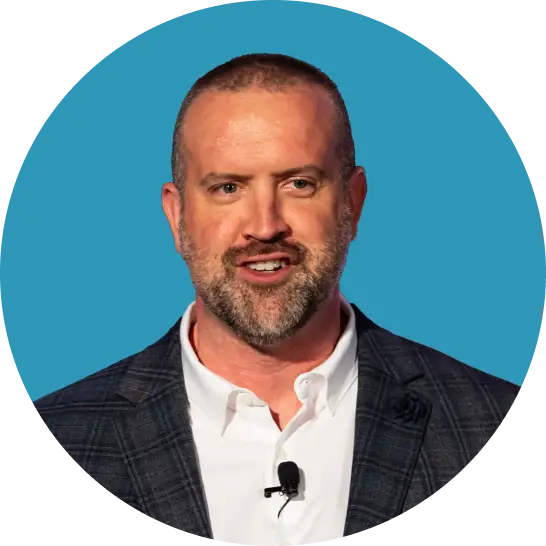
Are you looking to build trust with potential customers in today’s digital world? In this episode of the Local Marketing Lab, Phil Treadwell, founder of M1 Academy and host of the Mortgage Marketing Expert Podcast, reveals why traditional selling tactics fall short and how to start connecting authentically with your audience. His unique perspective combines insights from both the mortgage industry and his success as a craft brewery founder.
Marketing is about attention, not promotion. Phil challenges the common misconception that marketing equals selling. He explains why getting attention and building trust should come before any sales pitch. Learn how to start connecting with your audience by sharing stories and finding common ground, rather than pushing your products or services.
The power of social proof in the digital age. Today’s consumers research everything online before making decisions. Your digital presence matters more than ever! Leverage social proof to build credibility.
Three steps to marketing success. Stop overthinking your marketing strategy. Phil provides a clear three-step approach: engage with others’ content, share consistently, and expand your network strategically. These fundamental actions create meaningful business relationships that drive growth.
This episode delivers actionable strategies to transform your marketing approach. Learn how to build genuine connections that convert to sales, create content that captures attention, and implement a sustainable marketing system that grows your business organically.
Key Takeaways
Here are some topics discussed in the episode around how to start connecting:
- Fundamental difference between marketing and sales
- Build trust through storytelling and personal branding
- Evolution of social media algorithms and what it means for businesses
- Strategies for engaging with other businesses’ content
- Why personal branding matters more in high-trust industries
The higher the requirement of trust, the greater the need for a personal brand.
PHIL TREADWELL
Resources
- Connect with Phil Treadwell on LinkedIn.
- Learn more about M1 Academy.
- Listen to an episode of the Mortgage Marketing Expert.
Other shout-outs
- Bentonville Brewing Company – Brewery started by Phil in Arkansas
Transcript
Justin Ulrich
What’s up everyone, and welcome to the Local Marketing Lab, where you get real-world insights from industry pros to help you drive local revenue and local for growth. This podcast is brought to you by Evocalize – digital marketing tools powered by local data that automatically work where and when your locations need it most. Learn more at evocalize.com.
Well, what’s up and welcome to the Local Marketing Lab. Joining us in the lab today is a guest with nearly 25 years of experience in the mortgage industry, working with brands like Wells Fargo, Mason McDuffie, Thrive, and many others. He plays guitar, is a lifelong Arkansas Razorbacks fan, and the host of the Mortgage Marketing Expert Podcast, founder of M1 Academy and Bentonville Brewing Company. Phil Treadwell, thanks for joining us in the lab, my friend.
Phil Treadwell
That’s a cool intro. Thank you so much for having me. I’m excited to be here.
Justin Ulrich
Of course, of course. Yeah. I love your background because we serve multiple industries. So initially when I thought of bringing you on, I was like, oh, this would be great. You could talk to LOs in the mortgage space and maybe some insights for maybe the real estate space. But we also target restaurants.
So it’s really cool that you have insights around restaurant marketing your own business, as well as with all the coaching and stuff that you do in the mortgage space for LOs. So super excited to be here.
Phil Treadwell
Well, I didn’t provide you a bio there, so you must have done a deep dive on my LinkedIn or something. Years ago, you talked about working for Wells Fargo. In 2006 to 2008, I owned a little mortgage company, a little broker shop. And if you remember that time period, that wasn’t the greatest time to own a financial company with kind of financial Armageddon looming, if you will.
And Wells Fargo was kind of doing recruit by acquisition. They were by far the largest the largest mortgage company in the country at the time. I think one of every three loans went through one of their divisions. And so I ended up selling my company to them, which is a fancy way of saying they wrote a big enough check for me to close my doors and take my company to go work for them.
And they ended up moving me about a year later to Denver, Colorado from Northwest Arkansas. And I stayed there about a year before I moved back. And coming back from kind of craft beer Mecca to the county that I was in in Arkansas was a dry county.
You could only drink it like private clubs, which is essentially you signed a book when you went into restaurants, chain restaurants, whatever. And I knew it was going wet. And I really wanted to kind of contribute to that craft beer culture and so founded a craft beer brewery and took on some partners.
And then when I moved to the Texas area, sold to my partners, and they’ve continued to run with it and made it one of the largest breweries in the state. It’s it was a really cool endeavor. It’s something that I’ve always I have a tendency as an entrepreneur to monetize my hobbies.
And as I craft beer and started homebrewing, and so it is a different animal in terms of from what I’ve done for, you know, 21-22 years, which is mortgage and real estate. But it’s also very much the same. It’s about the community.
It’s about that community within an industry understanding how to get people’s attention, how to articulate your value offer, and really the benefits of why they want to work with you in your business.
Justin Ulrich
Yeah, that’s that’s a cool story. Yeah, we did. I’m in a town called Denver, North Carolina, but I lived in Denver, Colorado for 16 years. And like you said, that’s a huge part of the culture up there. It’s so fun that you’re able to bring that with you to Arkansas.
And so I was looking on the website. It’s like, it’s fantastic. The marketing idea, the branding, like everything tells a story. A lot of folks when they think of marketing for themselves, they kind of forget the storytelling aspect.
And if you think about how learn and how people connect with one another, it’s like if you think about a time when you’re sitting with a friend at a dinner table, or you go out to eat or whatever. It’s like, how do you communicate? You tell stories, you know, this happened to me the other day, or this happened.
And that’s how we like forge bonds with one another as human beings. And so the storytelling piece often gets missed in marketing, because people think they just want to sell a business or product.
Phil Treadwell
It does. And what I teach in terms of marketing for really any type of business, you have to understand what marketing is, because marketing and sales are different, and they tend to get lumped together. And I simplify it as marketing is simply getting someone’s attention.
And there’s a hard stop. See, sales comes later when you’ve built rapport, when you’ve created a relationship, then you have an opportunity to offer them something, a solution to a problem. And at that point, there’s a call to action that turns it into sales.
But marketing is simply getting people’s attention. Now effective marketing where you’re getting results is taking that attention and balancing it with trust. And I found there’s two easy ways to create trust.
One of those is to find things in common with people. Now the way you do that from a marketing perspective, is to your point is to share stories to share things about yourself, to share things beyond just your business, so that there’s something that people can gravitate towards. And we naturally have a connection or an element of trust with people that are like us, that we have things in common with.
And the second way to create trust is to add value or give them something of value without asking anything in return. So as soon as you have a call to action, it turns into sales. But if we’re simply trying to get someone’s attention, providing them a solution, providing them a resource, something that’s informative or something that’s entertaining, that’s a value to someone.
You know, when we’re sitting in the DMV or a doctor’s office waiting room, and we open our phone and start scrolling social media, we’re not hoping that someone gives us a vocabulary lesson, or that someone shows us how much great results or sales they had on their business. What they want to see is something informative, entertaining. If you solve the problem of taking them out of that environment, giving them something of value, they’ll pay you with their time, their attention, their engagement.
And I think that that’s where it gets muddy. And to your point, stories are the best way to do it. I spend a lot of time on helping people create a personal brand or digitizing their reputation or putting who they are online.
But when someone wants to market an actual business or a company, we have to remember that a potential client, a potential customer cannot have a relationship with a company. You can have relationships with people.
So the best way for companies to market and to get people’s attention and try to create relationship is to tell stories about their clients, to tell stories about their team, and to share things that are relevant and relatable to people.
Justin Ulrich
Yeah, those stories, like you said, they build trust. They have what we call social proof in the marketing world. You get that through testimonials or case studies, stuff like that.
Another way you can build trust though with the folks that you’re marketing to is highlight their stories. Share what they’re doing in the community. Because so many people out there have, I mean, everyone has their own story.
And how many people actually have the means by which to tell it, have an audience to tell that story? Maybe think about the value that you could bring to someone, especially if they have a business, like if it’s a local business or whatever it may be, and you’re telling their story. Now you’re giving them free marketing.
And it kind of puts them in a position almost where not only you’ve built trust with them, but they almost feel like they owe you something and they want to do something to help drive business in your direction.
Phil Treadwell
That’s exactly right. And when you’re showcasing someone else’s story, I think that’s a value to them because it helps build their brand. And so it kind of, again, falls in those two categories of offering that value to someone.
But I also think that one of the ways that there’s, when you talk about this social proof, right, case studies and testimonials and things like that, or that reputation management, reputation building. But I also think social proof is, you know, I tell the story every time I speak, and I spoke to a large group of real estate mortgage professionals yesterday.
And one of the things that we forget is 10 or 15 years ago, if I say you need to use Bob or Sue for, you know, whatever the service, again, my business and mortgage and real estate, you need to use them, they say they can get it done, they can, they’re gonna provide a strategy for you, they’re gonna walk you through the steps.
10, 15 years ago, they just went and use Bob or Sally. Today, when someone makes that same referral, the first thing someone does is they go online. They go to look at what? Yeah, what are they looking for? On social media, right? And for if you Google a person, most of those first results are social media profiles.
And so I tell people, if there’s nothing for them to see, they question the referral, they question the validity of that. And that social proof is important. People need to see who you are, what you do, hear your voice, your cadence.
And there’s a ton of reasons that I could go into it and studies and whatever else, but for brevity purposes, that’s extremely important. It can’t be overlooked in this conversation.
Justin Ulrich
Yeah. And when they like, if I’m a consumer of anything, if someone makes a recommendation, I do exactly that I go look them up online. But one of the things that I’m looking for are the reviews because that’s more social proof.
It tells of other people’s experiences and it helps them share their story of, of how they’ve worked with, you know, XYZ or they’ve tried XYZ company or lender or agent, whatever it might be.
And, you know, if you think about like from a Google perspective, the importance of that stuff is so high that whenever you Google someone and look at a location, it’s like, what are the things that they give you? They give you the price, they give you the reviews, the number of reviews, their rating score, like all these things, because they know that these are things that people look into in order to make a decision.
Phil Treadwell
That’s exactly right. And we, as consumers, as we just live our lives outside of business, when someone refers us a product or a service provider or a restaurant or a movie, the first thing that we do is go look it up online. And when we get into business, we forget that our potential clients, our potential customers are doing the same thing.
They’re looking us up online. And that social proof, that reputation management is extremely important. I have people that will reach out for, you know, in-person speaking events or potential coaching.
And one of the things they say is, hey, I kind of did a deep dive online. Well, I’ve done better than most over the last, you know, five, six, seven, eight years of creating content and putting things out there for people to see. So when they Google me or they go on social media, there’s something that is potentially relatable.
And not to go off on too much of a tangent, but for the average person or average business owner, salesperson, marketer, whatever, you have to start somewhere. I had an event recently where a guy came up to me afterwards and said, Hey, I’ve put out some videos. One of them only got less than a hundred views. And I think I’m going to delete it. Is that what I should do?
And I was like, absolutely not. Because when you go to this social proof example, we’re talking about if someone refers you and they go look at your profile, you don’t know that what you said in that video wasn’t exactly what someone needed to hear or exactly what was going to make the decision to do that.
So it’s about abundance of attention and staying top of mind with people more so than creating a perfect piece of content that’s going to go viral. Now we need to get the reps in. We need to continue to improve our process and improve how we’re doing it so that we can potentially reach more people.
But this isn’t, if you think about the evolution of social media from, you know, the MySpace, Friendster, Facebook days, and even in the early Twitter days, it was about who you follow and who follows you. That was the only content you were seeing, where then as we’ve evolved into Instagram, Snapchat, and now the TikTokification of social media, it’s now not based upon who you follow and who follows you.
It’s based upon what you like and the interest that you follow. And these algorithms want to keep you on the platform. So they’re going to show things that they think you want to see and are relevant.
And for the first time ever, it is about the content and the creative that is the variable for success. And so we have to remember, if you’re wanting to reach a potential client, the three-step marketing formula that I walked through with people, very simple. The first is very clearly identifying who’s your target market, who is your audience that you’re trying to reach.
The second is what value do you provide? What are the problems that you can potentially solve for them? And then third is where’s the most effective place?
What’s the right medium to provide that value and that solution to that audience? And so from a social media perspective, if you’ve clearly defined that avatar, this audience that you’re trying to reach, and you realize where they’re at in life, what their interests are, and you make content that’s valuable to them, that’s interesting to them, that’s potentially helping them, you can then say, where do they spend their time? Is that in person?
Is that on social media? What’s the right social media platform? And it doesn’t have to be about if they follow you, because you can put out content for this potential group of people, and now the algorithms will show them that content, one, if it’s good, and two, if it’s relevant to them.
Justin Ulrich
100%. Yeah, it is interesting. Like you said, this is like the first time ever where content kind of leads, as opposed to your network and your connections leading to get exposure.
I’ve heard multiple case studies of folks who have started a social media channel, like a YouTube channel or whatever, and their first video goes viral. And the reason why that happens is because they have their finger on the pulse of what’s resonating with folks that they want to go after. And you can find like content, you can find content that is going viral, and you create something similar.
That’s why you see a lot of folks doing kind of the same type of content. And the algorithms will actually serve that up to the audiences because they know they’ve positively engaged with the 20 other pieces that are very similar.
Phil Treadwell
Yes, I couldn’t agree more. And I try to break it down for people to make them understand, how do these free social media platforms make money? Because they’re free for people to use.
So how do they make money? They make money by showing ads. So their objective is to keep people on the platforms longer, so they can show them more ads and make more money.
So if you create content that people want to see, they’re going to set you up to more people to keep them on the platform. They’re going to reward you because you’re helping their overall business objective.
And people are like, well, I don’t know what’s interesting. The best content creators are the best content consumers. When you’re scrolling, what makes you pause? What makes you stop? What videos do you watch? What things do you read? Well, if you like those things, go create those things and other people will too.
Marketing for at least for my industry, when it comes to mortgage and real estate, is much less about showing people what you do, as it is about them who you are. And I kind of alluded to a study in Nashville, Tennessee. There’s a couple of Rory and AJ Vaden, who have the brand builders group.
And they’ve helped build brands for people like Ed Milett, Lewis Howes, School of Greatness podcast, the author John Gordon. And they commissioned a study of PhDs that went out and really studied marketing and branding and this attention with consumers.
And one of the things they found, it was just a small piece of the study, they found that about two thirds of people wanted to see more of a personal brand from their doctor, their lawyer, their employer, and their financial advisor.
And so what I tell folks is number one, when you think about going to those types of people, there’s an element of anxiety, right? You’re exposed, like you’re not sure. And so they want to see more of a personal brand from that person, because they want to feel more comfortable using that service or going, you know, talking to them or whatever.
And so the takeaway from it was the higher the requirement of trust, the greater the need for a personal brand. And so I tell people, if you’re putting out content, and you’re sharing things, and you’re marketing yourself in a way that’s going to help you make connections to find things in common to entertain or inform them, they’ll go to your profile.
They’ll look at what you do and say, okay, they’re in this industry, they’re in mortgage and real estate, or this is the type of business they have. And they may be curious on their own, as opposed to us trying to shove down their throat what we do, which again, doesn’t fall into those categories of creating trust.
They probably don’t have that in common. And we’re not giving them value, we’re just promoting our business. So social media needs to be about being social, and not an advertising platform.
That’s where I think it’s not that you can’t put that content out, but that can’t be the only type of content that you put out.
Justin Ulrich
Yeah, 100%. And it’s equally as important to not only create your own content, put it out there, but also engage with other people’s content.
Because if you don’t think about it as just like, don’t be a me monster and just want to put out your own stuff. And that’s all you do on social, like go to different businesses, engage with them, share, repost what they’re doing, retell their stories, amplify what they do. You know, it’s incredible.
I’ve seen personally like, and so for everyone listening, I work for a tech company called Evocalize. We target different industries and we go into different industries. If we’re able to engage with a lot of other folks who I know are well-known and who have big audiences that we want to tap into, that’s the fastest way for us to get our name out there.
And it’s the same way if you’re a local business, just engage with others locally who have, you know, a following and you’ll start getting more and more followers and people coming in your direction.
Phil Treadwell
Yes. Again, this is stuff that I love talking about and very passionate about and talk about often. If you want to do more deals, if you want to make more sales, then you need more potential leads, more prospects.
The way you create leads and prospects is through conversations with people. And in my opinion, one of the easiest ways for you to have more conversations with people is to engage in other people’s content. If people would take time and comment on other people’s posts, reply to their stories, which go to those DMs, those are ways that you can not only stay top of mind and create attention, but it’s going to lead to conversations.
And as we said, that leads to leads, potential prospects, and then sales and closed deals. And if someone just sat for a certain period of time a day and in a non-salesy, non-spammy way engage socially in social media, commenting and posting, their business is going to grow. And they’re like, but I don’t understand that.
It seems like a waste of time. Well, first of all, people put content out to get people to engage with it, to get comments and likes. So if you comment on someone’s post and they don’t know who you are, the first thing that they’re going to, or don’t know you very well, the first thing they’re going to do is go look at your profile.
And they’re like, well, how do you know that? Well, if someone comments on your post and you don’t know them very well, or don’t know them at all, what’s the first thing that you do? And that’s marketing because now you’re getting their attention.
Justin Ulrich
Yeah. It’s a hook. You don’t, they don’t realize they’re getting hooked in, but they’re getting hooked in.
I’ve got a, um, a good friend named Monte Silva. He’s a restaurant coach. And he said for six months, he wanted to just stop promoting his business and just promote others, amplify their stories, you know, share what they’re doing, engage with them.
And he doubled his business in six months by not marketing his own business, because he was engaging with other folks. Now, the other piece is if you do have, let’s say you’re taking that route and you’re developing your own content and you find content that, oh man, these pieces really take off. Then you can take money and throw that behind it.
And you’re going to get even more traffic, more leads, more conversations, more exposure. Yeah.
Phil Treadwell
Yeah. These are very simple tactics that anyone can apply to their business, telling stories, showcasing other people, engaging with other people’s content and sharing content yourself that is relevant to the audience you’re trying to reach.
Justin Ulrich
Yeah. A hundred percent, a hundred percent. If you could give a suggestion for somebody to do one thing, cause I know a lot of times this is really overwhelming for folks that don’t know where to start.
They think, Oh, I’ve got to create a huge plan. And many times I just say, just start, start something. Where would you suggest they start to start getting some traction on their local marketing?
Phil Treadwell
Yeah, that’s a great question. The first thing that I would do it’s the starting point is really three pieces because you’ve got to do some outbound lead generation activity or conversation starters. And I think that’s as simple as what we just said, go engage with other people, go comment and like, and reply and all those types of things to start conversations.
Secondly, you’ve got to start posting something. It doesn’t have to be complicated. If you don’t know what to post, find pieces of content that other people have created that you like and share that you can get attention and get engagement by simply being a content curator, by curating other pieces of content to share.
But you also have to at some point start talking about things either on video or in written form in a post. Written form, written posts do really well as much as even videos do, because it shows you the first couple of lines. When someone clicks more, the algorithm gives you the same type of credit as if they watched a few seconds of the video, you’re still keeping people on the platform. So the first is you’ve got to engage reply, comment, like things like that.
You’ve got to start posting content for people to see whether you’re curating that from other places, or it’s, you know, posting things yourself that you find interesting or about you, your hobbies, sports teams, things you like, whatever. And the third is around networking and creating a bigger sphere of influence. And that’s simply by friending and connecting and following people.
In addition to the engagement, people are going to connect back, they’re going to accept those friend requests or connection requests or follow you back. And I think those are the three things to get started. And as you’re doing that, if you’re paying attention to what’s happening, you learn very quickly, you can’t get results from work you didn’t do, you can’t get better at something you’re not doing.
And so to your point, you just have to start find a platform that is most likely to have the audience you’re looking for and one that you’re okay or halfway enjoy or really enjoy being on and start there. That’s what’s most important is that you start and you stay consistent and persistent.
Justin Ulrich
Yeah, consistency is key. I think a lot of times too, when people just start, they don’t see the results right away. Like the example you gave earlier, where someone only got 100 likes, 100 likes could be really good for your first video or 100 views, whatever it might be.
Phil Treadwell
We have the wrong metrics. No one gets paid for likes and comments and views. If you went to a network, let’s just say you went to meetup, or you went to a chamber of commerce meeting, or if you went to an actual networking event, let’s say you get 10 business cards or 15 business cards, contacts. Well, probably 90% of them you got because they wanted your contact to sell you something that you probably didn’t want.
But you put something on social media and 100 people saw it. We need to reframe what these metrics are and how that’s important because realistically, we all know as people, 10 to 15 other people really well. But each one of those people know 10 to 15 people really well and each one of those people.
It’s basic circle marketing. If we’ll apply that to what we do in social media, then the entire metric changes. You don’t need a huge audience. You just need a group of people that are really engaging with your message in a way that they want to share it and they want to tell other people too.
Justin Ulrich
100%. You mentioned earlier getting people some insight behind who you are and what sports you like. As I understand, I mentioned earlier that you’re a Razorbacks fan. Why the affinity to the Razorbacks?
Phil Treadwell
I grew up in Southwest Missouri, not too far from the University of Arkansas in Fayetteville. I grew up in the old Big 12 country, Mizzou and Oklahoma and Kansas. It was shoved down my throat.
But I was always an Arkansas Razorback fan. I grew up playing basketball and baseball and was just a big Razorback fan. It was also the closest D1 school to where I lived.
I went to University of Arkansas in Fayetteville to school. I was 18 years in Missouri, 18 years in Arkansas. Then outside of a year in Denver, I’ve been in the Dallas, Texas area for the last, I don’t know, six, seven, eight years.
It’s been tough to be a Razorback fan for the last 30 plus years, I can say that. Whenever I tell my story, whenever I’m speaking, one of the first times I was doing cold calls to realtors as a mortgage professional, a lady stopped me and said, hey, is that your black Jeep out there? I had a black Jeep Grand Cherokee that smoked, it burnt oil.
I was afraid. Okay, I’ve parked in someone’s spot or it’s on fire. This was the first time I’d ever really had a conversation with a realtor in a week, two weeks as I’m walking around doing this. I said, yeah. She said, with the Razorback on the back of it? I was like, yeah.
Well, the funny thing is I was in Missouri at the time. When I speak at audiences and be living in Texas, I tell that story a lot. I get a lot of crickets. Not a lot of people are there to support me. Yeah, go hogs. It’s one of those things that I tell people, when you’re posting on social media or talking to people, those are the easiest ways to connect with folks.
If someone has a college team that is red, I may be walking around in a store or a gas station, but hey, that’s the wrong color red. They kind of look at me, I’m like, I’m a Razorback fan. They’re like, oh, well now I’ve connected with someone about something that they like too, which is college sports.
I share that with people because number one, it’s low hanging fruit for people to take jabs at me. Two, it’s a great conversation starter. Like I said, it is even in this conversation.
Justin Ulrich
Yeah, that’s an extremely good point. It’s super easy to break the ice around sports. I am not a sports fan, personally. I like UFC and some other things. I grew up in Buffalo during the era of Jim Kelly. When I was at elementary school, I saw all my friends just shattered year after year after year.
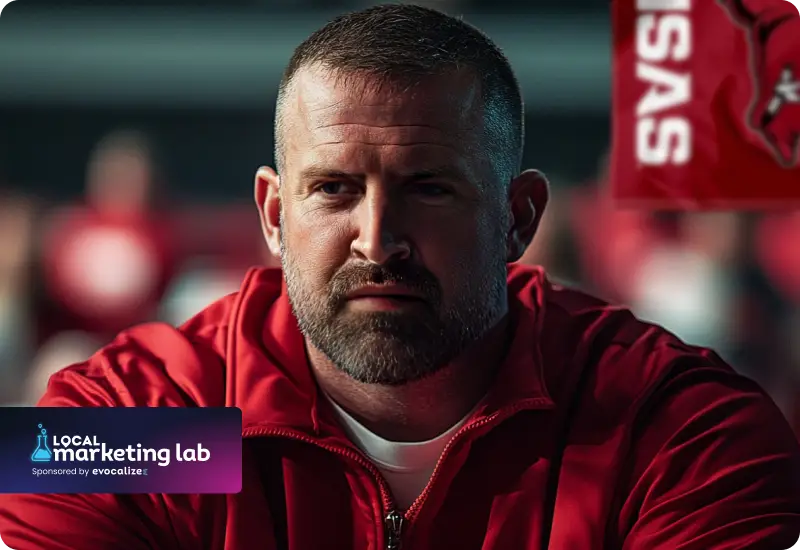
I’m like, I don’t want to be one of them. Those are four times Super Bowls in a row for sure. It’s interesting though, you said that Arkansas has had a hard 30 years. I was wondering, what would it be like if they actually had a coach like you? They’re leading their teams.
Phil Treadwell
That is a phenomenal AI image. I love that. It’s funny. I love that. I’m going to have to take a picture of that myself. It’s interesting that you say that because we’ve had some incredible coaches.
In the state of Arkansas, there’s not any professional teams or really other big D1 schools. Most of the state are diehard fans. I think that it’s just been one of those things where the stars haven’t aligned.
We’re in a really, really tough conference and have been in the SEC and the former SEC West. It’s a lot of fun. It’s a great culture. It’s something that people really connect to the same way they do pro sports and hobbies. I just parlay that into, hey, here’s how we connect with people. Here’s how we market.
I would love to participate with the Razorbacks on some level. Predominantly, what I do is a mindset coach. I think mindset’s the most important thing. It’s not the only thing that’s going to make you successful, but as I said, it’s the most important because our mindset controls our attitude and our actions. Those are the only things we can control. What we do and how we respond to things.
80% of what I coach on, what I teach on, I speak on is tactical, but you’ve got to filter through that mindset foundation. As you said with the Razorbacks, I think that they do a lot of things right. I think they have a lot of great personnel and coaches. They’ve got the right community and audience and fans, but there’s a mindset shift that probably needs to happen in a few places for sure.
Justin Ulrich
Got you. Got you. It makes total sense. I love that you say your mindset because your mindset leads, like you said, to action. And also, I always encourage folks to assume positive intent. I think a lot of times people, they default to negative if something happens and the way that they deal with the situation or whatever, but if you assume positive intent, it’s so much easier to communicate with folks positively and to move forward together productively.
But moving forward with this pod, we’re just about to wrap it up, so I’d love to give you a chance to let folks know how to follow you on social or how do they get in touch with you?
Phil Treadwell
Yeah, I appreciate that opportunity. I appreciate being here. It’s been a fun conversation. I’m pretty easy to find on all the socials. It’s just @philtreadwell and my website’s philtreadwell.com. There’s plenty of places. I answer my own DMs, so if you shoot me a message or connect with me, I’m the one that you’ll be talking to. Same way on my website. You can reach out.
My passion is around helping professionals, not just in mortgage and real estate, but sales and marketing entrepreneurs, achieve the level of performance that they’re capable of. That’s our mission in 1 Academy, to help people execute and perform at the level they’re capable of. A lot of that’s mindset, a lot of that’s tactics, a lot of that’s habits.
We’ve got group coaching programs, one-on-one coaching programs, workshops, a whole member portal with resources and training. This definitely isn’t a sales pitch because I tell folks there’s a lot of great coaches out there. There’s a lot of great resources out there.
The purpose of a coach in any industry isn’t to teach you something that you can’t figure out on your own. These gurus are like, oh, I’ve got this secret or this thing that without me, you’re not going to be able to do. That’s a lie.
There’s nothing that I’m going to help someone with or teach them that they couldn’t eventually learn or figure out on their own. Coaching is to speed up that growth curve, to identify blind spots, and hold people accountable to what they want to be held accountable to. We’ve created a platform that I think is really, really great for that.
At the end of the day, business can be tough at times. Sometimes just being a part of a community of like-minded individuals and having that support and that drive and motivation to stay focused and be held accountable is what people need to take them to the next level.
Justin Ulrich
100%. Steel sharpens steel. Awesome. Well, hey, for those who are listening, thanks so much for your time today. We value every single one of our listeners. Continue to listen. Our channel is growing pretty rapidly, so it’s been pretty cool to see. Phil, thank you so much for joining us in the lab, my friend. It’s been a ton of fun.
Phil Treadwell
I appreciate you having me.
Justin Ulrich
As always, thanks for joining us in the Local Marketing Lab. This podcast was sponsored by Evocalize. To learn more about how Evocalize can help you grow your business, visit evocalize.com.
If you learned something from today’s episode, don’t forget to subscribe on your favorite podcast platform and follow us on LinkedIn and Facebook @Evocalize. That’s Evocalize and on X at Evocalize.
And remember, keep innovating and testing new things. You’ll never know what connects with your customers best unless you try. Until next time. Thanks for listening.
Show More Show Less