



Summary
In this episode of the Local Marketing Lab, we explore the powerful connection between effective training, exceptional hospitality, and repeat customers with Jason Berkowitz, a hospitality veteran and founder of Arrow Up Training. With over two decades of experience spanning more than 50 restaurant openings, Jason shares invaluable insights on how businesses can boost repeat customers with training and create memorable guest experiences. His unique blend of psychology-backed management techniques and creative problem-solving offers a fresh perspective on cultivating customer loyalty in the hospitality industry and beyond.
Implementing consistent training programs. Jason emphasizes that the key to attracting repeat customers with training lies in establishing clear expectations and consistent training programs. By investing in comprehensive training, businesses can improve employee retention and enhance the overall guest experience, leading to increased customer satisfaction and loyalty.
Prioritizing order accuracy and service basics. One of the most critical factors in securing repeat customers with training is ensuring order accuracy, especially in takeout and delivery services. Jason stresses the importance of getting the basics right, suggesting that mastering these fundamental aspects of service is crucial for building trust and encouraging customers to return.
Building personal relationships through hospitality. Jason highlights the transformative power of genuine hospitality in creating repeat customers. By training staff to remember names, preferences, and create a welcoming atmosphere, businesses can forge strong personal connections with guests. This personalized approach not only enhances the customer experience but also significantly increases the likelihood of repeat visits, demonstrating how businesses can effectively boost repeat customers with training and a focus on hospitality.
This episode offers a wealth of practical strategies for businesses looking to enhance their customer retention through improved training and hospitality practices. Whether you’re in the restaurant industry or any service-oriented field, Jason’s insights provide a roadmap for transforming first-time visitors into loyal, repeat customers.
Key Takeaways
Here are some topics discussed in the episode around boosting repeat customers with training & hospitality:
- The difference between service and hospitality
- Strategies for implementing effective training programs
- Tips for improving order accuracy in takeout and delivery
- Methods to enhance employee retention and satisfaction
- Building strong relationships with guests
Hospitality is how you feel, how you feel at the job, how you make other other people feel.
JASON BERKOWITZ
Resources
- Connect with Jason Berkowitz on LinkedIn.
- Learn more about Arrow Up Training.
Other shout-outs
- Follow Shawn Walchef and Troy Hooper on LinkedIn for tips on digital hospitality.
- Check out Tocaya Organica, modern Mexican food with locations in Arizona and California.
- Ronan for excellent marketing, training, and hospitality.
Transcript
Justin Ulrich
What’s up everyone, and welcome to the Local Marketing Lab, where you get real-world insights from industry pros to help you drive local revenue and local for growth. This podcast is brought to you by Evocalize – digital marketing tools powered by local data that automatically work where and when your locations need it most. Learn more at evocalize.com.
Well, what’s up? And welcome to the Local Marketing Lab. Joining us in the lab today is a guest with more than 20 years in the hospitality space. He’s a musician, a writer, an entrepreneur, and maitre D to the stars. He’s the founder up of Arrow Up Training, Jason Berkowitz. Thanks for joining us in the lab, my friend.
Jason Berkowitz
It’s great to be here. And it’s funny that you say maitre D to the stars because working and running restaurants in Los Angeles like I did for many years, my cell phone is full of numbers of stars, which probably have all changed, but something that I understood very quickly and didn’t need to get burned by and tell other people is, yes, they love you when you can get them in table.
And the second that you are no longer in charge of their status or experience at a restaurant, they’re not picking up your calls. So don’t even try. Yes, Adam Levine, of course we love motorcycles together and we’re going to go riding and, oh, you know what? Next week, you’re right, Adam. Next week’s going to work. I stopped asking after I was no longer running the books.
Justin Ulrich
It’s so funny. We do it, you know, we do a call together called, you know, digital hospitality group, and we have Shawn Walchef and Troy Hooper and a bunch of other folks in there. And you host that group as well. And you shared so many stories. I think it’s just so hilarious about engaging with stars. Like you mentioned Adam Levine or like Denzel Washington or whoever else. It’s wonderful.
Jason Berkowitz
Remember that Denzel won, right? When somebody asked, poor manager had to ask Denzel to take his hat off. And Denzel went right into training day mode of just ripping him. And then he was like, I’m just messing with you. And I’m like, I don’t know how you come back from that, man, you should get therapy just for being in that scene that you thought was real.
Justin Ulrich
I would not want training day mode, that’s for sure.
Jason Berkowitz
Oh, my God, training day Denzel.
Justin Ulrich
Well, you kind of hinted at your background, so why don’t we start off by just telling our listeners, you know, a little bit about your background and how you got to doing what you’re doing now with Arrow Up and maybe what Arrow Up is all about.
Jason Berkowitz
Yeah, I mean, you know, like any shining story, it began as a 14 year old working at Burger King because my mom had a retail shop across the street. And after eating there enough times, I was like, I just gotta work there, man. The vibe is right. Burger King is it. And after pounding on the door multiple, multiple times in Cleveland, Ohio, in the eighties, so I guess you can get away with a lot more.
You know, they finally, she, like, wrote a handwritten note, which is like, it’s cool. He can work here. Go. You know, so those things happen. And then worked my way through, got a degree in psychology, which I think is key for the fact that it navigated my path all the way up to, and as you said, a little bit of music, a little bit of this, all the stuff that sort of rounds out the ability to build a vibe in a restaurant.
And that, to me, is one of the most important things you can do as a leader, is curate the vibe that attract both the team and the guests. And in many cases, they’re similar. And so that led me to really taking over my first general manager job with Adam Levine on speed dial and Dakota Johnson, if you’re listening, your number’s not the same, but I haven’t tried. I’m just sure it’s not. And, you know, but, yeah, we’ll get that drink.
And from that point, had a real love of training, and as I worked my way through, and we’ll kind of get into that. As I worked my way through different companies and elevated in my career, I really elevated in operations and started, like, I came as a director of service to a mommy burger. I knocked out the director of operations because if they don’t believe in training from the level of operations, you’re not going to get it achieved.
And so I realized I had to literally grow to the COO, which was my last position at Tocaya Organica. Fast growing concept, the Madeira group, fast growing concept, they just opened in Houston. I took over as chief operating officer just so I could get my ideas across as a glorified trainer. And then eventually I left and launched this, as I’m sure we’ll dive into.
So I think everybody wants to know two things. What’s my job and how am I doing? Training is what’s my job and how am I doing is feedback. And so I’m hyper obsessed with that, and I’ve always been hyper obsessed with that, internally speaking, and I think that’s a key to my success as an operator and to work with such successful brands as we grew..
Justin Ulrich
That’s actually a pretty interesting concept. How often do you see folks come in and just not – I guess management may just assume they know what to do and they don’t really know what their full role actually is or what’s expected. And if you don’t know that, then you can’t improve.
Jason Berkowitz
It’s exactly it. And they’ll get frustrated. Whether or not you’re a single mom and pop shop all the way up to multi-units. You just expect, how come you don’t know that this is the way to do that? Well, yeah, I mean, you know, first off, restaurants are America’s number one first job. It’s where you learn a lot of things, and a lot of this stuff isn’t, you know, isn’t as obvious as it seems once you’ve been in the arena for a while.
And then there’s just, you know, I talk about what I loved about openings and training is two things. First is, I love a kitchen. A chef once told me, you never get a second chance to teach your team how you want your kitchen cleaned. So do it right the first day, and some people like it differently.
Second is, I love treating restaurants like an art installation. Well, if it’s an art installation, then we’re players. We’re characters in this. And that’s your opportunity to say, hey, this is what we want from you. This is the experience we’re looking to deliver. A lot of times, you get people frustrated. How come the cappuccino has more foam? Cause you didn’t explain it to them.
And so and that’s a real cause of turnover in everything, is because in anything. Take your relationship, in life. Take your kids just wanting to know what they want from you. Well, it’s about you communicating it, what the expectation is, and then giving them feedback, whether it be positive reinforcement or critical corrections. These are transferable skills.
So I love the restaurant industry because you can shape people and help them understand how important it is to communicate your expectation. So then you know what showing up looks like.
Justin Ulrich
Yeah. And they take that with them throughout the rest of their career, because, as we know, most folks don’t stay in restaurant, you know? But they’re able to take that transferable skill, like you mentioned. Yeah, very, very interesting. And, too, thinking about, like, pre-Covid, it seems like there was a lot more, like, hospitality to things, and it feels like we’re getting back there.
But right after Covid, like, it seemed like it was a rough go. Obviously, everyone’s going through a tough spot, but the hospitality piece wasn’t quite there, and you just don’t get, at least for a while, you didn’t get the same service that you did before Covid and so some of these folks that are – that’s their first job.
They haven’t had maybe too many experiences. They’ve lost a couple years not experiencing what good hospitality is while they were formulating their opinions, and then they go into it as their first role, and they’re not giving the service that, you know, was required, really years ago.
Jason Berkowitz
Yeah. And, you know, it’s interesting the way you’re using hospitality. I mean, I come from the philosophy services, the details. Hospitality is how you feel. Some people say it’s equally as important. I actually come from the school of thought that you can remember my name and say hi to me, but if there’s not a fork there when the salad arrives and I got to wave somebody down and look around, then it just kind of kicks in, this raw disruption.
So I’m a big fan of get the basics of service done, and you’re right, a lot of that wasn’t there. A lot of people were understaffed, so they forgot about the power of training and investing. And a lot of our clients just didn’t have the time to invest in their teams because they were just literally trying to, you know, keep the lights on and the, you know, the place from burning up.
And now let’s talk about hospitality. Hospitality is how you feel, how you feel at the job, how you make other other people feel. And during the pandemic, there was a lot of disruption and trauma. We got hired. So one of the things my company, Arrow Up, does is we make custom content for companies.
And during the pandemic, we got hired by the city of Santa Monica to create what was deescalation training, to basically teach these 19 year olds who were working the front registers or the doors who were just getting screamed at by people who didn’t want to wear a mask or didn’t agree with the California policies. And they were just getting destroyed, these young associates.
So there was zero hospitality that they were feeling. And I think hospitality is a multi-way street. And they came to us and said, you got to teach them how to deescalate these situations. And what we did was we went and we built this course, but we went and interviewed everybody, the kids, the associates, people who agreed with the protocols, people who disagreed with the protocols.
And what we realized was that we were actually building a course on empathy. So we no longer called the course deescalation. It was about empathy. And the empathy was teaching the associate to have an empathetic conversation with the customer, even the angry customer. And how does that begin? It begins with trying to identify with how they feel or caring about why they feel a particular way.
And we would teach them tricks like, and it starts with tricks like, first you have to agree. Yeah, you’re right. This is frustrating. And you soften the experience well along the way, hopefully, you’re actually finding a bit of connection between them. And so that was a very interesting thing that happened with COVID with hospitality, where it got lost, where we’ve been finding it.
I think there’s still a lot of trauma that people are carrying around from it. It’s getting better, but people are coming in and dropping their baggage on other people, and that’s not good hospitality, which makes for a difficult environment. And what do you do? Let’s go back to the basics of the details of service. And that’s why I say I think it’s good to separate it a little bit. Can you get the order right, things like that?
Justin Ulrich
Yeah, for sure. And all those things, those touch points all kind of come together as their experience while they’re there. So we talk a lot in this show about acquisition, marketing, and driving folks to the restaurant or to any location, any type of business that you have.
But if you’re creating, if you don’t have the guest experience nailed down, you spend a lot of money on acquisition, and you’re not retaining your guests. If they never come back, you’re throwing good money after bad. So what are some maybe insights you might have around some pretty significant needle movers when it comes to creating a solid guest experience?
Jason Berkowitz
First, and I agree, and first off is, do you have a training program even in paper, right? We’re a digital training company, and I’m the first one to say, get it down on pen and paper. And if you’re listening and you don’t, reach out. I’ve got some you can use literally in paper.
And so it starts off first by, again, have you established the expectation so that there is consistency? Because you need the consistency both from what the employee expects and from what the guest expects. And there’s a fantastic study, and we continually learn that employees that have understanding and there’s rules and there’s regulations and there’s a way to do something, and it is trained and managed, they stick around longer. They stay. You attract those employees.
So first and foremost, put a training program in place. If you don’t have one, get it started. How do I get it started? You know what? Go ask a lead in every position to write down what their daily tasks are. Go ask the prep cook what their opening chores are. Go ask the expo to write down what they look for in the menu. Grab everybody and do it. Make this a team effort. It doesn’t need to be complicated.
Throw that all into – then grab somebody on your team, and while it’s slow, pull the computer out and say, who wants to be the one in charge of this? You’re going to find somebody that’ll grab and be like, oh, I’d love to do it. Let them own it, and they’ll start to put it into a shared Google Doc for everybody. You can start so simply that way, and you get it down. That becomes the consistency that’s important.
Second is to all of those owners. I grew up in a small business, and the two most important words for any small business owner, I was taught, was cash flow. Without cash flow, and if you don’t understand it, you’re missing your balance sheet. So that’s vital, I think, especially as we have a lot of takeaway going on in delivery, not denouncing the importance of cash flow, but to me, the most important two words are order accuracy.
And so what are you doing to make sure you have order accuracy? And, you know, in one of my last jobs, because it was something new, what we did was we would have somebody literally stand there and they would take every order out of the bag and put the order back in the bag and mark off on the sheet what was in there and then sign it thank you and initial their name so that it was double checked and we had accountability there.
So I don’t think that’s always something to do. But when there was a problem, I decided spending the hourly wage was far more important than the upset customers who weren’t coming back.
Justin Ulrich
Yeah. And it’s creating frustration. Like, when they’re gone, they can’t. Like, normally, if you’re in the location, you can go quickly, raise your hand or go up and grab a ketchup or whatever, but if you’re at home and it’s already taken a half hour to get your meal, it’s like, what the heck? You know, what are you gonna do now? And it creates a lot of, I think, aggravation a lot more quickly than if they’re in-house and you can take care of them right then and there.
Jason Berkowitz
Yeah. And it’s just measure twice, cut once, stitching time stays nine. There’s a reason a lot of these sayings get passed down from previous generations and we shouldn’t have to relearn them. So and what the theme is, and I think we’re talking about is, you know, marketing can get them in the store. It’s the experience that gets them back.
And I’m a huge supporter of figure out how to get those guests to return. The acquisition cost is so much greater if you’re always rotating guests. So how do you get them to come back?
And that brings me back to another point that I jumped off of, is the employees know what expected of them. They hang around, they establish better experiences. Well, you can tell that, or you see that restaurants that have higher return rates of employees, longevity, have better community engagement, have better sales.
And I think it’s about now, the other one. We’ve talked about consistency. We’ve talked about, right through training, attracting a good team. We’ve talked about order accuracy. Now comes to my favorite – build relationships with those walking in the door.
I love all that’s happening in the evolution of tech. Not so the manager can sit in the back on TikTok, but so that they can get out in front and double check and talk to people. I love playing games with my cashiers that says, whoever today remembered the most names and said, hi, with somebody’s name of a returning guest, you keep track. It’s the honor system. Whoever most, gets a meal on me, gets a prize, gets entered into raffle.
You know, I gamify it and have been forever, this engagement, so that people remembered people’s names, remembered people’s orders, we’re out on the other side of it. It’s just, it’s old school marketing. So invest in keeping your team, and then teach them how to be hospitality ambassadors.
Justin Ulrich
100%. Yeah. The brand is just the sum of all the different touch points and the perception that’s derived from a guest, you know, by engaging with those touch points, lots of the brand, like, lots of it falls on the shoulders of those who they engage with.
If you make them feel good, they’ll remember you, they’ll remember the experience. You know, if you call them by name, have conversations with them, you recognize them when they come back in, like, that’s a no brainer. Those folks will continue to come back without any official loyalty program, but that’s a loyalty effort in itself.
Jason Berkowitz
And it really begins with the leader of the store. So if anybody here is above store ownership and listening to this, it’s your responsibility to give the resources and tools so that the general manager and the leaders can distribute operational tasks and procedures so that you just don’t have a top leader sitting in the office dealing with everything and not out there on the floor.
Distribute tasks, distribute responsibility. That’s going to build this bench of future ownership. You could scale into new locations, but get them out on the other side of the counter, on the other side of the cashier, get them into the dining room. And that comes to systems and being able to put some resources into distributing the, you know, the responsibilities. It starts with that.
And then you have an ambassador’s upfront and they’re teaching everybody about it and being friendly and getting people’s names. And I miss being a GM, who I had a great owner where, you know, I probably would have managed the numbers better and wanted to, but he was making money otherwise, and he didn’t care so much.
All he cared about was, I’ll take care of payroll, him and all of that. You just be out on the front and build an entire relationship. And we had people that would wait hour easily, but they had, you know, champagne in their glass and it was amazing. You know, it was building the community, and I loved that.
Justin Ulrich
Well, think of how you gave an example earlier. Maitre D to the stars. Like you’re building relationships with these folks. Now, granted, it may have lasted a certain amount of time, but you had their number at some point, right? And they were able to contact you. They had that relationship with you, let you know that they were coming in so you could be prepared. You know, they were going to bring their friends.
Like, I’m sure that it’s not – I mean, they were managing the relationship is key for any level. If you’re a local business.
Jason Berkowitz
My dad, now I know people who are listening are right – you’ve got quick service and fast casual. And that’s where I think you can really empower the cashiers. If you’re full service, I think, you know, it’s remembering people’s drinks. That was a big thing for me when I was a server was I would, if somebody came back and I recognized them, I absolutely wrote down what their drink was and stored it so that when they came back, the next time I knew what it was and I would say it and just boom.
And I learned growing up, my father is a perfect example of somebody who, when you made him feel extra special, he loved bringing other people in with him so that he felt like, you know, a pimp, right? He was the king of it, down to the funniest part, that we go into this italian restaurant and we bring in a couple couples, and this is his spot, and we go in and it’s in Little Italy in Cleveland. And my last name is Berkowitz by the way, Jason Berkowitz.
And here we are. And the staff is doting over him, and he looks, and you just saw the smile on his face. And the maitre D or the manager walked out and he goes, and more bread for the Schultz’s. Thank you, Mr. Schultz. So forever. My father is Mr. Schultz now. But it was this funny little moment of they missed that mark. But you know what? He kept coming back because they just. The love was still there.
So you might even miss that a little bit. I haven’t thought about that story in a while, but he felt like a pimp. And that’s what’s great. It works. And people bring people, and then they bring more people and use…
You know what I used to do? Something else. Use your management system. I would go in to OpenTable or whatever, and I would connect the dots on so many notes. Blank is friends of blank. They were brought in by blank. They like these drinks. Get that stuff in. If you have a reservation system. I would build this book of knowledge of who was connected, and it works, you know? It really works.
Justin Ulrich
Yeah. That’s an incredible tip, man. You’ve had some really good nuggets. I haven’t even had to try pry them out of you. So great stuff. You know what else that you did really well is, as I understand, you’re a musician, and I’ve heard some of your songs that you made, but why don’t you give us a quick, like, 30 seconds on your musical path?
Jason Berkowitz
Oh, wow. Yeah. So it’s more about, you know, listen, I had the pleasure of accidentally just having rhythm falling into some incredible situations throughout my life and traveling and touring, but to be able to walk away from music with a claim to fame is that a band of mine, we wrote. And the title track, what became the title track to Shameless on Showtime.
Which is, you know, what became one of Showtime’s biggest shows, and then it went over to Netflix. So what’s great is I am well beyond my music career, but I will look, and all of a sudden, the Zell pops up, and in comes money into my account. So here I am, a professional food tech person, and I will look over, and that money comes in, and I’m like, it’s scotch time tonight.
And to just, you know, we talk about the two most important words in restaurants. What my buddy told me years ago when the first checked arrived was, you just learned the two greatest words in the english language. Residual check. And I’m like, this is dope. I mean, because then you get to write things off.
But that’s our thing now with my husband. Whenever a check comes in, we go out to a nice dinner and we drink some really good scotch because Shameless is a show about debauchery and all of that. So it’s fun.
Justin Ulrich
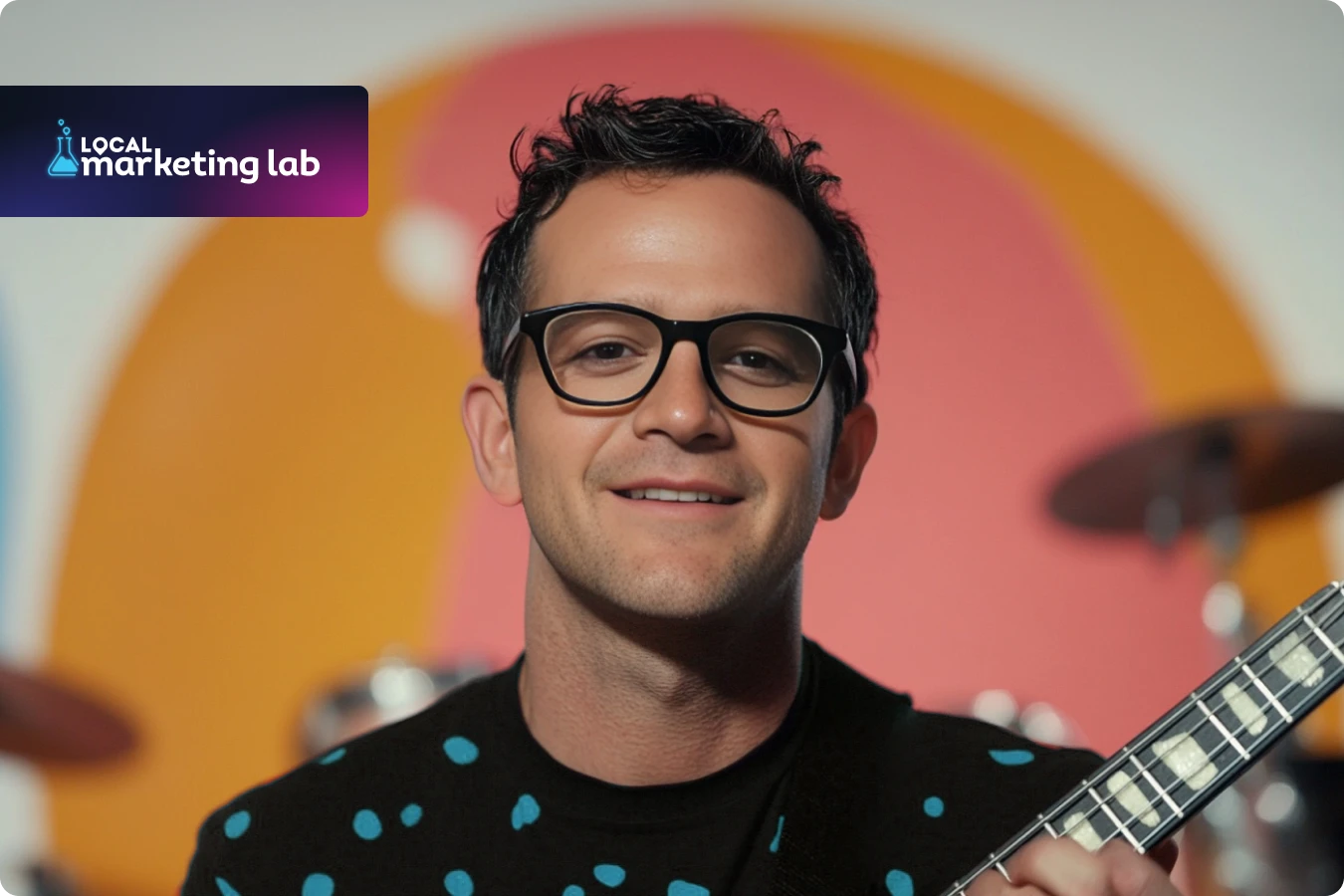
That’s hilarious. Well, I know that you’ve a couple of songs that I’ve heard. You had one for your mom that you’d written with her, I thought was very sweet. And then there’s some other kids songs, and I thought it would be kind of fun to drop you into AI as one of the guest performers on, like, Yo Gabba Gabba.
Jason Berkowitz
Oh, wow. So…
Justin Ulrich
No, go ahead.
Jason Berkowitz
You want to hear a heart wrenching no, no, tell it. And I’ll tell you a little heart wrenching story.
Justin Ulrich
I was going to say, you are also one of the nicest people that I think I’ve ever met. So I thought it might be fun to show you in a bit of a more of an aggressive light as, like a viking warlord.
Jason Berkowitz
I like this one. This is good.
Justin Ulrich
But it almost looks like you’re shouting in fear.
Jason Berkowitz
Oh, this is great. I get so, I think I’m more excited for this moment because I hear, as I’ve listened to a bunch of your, you know, of your episodes, when people’s reactions to, oh, this is kind of fun. This is. This is fantastic.
So I, yeah, I wrote kids songs years ago that I wanted to build for an animated project. And then I was still playing music, though, rock and roll music, which is a little bit more debaucherous. I got flown out by Nickelodeon to – late twenties. I get flown out to New York by Nickelodeon, and I think I’m gonna be behind the scenes writer for this animated thing. I go, I meet up with an old band friends that night before.
And so, needless to say, I don’t know why, but the sun came up. We had that kind of night, and it was an all throw down bash. And from the window to the walls, and here I come in to Nickelodeon, and they just were like, it’s you. You wrote these songs. And they’re singing my songs, and I’m like, it’s me. This is the greatest thing in the world. Sign me.
They’re like, can you be the lead singer of Jack’s Big Music Show? And they tell the story. Now, granted, mind you, I was hungover that they’ve never seen anybody go so yellow so fast and so green so fast. Because my thought was, I’m not a rock. I’m not, you have no idea what I was smoking last night and what was going on last night. I’m not the kid singer. This is. This is. And they.
And then I tried to kind of, like, catch it back, but they were like, you know, and how do I tell them no, I’m green? Because I was doing shots of whiskey till five in the morning. So I was almost Yo Gabba Gabba. So that hits me in the heart a little bit. So we’re gonna, come back with that music.
So that song that I did for my mom was like, one of them, right? I think we should make it the annual Mother’s Day song, right? It’s a letter to mom. It’s a story of my mom, who we used to say, you know, I love you more than you love me. We go back and forth and say, how about the same? And I’m not a parent, but I think, and I’m sure it’s difficult and I’ve avoided it at all costs. And you seem to be doing an incredible job. You know, you’ve…
You’re doing an incredible job. You got class presidents and future marketing mavens who are stop motion animation. I mean, it’s kind of incredible. But I think to me, what I appreciate is that I received a lot of hugs and I think if you can measure it in hugs, it makes a difference. So let’s get that song to be the Mother’s Day song and maybe we’re going to bring back some of these kids songs. Now, I’m living a much healthier lifestyle. It might be time, but Nickelodeon’s not calling anymore, so.
Justin Ulrich
Who’s this old guy?
Jason Berkowitz
Yeah, yeah, yeah. We don’t. Yeah. Not kidding.
Justin Ulrich
Too funny. I appreciate you diving in. You know, I love bringing in kind of cool facts that folks may not know about the guests into the show. It just allows people to understand others maybe on a deeper level than they did before, so.
But anyways, before we jump, I want to give you an opportunity to maybe shout out two things. If you’ve got a client or anyone else who you think is doing something really, really well from a training perspective, and then also, like, how can folks follow you and follow Arrow Up?
Jason Berkowitz
Yeah, we’ll take it reverse. So as I think about that, arrowuptraining.com and our big focus right now is we help develop supervisors into leaders, because I believe your supervisors are the bridge between expectation and execution. So arrowuptraining.com. You can find me on LinkedIn, Jason D. Berkowitz and jason@arrowuptraining.com. There’s a mouthful for there.
Justin Ulrich
Links in the comments?
Jason Berkowitz
Yeah, yeah. Links in comments. Fantastic. You’re a good man. You know what you’re doing. Not your first rodeo. Marketing.
For training, you know, I was kind of prepared, I would say I’m going to use them for both. Ronan out in Los Angeles is a great mom and pop shop. They really take care of their team. They really spend time teaching the menu to their teams so that they feel confident talking about it. And when you feel confident, you can communicate it.
I love that. They’ve learned how to teach them how to hold the glass at the bottom 50%, which is my biggest thing. Anybody who’s listening, go look at how all of your team members are holding glasses. Are they doing the claw? So they’re really great at that.
But in marketing, something that I wanted to touch on that I’ve heard you mention in other episodes is they really bring their, it’s a family run business and they really bring their family into the experience. You could just tell this is a mom and pop with three kids. You just feel the joy. You see it in the Instagram, you feel it in the food, you feel it in the service and the delivery. There’s just a real sense of love there that communicates across all channels in real life and digital. And so I want to give them a shout out.
Justin Ulrich
Yeah, that’s perfect. That’s perfect. Well, hey, I appreciate you taking the time. It was fun diving into your background. You had some great examples. Training, training, training. If you need any help with your training at all to create a better guest experience, hit up jason@arrowuptraining.com. Jason, it was a ton of fun having you in the lab, my friend. Appreciate it.
Jason Berkowitz
Appreciate it. Thanks.
Justin Ulrich
You bet.
As always, thanks for joining us in the Local Marketing Lab. This podcast was sponsored by Evocalize. To learn more about how Evocalize can help you grow your business, visit evocalize.com.
If you learned something from today’s episode, don’t forget to subscribe on your favorite podcast platform and follow us on LinkedIn and Facebook @Evocalize. That’s Evocalize and on X at Evocalize.
And remember, keep innovating and testing new things. You’ll never know what connects with your customers best unless you try. Until next time. Thanks for listening.
Show More Show Less