



Summary
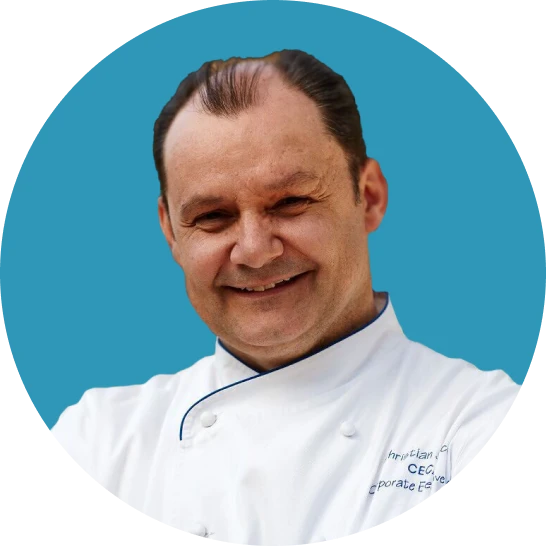
What makes a restaurant (or business) unforgettable? In this episode of the Local Marketing Lab, Christian Fischer, a seasoned chef and hospitality expert with over 35 years of experience, shares insights on how to improve customer experience with authentic hospitality. From his journey as a French-trained chef to becoming a consultant and author, Christian unveils the secrets behind creating memorable dining experiences that keep customers coming back.
Create authentic experiences that resonate. Christian emphasizes that to improve customer experience with authentic hospitality, restaurants must stay true to their concept and the chef’s background. He stresses the importance of creating an atmosphere that aligns with the cuisine, from decor to music, ensuring a cohesive and genuine experience for diners.
Specialize to stand out. In today’s crowded restaurant market, Christian advises against trying to please everyone. Instead, he encourages restaurateurs to focus on a specific cuisine or concept, allowing them to excel in their niche and attract customers seeking authentic experiences.
Leverage culinary skills for business growth. Christian highlights the entrepreneurial potential of chefs, demonstrating how culinary expertise can lead to diverse career opportunities beyond the kitchen. He shares his own experiences, from cooking for presidents to consulting for international companies, illustrating the vast possibilities within the hospitality industry.
Christian’s insights offer a fresh perspective on improving customer experience through authentic hospitality, making this episode essential listening for anyone in the restaurant industry or entrepreneurs looking to create memorable customer experiences in any field.
Key Takeaways
Here are some topics discussed in the episode around how to improve customer experience with authentic hospitality:
- Create authentic dining experiences that resonate with customers
- Importance of specialization in menu design and restaurant concept
- Turning culinary skills into diverse business opportunities
- The value of staying true to your roots and background in business
- Adapt to changing customer expectations in the hospitality industry
I call myself an architect of memories, because everything you do is we create memories. And for me, hospitality is that simple.
CHRISTIAN FISCHER

Resources
- Connect with Christian Fischer on LinkedIn or on his website.
- Check out the Disruptive Chef Entrepreneur Podcast.
- Listen to the episode with Chef Adam Lamb.
- Learn more about the Culinary Executive Mastermind.
- If you want to write a book, take Christian’s course.
Other shout-outs
- Jason Berkowitz for hilarious and amazing stories.
Transcript
Justin Ulrich
What’s up everyone, and welcome to the Local Marketing Lab, where you get real-world insights from industry pros to help you drive local revenue and local for growth. This podcast is brought to you by Evocalize – digital marketing tools powered by local data that automatically work where and when your locations need it most. Learn more at evocalize.com.
What’s up? And welcome to the Local Marketing Lab. Joining us in the lab today is a guest with over 35 years of experience in the food service industry. He provides strategic leadership support to hospitality professionals to help them overcome challenges. He’s a French-trained chef, author, and host of the Disruptive Chef Entrepreneur podcast, Christian Fischer. Thanks for joining us in the lab, my friend.
Christian Fischer
Thanks for having me. You make me sound so fancy. But thank you for the nice intro.
Justin Ulrich
It was your hard work that got the intro put together. But, yeah, you know, I think it might be good to start because digging into your background a little bit, you know, you opened your first restaurant when you were 17 years old, and you’ve got really, really interesting perspective through the chef lens that I believe.
We only had the pleasure of hearing that perspective from one of our guests so far of the 50 some episodes that we’ve had with chef Adam Lamb. But it would be great to hear your perspective, and then maybe we could just start a little bit with your background and kind of how you got to where you are and what you’re doing at this stage in your career.
Christian Fischer
Awesome. No, I appreciate it. So for me, I started my parents on the – so I’m native Austrian, if you can tell my accent. I’m not from the beautiful state of Connecticut. So I’m actually Austrian, and my parents owned the hotel. My Dad always wanted us to eventually take over the hotel. I seen how much they struggled, so I never wanted to be in the food industry.
So for my first, in the beginning, he said, you can do whatever you want. So I was like, I want to be a medical doctor. Went to medical school a few months, and then I had to watch a – and we’ll never forget, this is 57 year old guy. We had to cut him open to get his appendix out of. And all I remember is cutting him. The next thing I woke up, I was in the locker room, and they were saying, okay, medical school is not for you.
So I went home. I went home on a Tuesday. My dad said, okay, what are you going to do? I was like, oh, I take the summer off. I kind of relax. He says, good, good. You have to. Thursday. I was like, what do you mean, Thursday? And then Thursday, he dropped me off at a place to do an apprenticeship. Because in Austria, in order to learn cooking, you have to go to an apprenticeship.
And the place he brought me to, all of the food, pizza from chef, serving, being a baker, butcher, you could do all of that. So he dropped me off there. I hated it. And the lady was so tough. We had to work from five in the morning to 11:00 at night, six days a week. And the end of the shift, I jumped out the window. I went home, and my dad brought me back the next day.
He says, it brings and gives you discipline, so you need to become a chef. And then, so during the whole process, that started as I was twelve. And in Austria, you know, we go only to school for nine years. And then when you’re twelve, you can go into a craft or a trade, or you can continue on schooling. So for me, I did this. I was down at 18.
At 19, I opened my first restaurant. I had six by the time I was 23. And the last one we had in a hotel, and it was just open for lunch and dinner. And there was one of our guests which came in, said, this is amazing. We need to bring this to America. I was like, America? I’m from a small town in Austria.
Got a call a few weeks later. It was a company which made acquisitions for Nestle, the chocolate company. And Nestle at the time, had hotels in the US, Stouffer hotel. They bought my restaurant concept to make it the hotel concept for Stouffer hotel. They offered me a job for 20 years, worked with them for 18. At the time, I had already children. I was married.
And they gave us the opportunity to go back to Brazil or Austria. My wife said no, because she’s from Westfield, Massachusetts. And so I said, I need to find a job. And one of my clients at the time, Nestle, you were working with all of these different companies was Compass Group, and Compass Groups, oh, you should start working for us.
I was like, okay, I work for you guys, and then work with them and eventually work with them for 18 years. And then the end, I was the chief culinary officer for a division of Compass Group. We were a three and a half billion dollar division. I was responsible to buy food for billion six, managing 20,000 people. So that’s what I did for the last few years.
And then COVID happened. And during COVID I always loved what I did. I didn’t like who I did it for. And I always had a little side hustle from magazine franchises to gas stations or a little bit of everything. And so one of the things I always wanted to do is kind of find a way to give back. And I had a call with a friend of mine. His name is Joe. He passed since, but he says, Christian, we need to find a way to give back to the culinary industry.
And we started what we called a Culinary Executive Mastermind. This great name all we did, we had office hours on Zoom. Tuesday was west coast time, Thursday was east coast time. And we just hung out like this. And people called in and said, hey, I think I’m going to lose my job. What am I going to do? And we were like, what are you good at? Oh, I think you should do this. Hold on. I make this connection. You need to meet this guy.
And through this, all of this evolved. And I had a friend of mine come and say, hey, Christian, you wrote a bunch of books. Can you teach me how to write a book? Oh, yeah, I can do that. I had two people, then there was six, and there was 20. And then we started now publishing company where we help chefs and hospitality professional write books in eight weeks or less.
Justin Ulrich
Wow.
Christian Fischer
That’s how it evolved. And so if you ask me what we do today, we have a few different verticals. One of them is our consulting vertical. We work with six international companies to bring them to the US, create their infrastructure and get their products to market.
And we have companies out of Spain, India, Singapore, China. We have a few different companies from all over the world, which is really cool. Then we have our consulting company, which goes on and does smaller things. We have an online platform now where we teach people stuff online, from a leadership course to our book writing course.
And then we have a few other things. We have a consultancy group where we help celebrity chefs get a foothold in the US. We have an ice cream company, we have three food service GPOs. So yeah.
Justin Ulrich
That’s crazy. I knew you had a lot. I didn’t realize you had that much. What sticks out to me, though, is through all of the different things that you have your hand in. The one thing that kind of stitches them all together is hospitality.
Christian Fischer
Yeah.
Justin Ulrich
And it’s not necessarily just from a business perspective, but it’s how you’re helping others. You know, maybe you could talk a little bit about what hospitality means to you, because I know you like to ask some of your guests that question.
Christian Fischer
So for me, hospitality is really simple. We are here to create memories. And for me, I don’t call myself a chef. I call myself an architect of memories, because everything you do is we create memories. And for me, hospitality is that simple.
Give them what they ask for, but support them what they need. And so that means in the restaurant, give them the food they want, but make it a great experience. Make them the hero.
Make sure in a business meeting that the guy who leads the meeting that everybody in that knows that he is the boss, you know, so just a few things that go above and beyond because we’re here to create memories, and that became our thing. And so that’s what we do within the hospitality industry. We are architects of memories.
Justin Ulrich
No, that’s very cool. I like that comparison to architects. It takes hospitality, though, out of the kitchen, providing great meal experiences, but also bringing it into the dining room and creating memories for your guests.
Christian Fischer
We always looked at it. If somebody makes a reservation, they have a certain expectation when they come into the restaurant, when they – in the restaurant, that the decore needs to fit our message. The whole atmosphere, the music, the way the staff is dressed, the way the tables are being set, it needs to all kind of fit together.
When they sit down, when the food shows up, it’s the confirmation that they made the right decision. And for us, that’s how we look. Hospitality is more than just a meal. It’s the whole experience, from sensory to auditory, whatever that is. It all needs to go together.
Justin Ulrich
So when you’re working with some of your clients, like, where do you start in assessing what type of experience they’re providing? Because from a local marketing standpoint, you could spend money, time, energy, effort on acquisition, marketing, and bringing in guests. But if they’re not having that incredible experience, you’re effectively, you got a leaky bucket. You’re throwing good money after bad. We say it all the time.
Christian Fischer
I love that. That’s a really good question. So fast we look at it, the very first question is, what do you want to achieve with this? If you want to have a lunch crowd, the place is different than when I want to educate them about ethnic foods. For me, I’m Austrian. If I do a lunch place, a breakfast place, an Austrian place, it needs to be totally different.
And for me, there is one thing, and I think you and I talked on our podcast, I think what is changing in the industry that when it goes, and they had baan Asian, you remember, oh, this restaurant does baan Asian. People are like, what the heck is that? You know, people want hyper specialized. You know, indian, Vietnamese, Cantonese, you know, Mandarin, whatever it is. So it’s really specialized. So people have to experience what it is.
And for me, you know, I spent a lot of time in Asia, and for me, coming back, I never looked at chinese food the same here as in Asia, because it is different. And for here’s that version of we play American music. You know, we use these plates, you know, we use this and it just doesn’t go. So for me, kind of coming back, so for us is the first thing.
So we have this three step process. Number one is what do you want to do? The second thing is, what is the systems you currently have in place to get there? And the third thing is, who is going to be the one doing it?
So what we realized is a lot of owners in particular, they have this idea, but they have no idea how to run it. And you probably heard it said that 64% of all restaurants are owned by people which never owned a restaurant before, have no food service experience. And there’s one other six out of ten restaurants, they had no prior experience.
So they’re trying to create something which sometimes doesn’t exist or doesn’t make sense within the clients. And so, for me, I encourage any of your listeners, look around your town, where you live. What are the restaurants which been there for a very long time. How do they feel? What do they look like? You know, what do they serve? And you will find it’s good comfort food done right.
If it’s an Italian place, the guy back there speaks Italian. If you go to a Japanese place, it’s Japanese. So for me, I think if there’s one thing Covid did to us, it gave us a heightened sense of BS. So if it’s not congruent, it’s not who they are by the way they serve, the way the restaurant feels, the way the menu reads, people know that you’re trying to do something you’re not.
And those are usually the restaurants fail. And so we always use the joke. We have three restaurants in Florida, and it’s Swedish Austrian, and, you know, it’s not a great cuisine. You know, it’s peasant food. But when you walk in, it feels like that. Then when you sit down, we do Swedish meatballs inside out, you know, and – or we do it, deconstruct it. So some really fun ways of bring it all together.
But when you go walk in there, it’s like, wow, this is. I didn’t know Swedish meatballs taste like that. They don’t taste like that over when I go to Ikea, you know, or if we do beverages. So we want to bring real authentic food. And then that starts, unfortunately, you need to have somebody in your staff who has experience in that. So it’s. Anybody could run an Austrian restaurant, but if there’s a real Austrian guy which knows what the feel is, he knows, you know, what it is. It feels different.
And for me, that’s why if number one, and we spend a lot of time with our client, what is it? What do you want? What do you want to do? What is the ethnic food you want to serve? How do you want to serve, and how do you want to be remembered? Do you be somebody who has big portions? You want to be somebody who’s cheap? You want to be somebody who’s fast? Get really clear of who you want to be. And that’s what we build upon.
Justin Ulrich
Very good. Yeah, it’s funny. You go to some restaurants like you’re talking about, and the menu is all over the place, and it just creates confusion. It’s like, I don’t even know what I want to get. You know? It’s like if you try to be everything to everyone, you’re effectively nothing to any specific group.
Christian Fischer
There’s a famous saying we use in the food services. You know, I’m confused by, I don’t buy, he doesn’t buy. So and people vote with their feet. So for me, if I go in there in a restaurant, Italian section, Asian section, Indian section, I know none of them is great, and there’s a place for that. I think the days for you to have an international menu is over.
People want to see different foods. Also, I think through Covid, you used to be able to do a menu for three years. Now when people walk in the three times, they say, oh, same old, same old. So you need to have menu which changes and shows who you are.
Highlight the chef. And so for me, and the final thing around that is I want to. So if I go to Italian restaurant, and I, for me, I love chicken franchise, it’s one of my things. There’s a hundred ways of doing it. You and I could have the same ingredients, same equipment, same everything. Mine looks different than yours. It’s just the way it works.
Justin Ulrich
Yeah, yours looks right. Mine would look awful.
Christian Fischer
But for me is I want to have a sense of who the chef is. So I want to have that traditional dish, but I want to have his twist. For me, that’s what’s really important, because when I sit down, I was like, wow, this is amazing. The atmosphere is great. The food is amazing. And I wonder why he did this.
And then I says, oh, I kind of see it on that place. I can see it in this place. Oh, I know he’s trying to do this. And for me, I think that’s what we need to do. More of the chefs need to highlight on who they are, and they can combine what we are from our experiences and things we learned and make it unique, make it. You and I know that people are attracted to that.
Justin Ulrich
Yeah, 100%. What do you think is the most impactful thing that a chef could do or any operator can do to really nail down the experience?
Christian Fischer
Yeah, we call it this really simple: hot food, hot. Cold food, cold. And it’s the basics, you know?
And I used to go to a restaurant in Manhattan, Swedish restaurant, and the lady was actually Swiss. So she says, you know, we have two restaurants, but I run both. But for some reason, the one across the street, Mont Blanc, Swiss. That’s so much better. I was like, of course you Swiss. You know, it’s just the way it is.
But there was a few things she did which I absolutely love, that more people need to do. When she served soup, the spoon was run through hot water. So when you sat down and you grabbed a spoon, even the spoon was warm. Oh, this soup is hot, you know, and tasted it.
Hot food. Hot. Cold food. Cold. If you do the basic stuff like that, everything else comes together. We need to become better in the basics and be consistent with the basics.
Justin Ulrich
Yeah, that’s interesting. I’ve never heard of that. The hot spoon. What are some, I guess, what are some of your favorite, or maybe your number one favorite dish to prepare?
Christian Fischer
My kids know, and they laugh because I love Wienerschnitzel, you know, which is a breaded, real cutlet in Austria. But for me, I try to make it mine. So it’s normally you take, you know, eggs, flour, and breadcrumbs, and you bread it. But for me, what is missing when you go somewhere is not just the seasoning on the salt, pepper. It needs some earthiness to it.
So for me, I mix three different mustards into my egg wash. I do a little bit vinegar. I put some spices in there. So I bring my bread, and people said, oh, my God, it tastes amazing. And I can put my finger on it, but it has just a really nice mouth feel. But what is it? You know? Um, so for me, I like making that.
And then there was my first restaurant. It had Wienerschnissel done as many ways as I could, was with turkey, beef, pork, you know, and we had a healthy way. You could have it on the grill or pan fried. And if you throw it in a fry later, it will never taste the same than having clarified butter and pan fried.
And those are the little things we always did, because that’s how we would do it back home. And people which know and experience that know exactly. Oh, my God, it tastes just like I’m back in Austria. It’s those little things. Yeah. Don’t let, you know, if you’re in Connecticut. Don’t let Connecticut take over, still do what you do back there, and then find a way to bring Connecticut into your food in some really cool ways.
Justin Ulrich
Yeah. Let me ask you this. So my dad, growing up, was a building contractor, and we always had projects going on in the house, but whenever he came home, he was too tired, he didn’t want to do the projects in the house. So when you come home, are you cooking a lot on your own, like, in your own house? Is your family getting the same experience as your guests?
Christian Fischer
Truth be told, no. My wife is – she was just, her friends always say, you so lucky you married to a chef. She said he doesn’t cook at home. And then, you know, for me, I do cook, but I, you know, I know the things, which I can do really quick because my thing is I don’t spend more than a half hour cooking at home.
And so for me, I make simple things. And, you know, I have Chinese adopter kits. So our, and I’m Austrian, so my wife is American. So our food has a little bit of everything. Has a little bit of Asian flair.
Justin Ulrich
Aust-rasion fusion.
Christian Fischer
It could be confusion. But truth be told, I love that saying because my dad always said a mechanic drives a crappy car. You know, a car that lives in a crappy house because it always needs work. A painter’s house always needs to be painted. And it’s so true. So true.
Justin Ulrich
Yeah. The one thing that I did help, I like to do marketing a little bit on the side, but my daughter was running for class president, actually, she’s done it for quite a few years in a row. And I always help with her campaign and create, like, the best posters and, like, it’s pretty legit.
She actually won this, her senior year. She won overall student government president. And I like to think it was because of my posters. But, you know, she also is pretty good at what she does.
Christian Fischer
Yeah. Oh, that’s awesome.
Justin Ulrich
So one thing that I learned about your background is you said you grew up in Austria in a small town called Thal. Go ahead, tell me about Thal.
Christian Fischer
Yeah, so it’s “Tirol”.
Justin Ulrich
Oh, I blew that one. Shawn Walchef told me to pronounce where you grew up. I knew he was setting me up. Yeah.
Christian Fischer
So of my little town, he was actually fast. Was it? So my parents business was in Thal, which was winter season. And we gotten there usually the last week in August. First snow came mid, second week in September, and we were there until May. And then we came to the other side near the Italian side. So that’s where I spent most of my time.
My small town had 27 people. I have five brothers, five sisters. So half of the town was my family, so it was fairly small. And the place I went to school had 1400 people. And the big city where my restaurant was four and a half thousand people, we had three traffic lights.
And for me, as I was younger, when I came home, my neighbor always said, oh, did you bring home a girl last night? I was like, it was 04:00 in the morning. How do you know? She says, I heard your car door shut twice. I was like, I need to get out of my house.
Justin Ulrich
I heard your car door shut twice. From what I understand is that where Schwarzenegger’s from, the same town.
Christian Fischer
He’s from the same town. So there’s really. There’s three of us. So there’s Arnold Schwarzenegger. I never met him. I would love to meet him. So if he listens to this podcast, Arnold, I want to interview you. And so I know his family, I know his sister never met him.
And the other side of town, we had, this guy’s name is Wolfgang Puck or something. No. So he went to the same culinary school I went to, and he’s the guy. And, yeah, through the years, I had some stuff with him as he launched his first cooking equipment show. At the time, he was in Atlantic City. QVC was in Atlantic City. I get this call. My wife said, your friends are so stupid. They keep calling and pretending to be Wolfgang Puck.
And then I was like, oh, it’s him. So he said, hey, don’t you live there? I was like, you know, he from California was like, no, it’s 5 hours away. He says, can you come? I want you to be my guy. We do cooking. I have this equipment. I want to sell this. It was a 14 part, a 14 piece pot cooking set.
And I will never forget this. We sold it, or he sold it at the time for $349. And we were on a QSC from midnight to 1:00 a.m. and he sold out 10,000. And he came out, this is the future. Screw cooking. Equipment is where it’s at. And, yeah, small world.
And then the last thing him and I did together, we did a fundraiser at University of Arizona now ten years ago in 2014. So he came in from Dubai at the time, and he helped us, did an event, and, yeah, it was a lot of fun.
Justin Ulrich
That is cool. Yeah, you should have him on your podcast. That’ll be pretty cool.
Christian Fischer
I need to ask him. Yes, he would be great.
Justin Ulrich
Yeah. Yeah. Well, I thought it might be cool. Because I don’t know if you know this, but for our guests that join the show, we like to drop some facts about them into AI and see what it cranks out. I thought it might be fun to show what a different path might look like for you had you gone the same path Arnold went.
Christian Fischer
That is me. No, that’s awesome. That is awesome. You need to send that. That is the best.
Justin Ulrich
I will definitely.
Christian Fischer
This just cracks me up. This is the best.
Justin Ulrich
I’ll send you the high res.
Christian Fischer
Yeah, send me that. That’s awesome. I really appreciate that.
Justin Ulrich
Yeah, you bet. You bet. Before we, before we jump off, you know, I mentioned earlier that you have the Disruptive Chef show podcast. Like, is it. Sorry, can you correct me? Is it Disruptive Chef Entrepreneur?
Christian Fischer
Yeah. Our show is called a Disruptive Chef Entrepreneur. Where this came from is we want to disrupt the thinking of chefs because we know the chefs are a skill, a network, a connection, a strategy, a way to have a total different outcome in their career, their business, and their community.
And so the idea with the Disruptive Chef is that people I look up to, people I want to learn more about, I bring on the podcast and we have a conversation and we have some questions we ask, but we want to know, why did they do what they do? Most of them do something really amazing. What was the pivoting point? You did this. What are you working on in the future?
And for us, it became our platform. And hopefully a lot of chefs or anybody in this case can listen to it, where somebody says, oh, I never really thought about that. I could do this. Oh, he made it sound so simple. Let me find out what he’s all about and see if I can take a strategy or two and implement it in my career.
Or when somebody comes on and says, hey, I had a side hustle. And then there was this point for me where I knew I needed to do this as a career. It was, I knew this is how I can serve my community much better than, because I know 60% to 80% of the chefs listening to this are in the same situation.
So I want them to have and realize that they have transferable skills. And in all essence, that’s the Disruptive Chef. And we have some ebooks to support, which we call From Chef to Entrepreneur. I honestly believe every chef is by heart an entrepreneur. In order to do what they do, we just need to help them realize and be the ones to see in them what they don’t see in themselves so they can build a better future for themselves, for their family, and for their communities.
Justin Ulrich
Yeah. Gain full understanding of the business, all the ins and outs. And that’s what I liked about the entrepreneur piece. It’s not just about working for someone, but it’s building something of your own and being successful at it. Well, very cool.
I would suggest for anyone who’s listening, check out Christian’s content on LinkedIn on all social channels. He’s got tons of followers. Christian, if you want to give a shout out to what your social tags are, we can have folks follow you. And I’ll also put them in the comments.
Christian Fischer
Yeah. So thank you. So the easiest thing is to go to our website. It’s christianjfischer.com. Everything filters out from there. Christian J. Fischer on most of the social medias. We have now TikTok under the Disruptive Chef. We have now LinkedIn under the Disruptive Chef dial. So that’s a lot.
And then you can also find us under bookwriter.club. So if you ever want, if you wanted to ever write a book, this is a program we relaunching next week where we help first time authors write a book, and we have this free event we put on and we teach them in an hour and a half how easy it is to write a book.
Justin Ulrich
That is so cool. So many people have so many great stories to share, especially in the restaurant space. You know, not only is it their journey, but also just weird celebrity run ins and stuff. You know, Jason Berkowitz? Like, he has so many odd stories and they’re so hilarious that you otherwise just would never hear unless someone put it in a memoir.
Christian Fischer
It’s true. My wife and I talk about this a lot. You know, I been really lucky, you know, through food. And thanks, my God, he, my dad, because he, he always said to me, hey, you need to stay in food because people like to eat, and you will meet amazing people.
Food allowed me to live in 17 different countries. Food allowed me to meet some really amazing people. I spent, not long ago, a few hours with Elon Musk, which is the most incredible guy ever, man. We’re working with a company which 3D prints steaks. We’re working with a company which has an encapsulated oil molecule. It’s amazing what all of that does.
I cooked for six presidents. I have a chef book which Obama signed. I made lunch for him, and I spent a week with the Bush family up in Maine. And then Bush Sr. hired me to help him build his presidential library. And what we did is we took his house or his setup, what he has in Houston. And we replicated literally identical at the library. So when they went back and forth, they didn’t have to learn two houses. Cabinets, the same layout, the same, all the same. And food allowed me to do that.
Justin Ulrich
Yeah. That’s incredible. Well, awesome. Well, like I said, give Christian a follow. Christian, it was a ton of fun having you in the lab. I appreciate you taking the time to join us today.
Christian Fischer
No, I really appreciate it. Thanks for having me. And to any of the listeners, you guys need to pick this guy’s brain. He was on my podcast. Not only did he drop a lot of great content, we actually implemented some of them right after we spoke with him.
And the reason we had you on our podcast, I think we shared this at the podcast. We wanted to have 100 people which make an impact in the industry. And this guy’s name came up. Coming up, coming up. And then I was like, shit, he’s really good. Oh, my God. He does that. Oh, he makes this sound so easy. So we need to have him on the podcast.
So thanks. I appreciate for being an. You’ve been amazing, and you provide some really amazing content to the industry. So thanks for what you do, and thanks for having me.
Justin Ulrich
I appreciate that. Yeah, it’s because of incredible guests like you. That’s where the content comes from. Awesome. Well, thanks for listening, everyone. Christian, thanks for joining us.
Christian Fischer
Happy to be here. Thanks, everybody.
Justin Ulrich
As always, thanks for joining us in the Local Marketing Lab. This podcast was sponsored by Evocalize. To learn more about how Evocalize can help you grow your business, visit evocalize.com.
If you learned something from today’s episode, don’t forget to subscribe on your favorite podcast platform and follow us on LinkedIn and Facebook @Evocalize. That’s Evocalize and on X at Evocalize.
And remember, keep innovating and testing new things. You’ll never know what connects with your customers best unless you try. Until next time. Thanks for listening.
Show More Show Less