



Summary
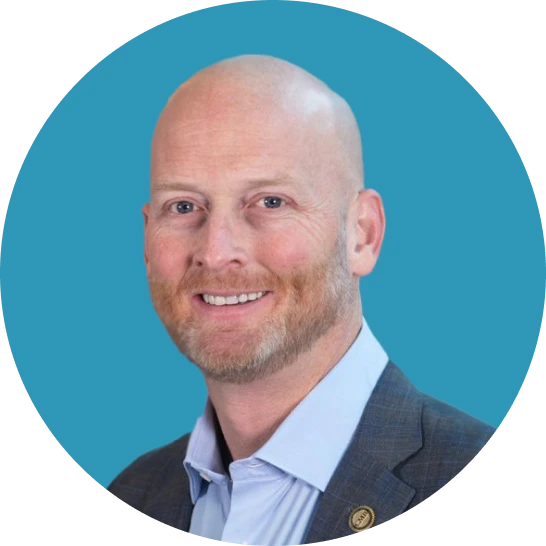
Discover how creating consistent content to drive social engagement can transform your local marketing strategy. In this episode of the Local Marketing Lab, Dustin Owen, Vice President of East Division Sales at Waterstone Mortgage and host of the Loan Officer Podcast, shares his wealth of knowledge in the mortgage industry. With over 20 years of experience, Dustin reveals how content creation and social engagement have been pivotal in building strong client relationships and driving business growth. His insights offer a fresh perspective on leveraging digital strategies to enhance local marketing efforts in the competitive mortgage space.
Leveraging personal branding for local marketing success. Dustin emphasizes the power of showcasing both professional expertise and personal interests online. By consistently creating content to drive social engagement, mortgage professionals can build trust and authentic connections with potential clients and referral sources.
Mastering online networking for business growth. Learn how dedicating just 30 minutes a day to strategic online networking can yield significant results. Dustin shares practical tips on how to engage effectively on platforms like LinkedIn, Facebook, and Instagram to expand your local influence and generate leads.
Balancing content creation with traditional marketing tactics. Discover how Dustin combines innovative content strategies with time-tested methods like in-person events and newsletters. This multi-faceted approach to creating content to drive social engagement ensures maximum visibility and impact in your local market.
This episode is packed with actionable insights for mortgage professionals looking to dominate their local markets through strategic content creation and social engagement. Don’t miss Dustin’s invaluable advice on transforming your digital presence and skyrocketing your business growth.
Key Takeaways
Here are some topics discussed in the episode around content to drive social engagement:
- Leveraging your circle of influence for business growth
- Effective strategies for online networking and personal branding
- Creating consistent, valuable content
- Utilizing CRM systems for managing client relationships and marketing efforts
- Building trust through an authentic online presence
80% of what you should be doing is in your backyard. 20% can be outside of it.
DUSTIN OWEN

Resources
- Connect with Dustin Owen on LinkedIn.
- Learn more about Waterstone Mortgage.
- Check out The Loan Officer Podcast and the loan officer coaching community.
Other shout-outs
- Rocket Mortgage
- Use the Scotsman Guide to find loan originators.
- Follow Jordan Nutter from NFM Lending for ideas to generate leads on TikTok.
- Check out Jennifer Beeston from Guaranteed Rate for excellent YouTube content.
- Follow Amir Syed for TikTok content and his coaching company.
Transcript
Justin Ulrich
What’s up everyone, and welcome to the Local Marketing Lab, where you get real-world insights from industry pros to help you drive local revenue and local for growth. This podcast is brought to you by Evocalize – digital marketing tools powered by local data that automatically work where and when your locations need it most. Learn more at evocalize.com.
What’s up? And welcome to the Local Marketing Lab. Joining us in the lab today is a super exciting guest. He’s got over 20 years of experience in the mortgage space. He’s a diehard UCF football fan, enjoys competing in triathlons, and is the host of the Loan Officer podcast. VP of east division sales for Waterstone Mortgage, Dustin Owen. Thanks for joining us in the lab, my friend.
Dustin Owen
You are very welcome. Thanks for having me today. I’m excited to be in, quote, unquote, the lab. You should just call it the lab. Have you thought about that?
Justin Ulrich
I have, but there’s something to do with local marketing that we’re trying to be found for from a search perspective, so it works really well.
Dustin Owen
Okay. I like that. Guess what? You’re the marketing company, not me, right? That’s how you and I originally connected, because I am a part of a couple businesses that very well could use your services.
Justin Ulrich
Oh, very cool. We’ll have to talk after the episode. I did hear you give us a shout out randomly on one of your episodes recently, so it was kind of cool to hear.
Dustin Owen
Yeah. Well, truth be told, we, the mortgage company that I’m affiliated with, Waterstone. You’ve already mentioned it. We’re checking out your product, and the role that I’m in currently is one in which, when we’re going to check out a product, they’ll typically run a product like that through myself or one of my colleagues in a similar role so that we can get some buy in from the field to see if, you know, this is something that they could, should continue pursuing, at which point I gave them double thumbs up.
Justin Ulrich
Yeah. Very cool. Very cool. Well, thanks for doing your research. You know, I did a little bit of research on you as well. I happen to play a podcast host on LinkedIn and on the Internet. But you, in fact, are the real deal. You’ve got over a million downloads so far, which is incredible.
So I would say my first question personally would be like, how in the world? How in the world were you able to accomplish that? Followed by, what’s your secret? But I think for the listeners, you know, I’d like to probably dive a little bit more into the mortgage side of things.
Dustin Owen
Okay.
Justin Ulrich
Because you’ve got so much experience coming up, you know, as a loan officer yourself. And now you’ve, you know, you’re co running this business where you’re doing over a billion dollars in business a year. So I think it’d be good for folks to understand maybe a little bit about your background. And then what does Waterstone mortgage do?
Dustin Owen
Okay, so the easy part is Waterstone mortgage, they’re a top 50 independent mortgage banker. So we’re a national lender. We help people purchase real estate by offering them the financing solutions that match their financial needs, wants, and goals. And they qualify for. Like, in a nutshell, we are a mortgage banker. That means we help people buy real estate and obtain home loans. Right?
That’s, that’s the most simplistic standpoint. We’re a boutique. We’re elite. We take an advisory standpoint. And that’s our, our strategy is to be more of an advisor, not necessarily an order taker, because there is such a thing as actually getting the wrong loan. You can get a loan that you qualify for, but it could be the wrong loan for you. So what we help our buyers do, and we partner with real estate agents and home builders to make sure that their clients are treated appropriately.
But we ultimately help people make sure they not only qualify, but they’re also getting the home loan option that matches their financial needs, wants, and goals. So that’s, that’s probably the easy part.
Loaded question is, who am I? Or what’s my background? I mean, you want to go all the way back? I’m a son of a school bus driver and electrician who grew up understanding that he wanted financially more in life. I wanted everything my parents had. But then I wanted more financially. And I was always drawn to careers that would put myself in a situation where I could work with money, I could coach and talk to individuals such as myself about money, money-making decisions, financial literacy.
And I didn’t know really what that looked like. But by about age of 25, I was able to leave a career in advertising and enter the world of home lending and really found my calling because I could leverage the master networker, the independent entrepreneur salesperson with also someone who works with the consumer, teaching them how to purchase real estate, how to budget, the basics of credit, the basics of saving for retirement, while also having a career that had unlimited income potential. Right?
So that’s my background. And I started 20 years ago as a rookie loan originator. Like, I was broke, I was scared, I was lost. It took me two years to figure it out. That was two years of me going $10,000 in credit card debt. That was two years of me deferring student loans, of me cutting off cable before, like, it was cool to do, like, now it’s cool to do because we have Netflix and Hulu and YouTube TV, but it wasn’t cool to do that back in the early two thousands.
I had friends who wouldn’t come over to my house to watch UFC because I didn’t have one of those things called a flat screen tv. And occasionally I would find ways to go do manual labor on the weekends if it meant I could bring home a couple hundred bucks to my family because my wife was pregnant with our oldest. Right? Like, that’s how I got started.
But quickly I followed the patterns. I find that success leaves footprints. So I found those footprints and I started just following the footprints and following the patterns, and I was able to become a top producing loan originator. And from there I became a producing manager. And then from there survived the crash of 2008, 2009, rebuilt, found a couple partners, found a good corporate umbrella to operate under, and we built out what is essentially now a region of mortgage branches with 70 other mortgage loan originators. And we have a team that’s built to fund a billion dollars a year.
Last month, we did right at $70 million in production. Considering this is one of the worst years in terms of home sales, in 40, $70 million in a year, like, this is pretty much like $125 million in a normal year. So we built something pretty cool and have a really cool story to tell. And we did so by hiring, empowering, great people. So there we go.
I hit Waterstone and I hit a little bit of a background of who I am. You mentioned podcast. Yeah, about five years ago, four and a half years ago, I was at a point in my life where I was not having as much fun as I wanted to. I had hit a savings goal. There was other things I wanted to do in my career. I didn’t know what they were just yet, but I knew I wanted to do something different.
And at that turning point, one of the things that I did to start having fun is I started creating content. And at the end of the day, I was creating content because I was like, well, at the time we had 48 mortgage loan originators who worked for us. I was like, well, at a minimum, I’m going to create content for them, right? Content that teaches them the things that they need to learn in order to be the best advisors to their clients, the best partners to their referral sources to help them better understand the mortgage industry.
And then I was like, well, those same 48 loan originators, we help 1200 to 1500 people become homeowners every single year. So I might as well make content for all of those homeowners. And our clients are home builders. Our clients are realtors, people who refer us consistent business. Right? The borrower is our customer, but our client is actually the referral source. I’m like, well, let me just make content for them, too.
And then I started thinking more about it, and I hope this show is PG-13. I was like, so basically, Dustin, you’re going to create a show that teaches the shit they didn’t teach us in school. And I was like, yeah, I’m going to teach that. And I’m like, but what’s your style going to be? I’m like, well, I kind of like Joe Rogan, and I kind of like Dave Ramsey. What if my style is Joe Rogan meets Dave Ramsey?
So we decided, and we was my partner, John Coleman, a guy that I recently was introduced to, he came on a job interview. He and I hit it off, and I said, hey, do you know anything about podcasting? He’s like, no, I know nothing about podcasting, but I can figure it out. I said, great answer. Let’s rock and roll. So we started podcasting with all of that in mind, right? We’re making content for loan officers, realtors, homebuyers, homeowners, entrepreneurs, college graduates, Dave Ramsey, Joe Rogan, have a baby. They come together.
But this is, I think, what was key. We committed to two episodes a week. We thought about one a week. We thought about three a week. We decided two a week was doable, and without fail, we were going to do two a week. Come hell or high water. Even during COVID and me getting Covid, we produce two episodes a week every single week. And we are going to do so for two years. Two years.
I have a rule in business. It takes two years to do anything. Sometimes three, sometimes five. But at a minimum, it takes two years. So we are going to dedicate two to 6 hours a week. It was 2 hours for me. It was 6 hours for him because he had to actually produce the content. I just had to record it. So 2 hours a week for me, 6 hours a week for him. We’re going to do it for two years. As long as we were having fun and as long as we didn’t suck.
And now we got to a point to where we were still having fun. I don’t think we suck. And we keep doing it two episodes a week, every single week. When I look back at the first 30 episodes, I’m like, oh, my God, are you serious? But I think that’s how life works. Like, we build things. As we grow, we get 1% better. And if we can focus on small digestible changes, then after the course of six months, 18 months, 24 months, we can be amazed at how far we’ve come at anything in life.
There’s your backstory, and I’m sorry I keep on doing this to the audience. My camera, someone hit it, I guess the cleaning crew. And it is like, there we go. My camera is like, all discombobulated and I’m sitting here playing with it, which is at least real. It’s just not overly professional. So. All right, we’re good now.
Justin Ulrich
It has a slow drift, like every time for the listeners. Every time you adjust it downward, it slowly drifts upward.
Dustin Owen
It doesn’t do that typically. I don’t know what transpired, but let’s see.
Justin Ulrich
No, no biggie at all. It makes things interesting for the viewers. There you go. It looks like it worked.
Dustin Owen
It’s like the Blair Witch project. You remember watching that, like, back in the early two thousands? The horror flick that, yeah, it’s kind of like, you know, that’s our, that’s our actual, our creative preference today is to give everyone a camera that, you know, we’re, oh, what’s going on? Is there an earthquake in Florida? We’re like, no earthquake in Florida. We have hurricanes, wildfires, and they get the earthquakes.
Justin Ulrich
That’s right.
Dustin Owen
Go ahead. I’m sorry.
Justin Ulrich
I believe Blair Witch project was one of the first viral marketing efforts where they had the movie and a website to go along with it to kind of substantiate things. I remember that as a kid.
Dustin Owen
I know as an avid UCF fanatic that it was a couple kids from UCF that put on the Blair Witch project.
Justin Ulrich
Yeah, very cool. Very cool. Awesome. So a couple things that you touched on. So your background, you’ve come up doing this on your own. You’ve become a solid expert in the space, a thought leader in the space. You take your knowledge, you teach your own team how to grow, and then you also create content for folks to teach them in the industry, whether it be buyers or sellers, different audiences. You’ve seen a lot of what works, a lot of what doesn’t.
So I’d like to get from you, like, what do you think from a local marketing standpoint, if you can give one or two things that you think really move the needle, like, what would those things be?
Dustin Owen
Oh, so I would first preface, like, you know, I have to understand my context. Where am I coming from? And I’m coming from a mortgage loan originator. So, mortgage loan originator. You know, you could say real estate agent, commercial real estate, life insurance, sales, financial advisor. Like, very similar financial sales type roles, but it is hyper-focused, hyper-local, and we do coach and teach.
Even in today’s day and age of technology, we coach and teach the 80/20 rule. 80% of what you should be doing is in your backyard. 20% can be outside of it. But 80%, there’s enough business in your backyard, assuming you live in a decent sized market. Right? Top 200, let’s say. So, understanding the context, I’m a huge fan of being your local community expert.
So it starts with leveraging your circle of influence. It is making sure that your circle of influence knows what you do for a living and that you know how you can help them. But more importantly, you’ve asked them to help you. And help you doesn’t mean become a client. Do business with you, help you, maybe make an introduction. I’m not a big fan of cold calling, but I do love a warm call.
So we coach and teach the triangle of trust. Right? So I don’t know you, but I know Kevin. Kevin knows me, Kevin knows you. I reach out to Kevin, I tell Kevin what I’m looking for, because maybe Kevin and I are boys from college. And now Kevin introduced me to Justin. I can call Justin. It’s no longer a cold call. It’s a warm call. Right?
So we start with a circle of influence. We leverage the circle of influence to create a list. From that list, we now start targeting people based on how much they fit the criteria of what our ideal client is. And again, for me, a client’s a referral source. A customer is a borrower. So I’m looking for clients who can refer me customers. So we do that.
We do that over coffee meetings. We do those over lunches. We do those over leveraged events. Whether it’s a happy hour, whether it’s something we’re putting on at Topgolf, or it could be through educational series, where we’re doing lunch and learns like that is by far my favorite way, in a hyper-local way, to get out there and market and sell my product and my services.
Now, on top of that, we have a robust CRM. We’re leveraging our CRM because our CRM is how we’re managing our invites. It’s how we’re managing our follow ups. It’s how we’re remembering who we called last. We have several drip campaigns that allow us to stay in front of certain targets. More than others. And our CRM is also where we are monitoring our clients, or, I’m sorry, our customers, our borrowers, to make sure that we work so hard to get that lead that we’re staying in front of that lead.
Newsletters is something, believe it or not, as old school as that is. I still am a firm believer in newsletters, but I think we should write them ourselves. Like, you’re a smart, equipped professional with some kind of a sales and marketing background. At least you have to be. So if you don’t have a background in it, you learned on the job, little OJT. And I think we should spend the 30 minutes. I think we should leverage video more than maybe we use our words.
But I’m a big fan of leveraging my CRM as well as still doing a weekly newsletter. So on hyperlocal, we’re doing that now. Things I’ve dabbled in, obviously, I’m a huge fan of networking online. Like, when we talk about COI, networking online is huge. Some people call that social media. I hate the media. I’ve hated the media since 1997, when I was a senior in high school, so. And that started with the local news.
That was before there really was these, like, you know, polarizing national editorial companies that, you know, opinionize everything and divide the country. Mine started with local. And then as a parent, I really don’t like social media because of what my generation allowed it to do to our children. I say allowed it because that’s a parent. I gave my child one of these things too, too early.
And I let him and her have access to things like TikTok and Instagram and Facebook way too early. That’s on us. Our generation did that. We didn’t know any better. Our parents’ generation gave away all of our data for free, and they didn’t know any better, you know, so it is what it is. Let’s just blame big tech and we’ll move on.
But I am a big fan of salespeople leveraging online networking to connect with people, make eye contact, create small talk, shake hands, eventually break off into individual conversations, and then have those individual conversations lead to a more intimate face-to-face, whether it’s zoom to zoom or belly to belly type meeting. So in order to do so, you have to be intentional with your activities.
So I coach and teach 30 minutes a day, LinkedIn, Facebook, Instagram, where your sole purpose is a network. Just like you’re walking into a networking event. What am I going to have to do? I’m wearing a name badge. I’m going to have to look good, I’m going to have to smile, make eye contact, shake hands. I’m going to have to engage in small talk eventually. Maybe a group small talk setting can break off into a one on one where I’m getting to know someone a little bit better.
But ultimately I’m going to ask that person to meet with me later down the road, because at a networking function, it’s really not a great time to get to know someone at a deep enough level that we’re going to start conducting business together. Well, online networking works the same way as traditional networking, except for I don’t have to get dressed, I don’t have to do my hair.
Well, I don’t have any hair, but if I did, I wouldn’t have to do it. How about I don’t have to trim my beard, I don’t have to drive across town, I don’t have to do it at a set time, at a set location, and I don’t have to spend money. So online networking is something, if you’re talking about hyper local and focused, I think all sales professionals, from a marketing standpoint, should have some form of a personal brand online.
Keeping in mind, people do business with people, not with products, not with companies, with people. So you need to be a person online that people get to see. Hey, this dude loves the Braves. This guy’s training for an Ironman. Oh, he happens to be in the mortgage space. Wait a minute, he loves riding horses. I didn’t know he had two kids. What? He’s volunteering with Special Olympics. Wow, he does mortgages, right?
That would be my posting cadence if I was posting on Instagram or posting on Facebook. And just like when I walk into a networking function, I have to smile, I have to make eye contact, I have to introduce myself to new people. Every time I’m logging in for 30 minutes a day, I have to be sending friend requests, I have to be sending out, I have to be following people on Instagram, I have to be connecting with people on LinkedIn. Right? That’s me introducing myself.
And I have to be liking and commenting on people’s posts because that’s me making eye contact, smiling and engaging in small talk. So you asked the question and I gave you a very long-winded, loaded answer. What are some of the things that we’re doing when it comes to local? Right.
That’s a lot of the grassroots, local, do it yourself, this stuff works marketing that our sales teams are doing to ultimately generate leads so that they can close loans so that they can drive revenue, so that they can make big fat commission checks.
Justin Ulrich
Yeah, I mean, you said it’s long winded, but it was very detailed and I think it gives folks a good idea and understanding, maybe a better understanding as to the importance of engaging on social, you know, people, you mentioned people don’t buy from people. I’m sorry, people don’t buy from businesses. They buy from people. They buy from folks who make them feel a certain way, who make, you know, who build trust.
You know, the most important thing that you can market is yourself, is something that I always say too. And it’s whether I’m marketing myself on LinkedIn, Facebook, Instagram, no matter what the channel is, you’re putting yourself out there and you’re building a personal brand. You’re giving people insight into your life, into the human version of yourself.
It’s not just a digital persona, you’re showing that you’re human and people connect with that. And as you engage with them, they also remember how you make them feel. So if you make people feel a certain way, feel happy, feel like you’re giving them the time, feel like you’re investing in them, they will give it back. And that’s how trust and relationships are built online and offline.
Dustin Owen
Correct. Especially more today than even 20 years ago. Well, I mean, 20 years ago you and I were being taught things like your net worth is the sum of your network. Right? What did that tell you? He or she with the most friends wins. He or she have the most friends, also has the most opportunities. He or she have the most friends, more than likely has the most money, the most net worth.
And then, you know, was it Carnegie that said people do business with people they know, like, and trust. And I always stop. I did this in Vegas last week at a conference where I was speaking in front of 600 mortgage loan originators. And I said, people do business with, and I had them, the audience being them, respond. People do business with people they know, like, and trust. And I stopped them.
People do business with people. Let’s just stop there and let’s get back in the human element, especially when we start thinking about robots and automation and AI. At the end of the day, I’m a firm believer that you’re going to choose to work with me and my robot, but it won’t be your choosing to work with my robot because you’re going to have to do me.
And then when I look at the consumer of the future, the millennials, the Gen Zers. We do this already in our daily life. If you are applying for a job with me, what’s the first thing I’m going to do? I’m going to look you up. I’m going to google you. I mean, that’s just normal. And we do that as people in our late thirties, early forties, people do it in their sixties.
Well, this new generation, these people who are currently 18 to 36 years of age, they may very well go to mom and dad for their advice, or big sister for her advice, or they may listen to their financial advisor or their attorney for, hey, what, what service should I use for x, y or z? But unlike you and I, when we were getting started, we just listened to that advice and we ran with it. Well, nowadays, people are going to Google you.
So then if they’re going to Google you, what are they going to see? Do you have reviews on Google? Do you have reviews on other review pages? Let’s say if you’re a realtor or a lender on Zillow, and then do you have a social media presence? Do you have a YouTube channel? Can they find you? And then if they do find you, oh, what do they see then? Because people do business with people and they’re going to want to get to know you. They’re going to want to find a reason to like you.
And if they like you, they’re going to want to also see if they can trust you. Well, the content that we create in the content that we put out, the persona that we make available is the reason why they’re gonna say, oh, I’m so happy my attorney, or I’m so happy my CPA or my financial advisor or my real estate agent referred me to x because I looked them up.
And, man, they’re right. They already know they like us, or they already know that they don’t like us. And the worst part, we can put them in his purgatory. They can’t find us. So, you know, I very much buy into that statement of people do business with people.
Justin Ulrich
Yeah, 100%. Let me ask you this. If you think maybe within your organization, maybe even outside your organization, who do you think does this really, really well? Who do you think does local marketing really, really well? And it could be any industry as well. Like, if you just have any examples.
Dustin Owen
In the industry, it’s interesting because, like, I’m in the mortgage industry and we have multiple silos depending on how you run your business. Right? There are companies out there that do consumer direct, right? That’s Rocket Mortgage.
When you see Rocket Mortgage, advertised. That is a company marketing directly to the consumer. They have a bunch of sales professionals with headsets on, sitting in a call center, and it’s smile and dial and it works. That works for Rocket. They have a successful business model that allows them to do so.
Then you have the banks, the Chases, the Bank of America’s, the Cities, where their model is more about how can we provide a service to our banking clients? Because they’re trying to protect what they already have. There was a time that banks tried to use mortgage to acquire new clients. They don’t do that so much anymore. But their business model is, how do I keep my client from doing their banking elsewhere?
Because maybe they went to a different lender. That lender did their mortgage. Now that lender is trying to convince them to move the rest of their banking relationship to them. So then there’s that model, and then there’s a model that represents the bulk of what’s being originated. And whether it’s coming from a mortgage broker or an independent mortgage bank, I think is irrelevant because you’re asking the question like, who does it the best?
I mean, company wise, I couldn’t name a company who does it the best would be the loan originators that are on the Scotsman Guide. Because they’re in the top 1%. They’re in the top 1% because they’re funding $36 million to $360 million to a billion dollars in annual production, which means they’re making $400 to $4 million a year W2 wages as a mortgage sales professional.
I think those men and women that really make up a hundred different mortgage companies, I think they’re doing it the best when it comes to local marketing, local advertising, because they’re the ones that are dominating events. They’re dominating online socially. They’re dominating CRM and marketing their past client database. And they’re in their circle of influence. And they have the most amount of referral sources referring them the most amount of leads because of their systems and their processes.
So I don’t know if there’s, like one company that does a really good job and there’s people that I follow. Right, like Jordan Nutter with NFM does an amazing job on TikTok of generating mortgage leads, or Jennifer Beeston with Guaranteed Rate does an amazing job on YouTube at generating mortgage leads. And, you know, there’s a guy, Amir Syed, and he has a whole entire coaching company that if you want to become the next TikTok superstar, he can teach you how to create content.
And Amir is a top producer himself, and he’s a heck of a mortgage sales leader himself. But he can teach loan officers how to content create, not just because he read a book on it, but because he practiced it and built multiple businesses by doing so. So I don’t know if I answered that question the way that you’re hoping to, but that’s the best answer that comes to mind.
Justin Ulrich
No, I think it’s a perfect answer. I think you gave multiple folks in different spaces from the individual level and the company level. I mean, it’s just to give inspiration to the listeners to go see, hey, what are they doing? The Scotsman Guide recommendation is actually a really good one. Go check it out if you can get your hands on it and at least see who the top performers are there.
And then if you could try to follow them online, too, then you could probably get a sense for what they’re doing well. To switch gears a little bit, we talk with, when we bring guests in the show, we like to learn a little bit more about them personally. And one of the things you gave me a couple trivia bites which were kind of cool that you are trying to watch a major league baseball game in every major league park.
Dustin Owen
Yes.
Justin Ulrich
And it sounds like you’re at, you’ve hit 21 of 30. What’s your next one?
Dustin Owen
So great question, 21 of 30. I’m going to try to do a quick impromptu trip out to Oakland first week of August with my 19 year old son because it’s the last year that they’re playing in the Coliseum. I think it’s called the Coliseum or whatever Oakland’s ballpark is. And look, they’re a trash team. It’s a trash stadium. Sorry I said that. If there are actually any Oakland athletic fans.
But Oakland’s going to be transferring to Las Vegas in a couple years. They’re going to be playing kind of in remote locations until that stadium is built. So I think I’d like to get out there and check that off of my, off of my list just so that I don’t have to do it in Vegas.
Yeah, well, I’m not supposed to go to Las Vegas. I love Las Vegas, but I feel like I would have missed out on that opportunity because like, I’ve been able to. I went to old Yankee and New Yankee. I’ve been to all three of the Atlanta Braves stadiums and I’ve been to both Miami Marlin stadiums, but I wasn’t able to get to old Kaminsky. I had to go to Guaranteed Rate field when I went and saw the the White Sox.
Justin Ulrich
Very cool. Yeah, that’s, that’s super interesting. I mean, I’d still put, it seems to me if they build a new stadium, you have to go. So you’re gonna have to go to Vegas anyway.
Dustin Owen
I mean, look, you’re not gonna go twist my arm, okay? I have to go gamble, go to some shows, eat some nice, some nice food at some great restaurants. Okay, sign me up.
Justin Ulrich
That’s right.
Dustin Owen
Yeah.
Justin Ulrich
So another, another nugget you sent over is that I mentioned earlier that you run Ironmans. You have another one coming up this year in Wilmington, which isn’t too far from where I live, actually.
Dustin Owen
Oh, no. Where do you live?
Justin Ulrich
I’m in just north of Charlotte.
Dustin Owen
Okay.
Justin Ulrich
Yeah.
Dustin Owen
Yeah. So I am, and I’m doing the half Ironman, so I have to, you know, they’re called Ironman 70.3s. I think they’re, they’re nice to us by calling them 70.3 versus, like, half Ironman. Look, it’s a six hour race and not a twelve hour race is how you break it up. I’m going to do a full Ironman. I hope to be one and done, but I’m going to do it in 2026 as soon as, and I made a promise to my wife and my daughter because my son’s in college, my daughter’s still in high school.
Once my daughter graduates from high school is when I would, I’ll do my Ironman in the fall of that year because she’ll graduate in the summer because at the end of the day, it’s taxing on your friends and your family. When you’re the idiot who signed up to do this, because the training regimen, I mean, you’re talking about a four hour bike ride on a Saturday followed by a 30 minutes run.
I mean, by the time you get home at 1:00 p.m. on a Saturday, you’re exhausted. All you want to do is eat and rest, and that means Friday night, you were in bed probably by 9:00 p.m. so when your wife wants to do date night and go out for margaritas and tacos, you’re like, no, I’m going to go to bed instead. And then when you do get home on Saturday, you’re like, all right, that was awesome. I just want to lay on the couch now.
And she’s like, no, I kind of want to still go out for margaritas and tacos. And I’m like, well, I don’t know. I have to get up tomorrow morning at six to go run 15 miles. So that’s why I do the 70.3s, not the fulls, because the 70.3s, although they’re taxing, they’re only taxing, honestly, for about a four to five week window on your family.
Justin Ulrich
Okay, well, you sold me on the idea.
Dustin Owen
You want to do one?
Justin Ulrich
Definitely not.
Dustin Owen
No, it’s…look, it’s a really cool community to be a part of. If you’re ever part of any type of triathlon community or even endurance racing community, it’s one of the few places where competitors cheer on other competitors, where everyone is there to tell you, you got this, good job. And you look at what I get to do for a living. Real estate the past three years has been, in a lack of a better terms, pretty shitty.
And I mean, you’re talking about, I probably would have rather relive 2008 again than relive 2022, 23, and now 24. And for me, getting up at 4:30 in the morning and going and training at 5:30, that 5:30 to 7:00 may be the only time where things are positive, where I leave with a smile on my face and people are nice to me. So it’s, um. I’ll say this about the triathlon community. It’s a really cool group of people to be a part of.
Justin Ulrich
Yeah, it sounds like it’s a very cohesive, like a crossfit type community.
Dustin Owen
Yeah, probably. Yep, probably so. And for those that don’t know a Ironman 70.3, we swim 1.2 miles, we bike 56 miles, and then we run 13.1 miles. So that’s where you get the 70.3 and the kind of the litmus is as a novice, as an amateur, you would love to do it in under 6 hours, but at the end of the day, if you finish, you’ve done something that very few people can do.
Like running a marathon takes people like that. Litmus is 4 hours. If you’re doing a marathon by itself, you want to be able to run a marathon 26.2 miles in 4 hours. So a 70.3 is about 6 hours versus a marathon being 4 hours. And then if you do a full, it’s obviously double everything, 2.4 miles, swim a hundred and whatever that ends up being. Twelve-mile bike, and then it’s the 26.2.
Like your race ends with a marathon at the end, so it ends up taking somewhere around 12 hours. But obviously, some people take 16 to 17 hours, at which point, if you finish an Ironman, you’ve done something that very few have ever accomplished from an endurance standpoint.
Justin Ulrich
Well, I thought it might be cool to show you maybe finishing, you know, the race within 5 hours and 45 minutes.
Dustin Owen
Whoa, who’s that? Who is that dude?
Justin Ulrich
AI.
Dustin Owen
Is that you?
Justin Ulrich
That’s you full Jack.
Dustin Owen
Who. Who is that?
Justin Ulrich
I tried to create an AI image of you finishing a finishing the Ironman. What was hilarious is when I was pulling the images together, you type in some prompts and it had images of Iron Man from marvel, like running races.
Dustin Owen
Okay. But anyways, that, dude, that is an AI image because that is my face and head and beard. Those are my teeth. I know that because I spend $15,000 on those teeth every ten years when I have to get new ones because all of my teeth are dental implants. That’s a whole nother story. Hold whole separate podcast episode.
And I would love to be that jacked. I’m a pretty lean person, but I don’t know if I’m like that dude. By the way, that’s a lot of muscle mass to have to get around. Did I tell you that I wanted to do Wilmington and 545? Was that part of my intake form?
Justin Ulrich
No.
Dustin Owen
Or did you just guess it?
Justin Ulrich
I just guessed it because.
Dustin Owen
Yeah, my first time running Wilmington, I, that was the first race I ever did. Like, I didn’t do anything. I had never done a sprint, I’d never done an Olympic, I’d never done an official race. And I show up. My only training was a PDF that I downloaded for free that was originally written in 2012, and I followed that. I wasn’t a part of a club. I didn’t have a coach. I was basically just training on the local trail and in the local, you know, swimming pool at the LA Fitness.
And I roll into Wilmington, North Carolina, asked a ton of questions, and I was able to finish in 5:58. And I was like, oh, my God. Mind blown because I thought I was going to do it at 6:30 based on my training. There’s a big difference between training in the heat in Florida versus doing the race in better weather in Wilmington, North Carolina, in October.
So then the following year I trained, and this time I joined a club and I hired a coach and but this time it was in Augusta, Georgia. Well, Augusta’s way hillier and way hotter, which impacts your time. But I was able to do Augusta, like two minutes faster than I did Wilmington. But I’d gone into Augusta feeling really good that I’m like, I’m going to do this in 5:45. Well, I did, right? I failed the 5:45.
But that’s when I learned the lesson. This is a great business lesson. Like, I can’t compare last year’s race to this year’s race because everything changed about it. Like, what changed about it? The weather changed, the course itself changed. And how many times are we trying to compare ourselves in business to what I did last year?
But last year was a different economy. Last year was different interest rates. Last year was different consumer sentiment. So it may be a losing proposition to try to compare. Or if I do compare, that I have to be able to put in some kind of a variable that allows me to correct for the environmental changes. So, long story short, I didn’t do 5:54. But now that I’m going back to Wilmington, Wilmington’s known to be an easier race. It’s a PR race, a personal record race. So 5:45 is my goal.
Justin Ulrich
Yeah. Well, I know you could do it. I thought it’d be good to show you an actual visual so you can visualize.
Dustin Owen
I like that. Well, thank you. And I’ll work on getting that jacked, too.
Justin Ulrich
So alive. AI tends to crank out images that lean a little bit more toward the muscular side, which isn’t, you know, I’m not mad at it, so. Yeah. Well, hey, you know, I just say for our listeners, you know, if. I guess I should ask you first, like, how should folks follow you? Follow your podcast, follow your brand?
Dustin Owen
Yep. So do me a favor. Go to YouTube and search for The Loan Officer Podcast. We call ourselves TLOP. TLOP. That’s the brand that brings you the podcast. You don’t have to have more than a fourth grade education to decipher that. TLOP is the acronym for the loan officer podcast.
But years ago, our fans started calling themselves T-Loppers. We started referring to us as TLOP, and it kind of stuck. So now TLOP’s the brand, and TLOP brings you the podcast. TLOP brings you a newsletter. So if you’re a mortgage loan originator, go subscribe to our newsletter. It’s free. I write it myself. It comes out every week. You can subscribe for it by going to our website, tlopponline.com.
But for anybody, please subscribe to the YouTube channel, because YouTube is where you can watch the podcast. But we also have a ton of other content that is on top of the podcast that you can enjoy, you can learn from, hopefully laugh a little bit. The podcast itself, the Loan Officer Podcast, Spotify, Apple Podcast, etcetera.
And we have a coaching company that is specifically built out for mortgage loan originators. So if you go to that website tloponline, you can inquire more information about joining our coaching community so that you can be trained and taught by top producers. They’re going to teach you what they did to become top producers and what they’re doing currently to stay on top.
Justin Ulrich
Very cool. Yeah, I would absolutely check that out as a resource. It’s phenomenal. The content that Dustin’s pushing out is chock full of nugget knowledge bombs however you want to put it. There are so many things that that you can glean from his content so go check it out. If you’re in the market for a loan, check out Waterstone Mortgage. Dustin, it was awesome having you in the lab. I really appreciate you taking the time and joining us today.
Dustin Owen
Likewise, I appreciate being in the local lab. Thanks for having me and I appreciate this relationship. Y’all take care. Good night.
Justin Ulrich
You bet.
As always, thanks for joining us in the Local Marketing Lab. This podcast was sponsored by Evocalize. To learn more about how Evocalize can help you grow your business, visit evocalize.com.
If you learned something from today’s episode, don’t forget to subscribe on your favorite podcast platform and follow us on LinkedIn and Facebook @Evocalize. That’s Evocalize and on X at Evocalize.
And remember, keep innovating and testing new things. You’ll never know what connects with your customers best unless you try. Until next time. Thanks for listening.
Show More Show Less