



Summary
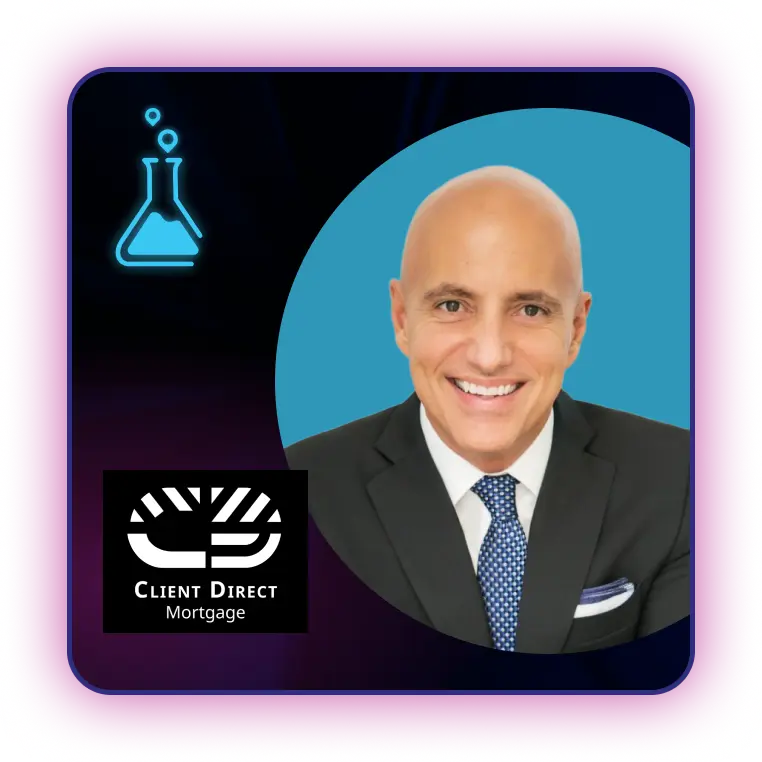
In today’s fast-paced digital world, how can mortgage professionals stand out in their local markets? This episode of the Local Marketing Lab features Jarrett Stanley, the award-winning CMO of Nationwide Mortgage Bankers, who shares his two decades of experience in crafting meaningful local connections. From innovative lead capture techniques to long-term relationship-building strategies, Jarrett unveils the secrets to dominating your local mortgage market.
Focus on building deep local connections. Success in the mortgage industry starts with establishing strong relationships in your immediate area. Jarrett advises professionals to concentrate on winning the hearts and minds of consumers and referral partners in their local community, rather than trying to dominate entire regions. This approach to creating meaningful local connections leads to sustainable business growth.
Provide consistent value beyond transactions. One key to building meaningful local connections is maintaining regular, value-driven communication with both consumers and referral partners. Jarrett suggests a 10-to-1 ratio of providing value versus making asks. This strategy keeps you top of mind during the long periods between transactions, ensuring you’re the go-to professional when needs arise.
Embrace data-driven marketing for local success. Jarrett advocates for a scientific approach to local marketing. By setting clear Key Performance Indicators (KPIs), testing strategies, and committing to long-term efforts, mortgage professionals can create more effective campaigns. This data-driven approach helps in crafting meaningful local connections that resonate with the target audience.
Jarrett’s insights offer a fresh perspective on local marketing in the mortgage industry, making this episode a must-listen for professionals looking to enhance their local presence and build lasting relationships in their communities.
Key Takeaways
Here are some topics discussed in the episode around building meaningful local connections:
- Strategies for building meaningful local connections
- Providing value beyond just selling mortgages
- Leverage technology to streamline lead capture and nurturing
- Staying compliant with new FCC/TCPA regulations
- Tips for creating authentic, value-driven marketing content
By the time you provide so much value and authenticity and people know you and trust you, making the ask is easy, because who else would they go to?
JARRETT STANLEY

Resources
- Connect with Jarrett Stanley on LinkedIn.
- Learn more about Nationwide Mortgage Bankers.
- Check out the new FCC updates regarding the TCPA rules for lead generation.
- Watch the FCC webinar with Eric Troutman.
Other shout-outs
- Toby Harris, co-founder at Movement Mortgage
- Gary Vaynerchuk: Follow for great marketing tips and advice
- Shant Banosian, mortgage broker at Guaranteed Rate
- Rob Jayne, chief production manager at Nationwide Mortgage Bankers
Transcript
Justin Ulrich
What’s up everyone, and welcome to the Local Marketing Lab, where you get real-world insights from industry pros to help you drive local revenue and local for growth. This podcast is brought to you by Evocalize – digital marketing tools powered by local data that automatically work where and when your locations need it most. Learn more at evocalize.com.
What’s up? And welcome to the Local Marketing Lab. Joining us in the lab today is a guest with nearly two decades of marketing experience in the mortgage space. He’s a drummer. He’s big into fantasy football and married his high school sweetheart. He’s an award winning CMO at one of the fastest growing mortgage companies in America, Nationwide Mortgage Bankers, Jarrett Stanley. Thanks for joining us in the lab, my friend.
Jarrett Stanley
I’m very excited to be in the lab today. Thanks for inviting me. I’m really, really excited to reach out and connect with you guys and chat about all things local marketing. It’s cool. Appreciate the invite.
Justin Ulrich
You bet. Yeah, I was excited to bring you on because your background is incredible. You’ve kind of come up in marketing throughout your entire career from what I see within mortgage. So I don’t know if you want to just run us through your background and kind of how you got to where you are today, that would be awesome.
Jarrett Stanley
Yeah. I think my story in mortgages is kind of like a lot of people’s story in mortgages. Nobody really intended to get into them. I think it’s either someone you know or you come across it as a great way of, you know, exercising a different skill. For me, you know, a lot of times for marketers, you don’t really think about the financial services industry. A lot of times it’s, you know, more social, especially nowadays.
For, well, for me, when I was growing up, I always had a great relationship with my dad. My mom and dad are great folks, but, I had a really great affinity and relationship with my father. And he was in the mortgage industry. You know, growing up, I was always under a cubicle somewhere, I was in offices, but I was not the sales guy. I was not really feeling like I was following in my father’s footsteps at all.
I was more the person that liked to, you know, take things apart and put them back together again. I was a creative kid. I played music like you mentioned. So for me, I was always more interested in how things were made and, you know, expressing creativity through that way. And that was not my dad. So for us, as far as the way that I could help him was he was helping me get through college. I was staying local here in Virginia beach where I’m from, going to Old Dominion University, and I just said, look, he’s helping me out, I’m going to help him out. I’m going to come after I have school.
After I finish, I’m going to go work part time, build his websites, start helping him out with his marketing, because I was going to school for marketing at that time and that was in 2007. His brokerage unfortunately crashed like everybody else in 2008. So we were in a bit of a bind and we knew a gentleman here in Virginia named Toby Harris. Toby Harris co-founded Movement Mortgage.
Back then it was, you know, nine people. It was people from our church, from our bowling leagues. They were. It was not in this big behemoth of a company that it was, that it is now. That being said, you know, my dad reached out to Toby, said, hey, obviously I’m not here anymore. I want to do this thing with you. So he tagged me along. I just, you know, I was a kid at that point. I said, I’m going to put my all into this. Somebody’s given me a shot and I want to prove myself.
And I’ve been in this industry ever since that moment. It’s really cool. And there was a lot of times where things weren’t obvious. There aren’t all these conferences and playbooks and AI, there wasn’t any of that. So there was a lot of, you had to figure it out and if you didn’t know something, you had to learn it. So that’s really how I got my feet wet in this industry and really in doing marketing at a very small scale and now to big skills.
But it’s always been the same mentality. If you don’t know something, learn it. If you want to be the best, put in the hours, put in the time, and over time you’ll be rewarded. So I’m an example of that.
Justin Ulrich
Yeah, no, that’s perfect. Yeah. As a marketing leader, too. You know, my whole career, it’s always been that there’s tons of things that you’ve never done before. Other people have done it. So google it and just get some ideas, inspiration, and anything can be figured out.
You know, you don’t have to have the, you know, broad strategy mapped out or the entire plan. It’s like if you get inspiration to do something, like just go search it up online and get some ideas and move forward and see where it goes.
Jarrett Stanley
Yeah. There’s no shortage of the ability to learn anything you want now. There’s no shortage of ability to look at docs, even have AI help look at docs for you and figure things out and move things. I mean, the key to it is like anything else, it’s reps, right? Like, if you don’t know something, get in there, be terrible at it for a while, be okay with being terrible at it and eventually you’re not so terrible anymore.
Justin Ulrich
That’s right. That’s right. I always say fail forward, fail fast, fail forward, learn from your mistakes and continue to improve. So I would say given, given your experience, because you kind of started at the bottom in marketing and came up through the brand side of things, helping LOs to promote themselves while also promoting the brands that you work for.
So given the breadth of experience that you have and, and the insights that you’ve derived over the many years that you’ve been in the space, what do you think would be maybe the one or two needle movers from a local marketing perspective?
Jarrett Stanley
Well, as far as needle movers go, I think that especially coming off of an environment where we’ve just been flush with leads, everybody looked to the lead source of oh my gosh, online is great. Oh my gosh, lead aggregators are great. I’ve got to focus on social and people forget that this business really is local first in a lot of ways. I work for a company called Nationwide Mortgage Bankers. It’s in the name. We are nationwide. Most of the states in the US.
However, the vast majority of our loan officers, the support that we provide them is in establishing themselves in their local market. It’s not to take over the state, it’s not to take over the region in the United States. It is to win the hearts and minds of consumers as well as referral partners in their local area. So I think mentality plays a big role.
There’s a lot of folks who are if you’re an extrovert and you’re Type A in this industry, you do really well because you’re organized and you’re able to make very good connections with folks and build meaningful relationships over time. So as far as the things that people need to focus on, I think building a very deep connection with a smaller group of people, as far as locally speaking, is a great way to feed yourself for a very long period of time.
Loan officers have been able to do that now with a lot of online help, but belly to belly never goes out of style. Going to these open houses, bringing technology along with you to help supplement open houses, going and hosting either CE or regular classes for both consumers and for agents. Providing value that goes beyond the mortgage has always been a great way of getting your foot in the door.
Because there’s way too many people that go out with their hand out of I need a loan, can you help me? I’ve got great rates, can you help me? All these things that aren’t really needle movers at the end of the day. The mortgage is the commodity of our space.
Really what we’re trying to sell now is not the commodity, it’s the experience and the support and the tech behind it that’s supplemented help both them and the agent and the builder and the title company and insert other person here, you know, every link in the chain. We’re trying to provide value to help their business and in turn ours gets fed at the same time.
Justin Ulrich
Yeah, I love that. I mean, within the mortgage space, it’s one of those industries that, I mean if you’re listening and you’re in mortgage, you get it. Like it’s not every day that someone’s coming to you wanting a mortgage.
So what are some things that you’ve seen work really well to help nurture folks along and stay top of mind even while they’re not in the process of buying a home so that when they’re ready, they can come to you?
Jarrett Stanley
That’s a great question. Buying a home, it’s got a very long life cycle. So when you’re buying a house, usually it’s 30, 60, 90 days. But the time in between buying a house is actually very long. Most of the time it’s about, between five to seven years is about the average time that people buy houses. So if you only have a 30-day campaign in your CRM, you’re missing 95% of the time that you should be talking to people.
Now, again, in mortgages we have quite a number of different audiences as far as our messaging goes. I think a lot of folks, like we talked about earlier, a lot of folks tend to focus on the consumer almost way more than they should. You should of course focus on the consumer. But what I’m saying is you sort of neglect the other audiences.
A lot of times you want to make sure that you’re feeding through your CRM both the consumer, so easy things get those 14 touches a year in, get those holidays, those birthdays, those loan anniversaries, those market updates like all the easy stuff and you’re not even right hooking, you’re not even selling at that point. You’re putting your face, name, logo and value in front of those people a number of times.
And you’d be surprised. You’re building that positive connotation in their mind if they have used you or they haven’t used you. At that point you can’t really predict five, six, seven years down the line of when they’re going to need the mortgage, but you better believe that when they do, your face, name and logo are going to be called. You’re training them in a lot of ways from marketing perspective, to remember that, to remember you.
And agents are the same way. You know, I think we deal with agents quite a bit more where we want to provide great service and we build a great reputation by doing that a number of times in difficult and easy circumstances, by becoming reliable. So I guess the best way to answer that is to make sure that staying top of mind is staying, providing value, and doing it on purpose in a number of different ways.
Justin Ulrich
Yeah, that’s a great point. I’ve had other guests that we’ve talked pretty extensively on engaging your sphere locally with content that’s valuable to them that may have nothing to do with mortgage. This could be a newsletter that talks about up and coming events, you know, highlighting other folks within your community, you know, showcasing their stories on social to try to engage their audiences.
And in doing so, like if you engage with lots of folks within your community, you highlight these, these local hometown heroes, you’re able to then gain access to their audiences and everyone they’re friends with and get in front of a much, a broader audience, casting your net really wide, create additional content to nurture those folks along. And the momentum just continues to build and build and build.
Jarrett Stanley
Totally. And there’s a lot to be said too about when you’re doing these things locally, viewing the event as part of the whole, but not the whole story. So what I mean by that is a lot of times in our industry we’ll do things like sponsor events or you’ll do things like these CE classes, CE, I mean, continuing education. So like if you’re working with an agent maybe to provide that value that way.
So many conversations that I’ve had have been centralized around, well, I need to make sure that the event is great. And in my mind I’m like, yes, of course, that should be table stakes. Right? But then you want to talk about value, how you’re providing it. How is the experience actually in signing up? Is it responsive on the web? Are you using some type of aggregator to be able to provide awareness for those folks out there?
How can they sign up? Are they getting messages leading up to it saying how excited you are? Are you collecting data when they come in? Are you incentivizing them to bring more people after they attend? Are you sending that message an hour after saying, thank you for attending? I really appreciate you coming and you know, your time is valuable. So I appreciate you sharing that with me.
And then are you 1, 3, 6, 9, 12 months down the line, are you still giving them relevant content? Again, we tend to think as the thing is, the stop and ending point, and really it’s just kind of the conversion funnel or the method that you’re getting people into have more relevant conversations. So by having a bit more of a holistic mindset, you can take something that’s local, like an event sponsorship, you can turn that into a year-long conversation.
Justin Ulrich
Yeah. Do you have any specific examples of maybe some tactics or campaigns or something that you’ve done lately that you found worked really, really well?
Jarrett Stanley
Yeah, I mean, there’s a new system that we just developed at NMB, Nationwide Mortgage Bankers called our NMB Kiosk System. So what we were finding is there are people who were attending open houses or are attending networking events, happy hours, you know, agents, consumers, different audiences, and they were just attending and then leaving.
And we don’t have necessarily a in-house way of knowing who attended. Now, you can invite people off of your CRM, but you don’t know who actually attended. You don’t know who actually showed up. So unless you’re using something Eventbrite and then sending an API post over back to your CRM to kind of, you know, say is invited, attended, if attended, do something. Right. You have to figure out a way of being able to do this.
Now, not everybody in organizations, like, for example, NMB, we don’t make you sign up for our CRM. So there’s a whole lot of things that gaps that we have to fill. So we invented this proprietary sort of form, kiosk technology, to where we can say, web based, somebody can go and say, all right, I have an open house coming up this weekend with Joe Realtor. I’m going to add Joe Realtor here.
And it will spin up dynamically forms that they can use either on their laptop, their phone, through a QR code. So anybody that walks into that door that’s attending that open house and scans to sign in, both the agent and the loan officer now get that lead. It routes over to the loan officer’s CRM and it sends a message an hour later saying, thank you for coming to our open house at variable name of where it was, and it co-brands the agent.
So there’s a lot of this stuff that people know they need to do. They just find it really hard. And it is. Nobody wants to spend their Saturday, especially as an agent, of reviewing 30 names on a clipboard of can I decipher this? Now I got to enter this over in an Excel sheet. And I got to share the Excel sheet over here. Now, who’s going to send the email? Are you or am I?
We want to try to take the friction out of that. As marketers, I think the best thing you can do is make and adopt technology that will help people just get back to what they’re really good at. And I think that is the relationship side of things. So if we can smooth that road in any way, I think that’s a pretty good example of one of those things that we took some of the friction out of it.
Justin Ulrich
Yeah, 100%. Anytime you can processize lead capture, or anything else for that matter, with digital means, you’re able to track. If you’re able to track, you could baseline data, and if you could baseline data, you can improve and optimize. If you’re not doing things digitally, it makes it really hard to do those things to work your way into what actually works really well.
The other thing that comes up when I heard you going through your explanation there was with the new FCC updates regarding TCPA rules, and you have to give your leads the ability to opt in explicitly, tell them, tell you that you’re able to reach out to them with regards to the product or service that you offer. Doing so digitally is an incredible way to track that because you’re going to have to track that with context as to how you got their information. What was the thing you were talking about?
So the example you just gave, if you’re doing an open house and you’re saying you came to this open house at this address, and this is why they gave you the information, to reach out to them about the thing, you’re able to track that digitally, whereas on paper that can get pretty messy.
Jarrett Stanley
Yeah, we’re building a lot of systems with that in mind. We have as a part of our forms, we build a lot of our forms as entry points into our CRM or entry points into where the data is supposed to flow next. That could be in a number of directions, but as a part of that, we always capture consent at the point of form convergence.
To your point, it’s really difficult to do that after the fact. You can have all the implied intent in the world, but you need explicit intent now. So people have been under the radar for a while with that because you can kind of, you know, if you do it at any sort of low volume, you can kind of, you know, tiptoe your way around that but not anymore, especially not when there’s so many very cheap ways of getting into the game.
And like we talked about earlier in the call, like, if this stuff sounds confusing, look up what an API is like, figure out how data goes from one point to the next. They give you plenty of formats to learn how to do these things. And I think as marketers, if we are leveling up into things that even we may be scared to try, if we can get that, we solve a lot of problems just by being bold enough to create solutions and try new things.
Justin Ulrich
Yeah, trying new things is key. I mean, there’s so many, the speed of, you know, innovation right now with all the different tech tools that there are, if you look back a year ago, you wouldn’t even consider that, like how far along AI would be and how much more capable it, you know, it makes you. It is incredible, these tools, you know, how much more you’re able to do by just leveling or leveraging some simple tools out there.
I’m stuttering and stammering because it is the end of the day and I am exhausted. Had a long week. But I also wanted to get at, you know, with those that we were talking a little bit about FCC. We just recently did a podcast with, we had Troutman Amin LLP on, and it was a webinar that we did with their head partner, Eric Troutman, as well as our CEO, Matt Marx. And he was, Eric was talking quite a bit about the sharks that are kind of circling right now and how companies that aren’t prepared for this changeover.
January 27, I believe it is, of 2025. You know, your funnel has to be cleaned up before then, because basically the leads that you have in your system are going to be null and void. You’re not going to be able to communicate to them with these mass automation, you know, outreach tools, like if you’re using auto-dialers or auto-textures or anything like that.
The lawsuits so far this year are up 40% over last year with regards to TCPA infractions from people being noncompliant. It’s incredible. And the sharks are just circling right now, waiting for folks to make a mistake so they could jump on it for these class action lawsuits.
Jarrett Stanley
Yeah, it’s very true. It’s very, very true. Anytime there’s new legislation, there’s sharks out there waiting for people to be asleep at the wheel so they could take advantage of it. Now, whether or not that’s good or bad intent? I assume it’s bad. But, you know, at this, at the same time, it’s on, just like we talked about our earlier, it’s on us to be ahead of the game on these regulations. If you’re unfamiliar with it, reach out, you know, talk with you all on your attend these webinars.
Like, these webinars are free, and if you don’t have the ability to attend, sign up anyway, watch the webinar, watch the recording. You know, there’s a lot of, there’s a lot of great information out there. You know, as marketers, we wear a ton of different hats all the time. Like, for me, I’m still, in my mind, I’m still the creative. So when you say things to me like TCPA laws, my brain automatically turns off because I’m like, what is that? I want to make things.
But at the same time, you know, it’s my responsibility to insulate the things that we create, to insulate our loan officers and protect the relationships that we try to build so, so, so hard day in and day out. You know, having that information is key, and being able to act on it is even more important.
Justin Ulrich
Yeah, for sure. Hey, if you could give listeners advice, let’s say we have a loan officer or anyone that operates locally who’s really struggling to drive business at the local level, what would you suggest that they could do today or maybe sometime this week to help turn that trajectory around?
Jarrett Stanley
So a couple things. I think one is to start with data, so a lot of people, and again, that sounds really unsexy, but hear me out.
Justin Ulrich
Okay, I’m listening.
Jarrett Stanley
All right. Marketing is really a scientific method exercise in a lot of ways. Like, we tend to look at marketing. We think of it with our creative brain of, oh, I’m going to make a graphic, or, oh, I’m going to be on a podcast, or, oh, I’m going to send this email when I remember to in my CRM. That is a way of quickly becoming fatigued and wondering why things don’t work.
I tend to look at it as, okay, I want, what do I want to have happened? What you’re doing is when you ask that question, you’re establishing a KPI. A KPI is a key performance indicator. That’s all it is. I want thing to happen when I do x. You then take that thing and say, okay, well, what would be the actions to make things happen? So you can come up with any number of these things. It could be difficult. They could be easy.
I would examine what you already have at your disposal. There’s so many people who go out there and try to find this silver bullet tool that they don’t have to do anything. And then automatically the leads just start to come in just because they hit a button. A lot of times it’s, it’s a lot more than that. You got to have a strategy, you got to commit to it.
And that’s really the second part of this, is committing to it long term, even when you don’t see results. Marketing is a marathon. It is not a sprint. It is not something that you can go into like you’re going into the gym and you’re frustrated and you cancel your gym membership because you didn’t leave with a six pack. It’s the same thing.
Like you have to go in there and you’re going to suck at it at first. It’s going to be tough. You’re not going to understand the things you’re doing. I’m talking to salespeople primarily. It’s going to be, it’s going to be difficult at first, but then once you get those reps, you’re going to start liking going to the gym, you’re going to start liking the idea of I’m working through campaigns and I can set up and see what’s working and seeing what’s not.
It goes back to that data mentality of I have a hypothesis, I’m going to see it through and I’m going to repeat and iterate. Take that scientific method and you start to take the emotion out of it and you start to put more of the, I’m going to see if this works and be very smart around the way that I want to scale my business and operation. I think, I think that’s one thing.
And lastly, like, like we mentioned, authenticity is really, really, really important. People have a very high BS meter today. They are marketed to quite literally all day long, through every medium you can think of. They’re driving in the car, their phone goes off, they get an email, every bit of it. And I probably speak for a lot of us. I open up my email when I get them. When I wake up in the morning, there’s 50 emails from companies that are trying to sell me something.
I’m very keen around what I’m being marketed to. So how do you combat that? How do you get around. Oh, I’m just, I’m selling it. People don’t want a mortgage why am I even talking about this? We talked about earlier: value. Right? You’re not going and you’re not right hooking all the time. When I say right hooking, I’m alluding to Gary Vaynerchuk‘s jab, jab, jab, right hook.
Jabbing is the equivalent of providing value. Right hooking is making the ask. A lot of times you want to have like a ten to one on the value to ask ratio. Because by the time you provide so much value and authenticity and people know you and trust you, making the ask is easy, because who else would they go to?
Justin Ulrich
Yeah, yeah. That when you’re providing value, you’re building relationships. If you think about, like, any relationship that you ever get in, even on a personal level, you don’t just meet someone and say, hey, let’s get married. It’s like, you know, you go through a dating process and you get to know each other a little bit more and more.
Same thing from a marketing standpoint. Like, if you do it really well, you can build those relationships, build trust in a personal level, and then introduce the conversation around business. Yes, it’s a longer play, but it’s going to get you much higher conversion rates, the different stages of the funnel, if you’re able to build trust and rapport up front than if you just try to go sell somebody cold.
Jarrett Stanley
I mean, there’s always going to be people who, especially in our industry and other industries like it, where the market is somewhat dictating the level of demand. So in 2020, you could be somebody who just learned what the word mortgage was and be making six figures in the industry. Because quite literally, it wasn’t even about you. It was the fact that there were 2% rates, like rates lower than anybody had seen in generations.
So it was not hard to be a loan officer at this point. Now, when you actually have to build relationships and maintain, you’re separating the wheat from the chaff a lot in these conversations now. So for the folks who are doing well, and I know a lot of loan officers who are having their best years ever, shockingly. Right? Like, you would not think markets working against them, but the seeds that they have sown throughout the years of providing value to those agents in the good times and the bad times, they’re continuing to be fed.
Justin Ulrich
Who are some folks that you think are doing it really well? And it could be, you know, at a brand level, it could be even outside of the industry.
Jarrett Stanley
So some folks that are doing well, I think, you know, I see a lot of people in the mortgage space. So there’s a number of loan officers I see that are doing this Shant from Guaranteed Rate. Rob Jayne from our company is doing a lot of content creation. I think there’s a lot of people who are just keeping the conversation and dialogues going.
So there’s so many loan officers that I could name that are doing really great work out there. But I also do want to say, too, that I think mediums like this, like the one that we’re talking on, where we’re connecting with each other as partners, I think that’s a very valuable medium, too, because now we’re sharing the like-mindedness of how we think and our products, if they jive, we’ve developed a relationship, too.
So I guess, all to say, when you are considering what’s working or not, I think people who are continuing to show up, vendors who are continuing to put out meaningful content, not just for preaching, but for real connection like we’re talking about now, providing value to our viewers, hopefully. Hey, viewers out there, hopefully you were getting some value out of this.
If we’re providing value to you, you’ve probably created a, you know, a very positive connotation to the both of us. Right. So if at some point you need our services, you’re more likely to trust us.
So, all that being said, there’s a million different examples. A lot of great loan officers who are doing amazing things, but it’s come through them understanding the long term value and sacrifice of maybe them being a little bit uncomfortable to get out there and make those connections, even when it isn’t easy.
Justin Ulrich
Yeah, for sure. For sure. All right, we’re going to switch gears a little bit.
Jarrett Stanley
All right.
Justin Ulrich
Hard stop to the shop talk.
Jarrett Stanley
Okay.
Justin Ulrich
So you sent me over some fun facts about yourself before jumping on, and you mentioned that you used to be, or you still are, like, a very experienced drummer. You’ve played the drums for 20 years.
Jarrett Stanley
Yeah, long time. I played. I’ve played since middle school. There’s a funny story about that, too. So middle school, I go to class and I sign up for band. Like, this is…middle school is the first year you can really sign up for electives in school. You know, you get the stuff that you got to take, and then you can take something that you may want to.
Band was something that – I liked music, so I wanted to try it out, but I didn’t have an instrument, so I go there and I didn’t know what I was going to be assigned. I thought maybe I would be assigned an instrument. And I walk in and apparently it was first come, first serve. You got to pick which instrument you got. But because I signed up for the class late, all the instruments were taken except two.
I was either going to be playing the tuba or I was going to be in percussion. And I wasn’t playing tuba, mainly because I was riding the bus and I saw these poor 6th graders trying to carry, you know, this case that’s bigger than them and try to, like, there are kids literally falling off the bus trying to carry a tuba. I was like, I’m not going to be that guy. I’m going to grab some drumsticks and see how this goes.
And I just fell in love with it. It was another way for me to kind of express creativity. I’ve always been good at math, so for me, you know, drums and percussion is like creatively applied math.
So it’s something that I, that I really enjoy and I’ve just stuck with it. And I’ve played in churches. I’ve played, and I’ve played in cover bands. I played, obviously, I’m from Virginia Beach, so I played in a bunch of COVID bands down at the Oceanfront. So, yeah, you name a song, I’ve probably at least heard it or play it a couple times.
Justin Ulrich
That’s awesome. Yeah, I dabble a little bit in drums. I don’t, I’m not incredible, but I got a set, you know, when I was like 18, I just wanted to learn and I just bought one and started banging around on it. And then as my kids got older, my daughter was, I think, 12 or 13 and she said she wanted to get some drums.
And so I went out and got like an Alesis, you know, electric kit. And it’s selfishly, like, I got a good one so that, like, I could play it as well, you know. So it’s been a ton of fun, but I thought it would be cool to kind of throw you into AI and see what it came up with with you as a drummer.
Jarrett Stanley
There we go. Not too far off, actually, so that’s pretty good. Good job, AI. They even got me right-handed. They know that I only like one. One rack tom. Yeah, I mean, hey, AI did its thing. That’s really good.
Justin Ulrich
That’s awesome. Yeah, it’s fun, man. That’s the best part about doing a podcast, is being able to generate folks’ images. With AI, there’s been some really cool ones.
Jarrett Stanley
That’s awesome.
Justin Ulrich
Yeah, so before I let you go, why don’t you tell folks that are listening how they can follow you, follow your brand.
Jarrett Stanley
Yeah. Love to be able to connect with anybody out there that wants to start a conversation or, you know, explore marketing, explore mortgage, or, you know, maybe explore some AI about making me look like a drummer. Anything you want to talk about, I’m here to talk about.
Reach out to me on LinkedIn. So if you just search Jarrett, two R’s and two T’s, Jarrett, and my last name is Stanley, you’ll find me. You can also look me up on Instagram. Instagram’s a bit more personal than LinkedIn, so if you reach out to me, you’ll see maybe playing the drums every now and then, if you want to check that out. Yeah, connect with me there.
Of course, Nationwide Mortgage Bankers is where I call home. So nmbnow.com. If you want to check out the website, some of the stuff that we talked about, some of the funnels that we’ve got, if you’re a marketer, especially if you’re interested, all those things are there for you to discover and kind of see how we operate. Again, if you need any more information, hit me up. Happy to point you in the right direction. Start a conversation with you.
Justin Ulrich
Yeah, I appreciate that. I would absolutely follow Jarrett on LinkedIn. His feed has got tons of nuggets. He’s constantly putting out videos and stuff. I was looking for a podcast. Are you planning on ever coming out with one? You seem to have really good content.
Jarrett Stanley
Yeah, it’s definitely been something in the works. And it would be a shame. I’ve been setting this stuff up to do the sporadic podcast every now and then. I do a lot of trainings with this video set up, too, for our own internal folks. But I’ve got a buddy of mine that we’ve been, you know, pitching a podcast idea over beers for a while, so it might be time to pull the trigger.
Justin Ulrich
You should do it. It’s a lot of fun.
Jarrett Stanley
Yeah.
Justin Ulrich
So go ahead, check out, check out Jarrett Stanley on LinkedIn, Instagram, Facebook, wherever you’re on social, as well as Nationwide Mortgage Bankers. If you have any mortgage needs, go check them out as well. Jarrett, it was a ton of fun having you in the lab. I appreciate you taking the time to join us today.
Jarrett Stanley
Yeah, my pleasure, guys. Thanks for having me.
Justin Ulrich
You bet.
As always, thanks for joining us in the Local Marketing Lab. This podcast was sponsored by Evocalize. To learn more about how Evocalize can help you grow your business, visit evocalize.com.
If you learned something from today’s episode, don’t forget to subscribe on your favorite podcast platform and follow us on LinkedIn and Facebook @Evocalize. That’s Evocalize and on X at Evocalize.
And remember, keep innovating and testing new things. You’ll never know what connects with your customers best unless you try. Until next time. Thanks for listening.
Show More Show Less