



Summary
Have you ever wondered why most restaurant customers never return after their first visit? It’s a staggering reality that around 70% of diners are one-time visitors, severely impacting profitability and growth. In this episode of the Local Marketing Lab, Hamed Mazrouei, CEO of Milagro, Utiliko, and Vivant, unveils the secret to boosting profits: delivering a VIP customer experience through data-driven personalization.
Retention trumps acquisition. Hamed emphasizes that restaurants should shift their focus from solely acquiring new customers to retaining existing ones. By implementing basic communication strategies, such as personalized messages and recognizing VIP customers, establishments can significantly improve customer loyalty and profitability.
Embrace data-driven personalization. In an era where siloed technology solutions and underutilized data plague the restaurant industry, Hamed advocates for a streamlined approach. He highlights the importance of leveraging customer data to deliver personalized VIP experiences, fostering strong connections, and driving repeat business.
Operational excellence. Hamed underscores the need for operational changes to support customer retention initiatives. By optimizing processes and empowering staff with the right tools, restaurants can consistently deliver exceptional VIP customer experiences that keep diners coming back.
Packed with real-world examples, actionable insights, and a forward-thinking mindset, this episode is a must-listen for restaurant owners, managers, and industry professionals seeking to elevate their customer experience, boost retention, and ultimately, drive profitability.
Key Takeaways
Here are some topics discussed in the episode around delivering a VIP customer experience:
- The importance of customer retention for restaurant profitability and overcoming thin margins
- Strategies for effective communication with customers, including personalization and VIP treatment
- The role of technology in streamlining operations and enabling better customer experiences
- The value of customer data for targeted marketing and communication
- The significance of basic elements like recognizing and using customers’ names
It’s not always discounting. It’s just recognition. You know, the VIP treatment. And in the restaurant, it’s so easy to do that. You just have to do it.
HAMED MAZROUEI

Resources
- Connect with Hamed Mazrouei on LinkedIn.
- Learn more about Milagro.
- Check out Vivant and Utiliko.
Other shout-outs
- Stake 48 — providing a VIP experience for Hamed.
Transcript
Justin Ulrich
What’s up everyone, and welcome to the Local Marketing Lab, where you get real-world insights from industry pros to help you drive local revenue and local for growth. This podcast is brought to you by Evocalize – digital marketing tools powered by local data that automatically work where and when your locations need it most. Learn more at evocalize.com.
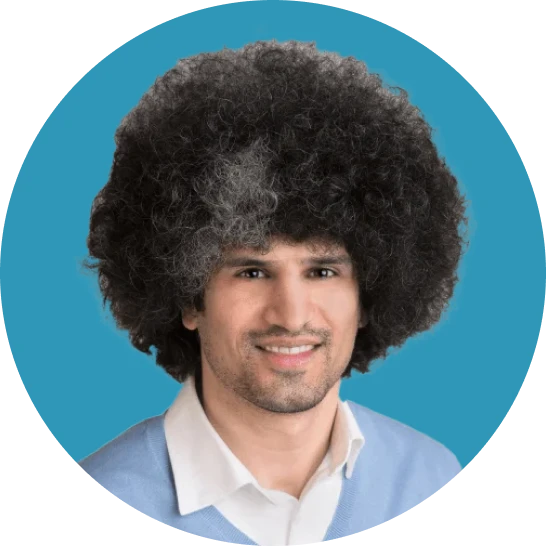
What’s up? Welcome to the Local Marketing Lab. Joining us in the lab today is a guest with over 20 years in the tech space across multiple verticals, including restaurant. He loves driving fast and taking chances. He’s the founder of multiple organizations, including the Vivant Corporation, Utiliko Corporation, as well as Milagro Corporation, and is the CEO at all those entities as well. We are speaking with Hamed Mazrouei. Thank you for joining us in the lab, my friend.
Hamed Mazrouei
Absolutely. Thank you for having me on board.
Justin Ulrich
You bet. You bet. Yeah. Your background is really interesting. I love that it’s across multiple verticals, and you’ve got a history of kind of starts and stops and figuring out what works best and failing forward and ultimately succeeding in many different industries.
So I don’t know if you want to just give us a quick, high level of your journey and what got you to where you are today. That would be awesome.
Hamed Mazrouei
Absolutely. Yeah. I’ll give you a short story of it, but funny enough, I put a LinkedIn post, I don’t know, about a month ago that my last position was at Best Buy. So I actually took a pay decrease to go work at Best Buy for $8.94 an hour.
Justin Ulrich
Oh wow.
Hamed Mazrouei
Back in 2002, three. So the tides have absolutely turned. But I got fired out of there for a bogus reason. And then that was my last job, per se. I remember I was crying in the car, and the same manager who had hired me came out and was like, hey, dude, it’ll be okay. You’ll figure it out.
And sure enough, figured it out, got into surveillance, and then started — customers started asking, hey, if you do our video surveillance, you should do our alarms, cameras, audio, video, things like that. And then they — that was the beginning of the first company in 2003. And then things just kind of started morphing into customer demands and letting them sort of drive and see what makes sense to add on.
From there, we kind of, we started getting more and more into a restaurant space, hired somebody who had done business with the guys at Genghis Grill. That was the really beginning of everything.
So I remember when I built our first software, was a customer, actually, the first one was an employee theft prevention tool where it proactively went through all the transactions and any exceptions. It would automatically grab that check and then email it to the manager. That was game changing. And I don’t even. I don’t know if there is a solution out there right now that does anything like that.
But anyway, that was the beginning of the software stuff. And then from there, it went into customer feedback and then went into Vivant or telecom company. And then we had shut down improving restaurants, which was the predecessor to Milagro. We were way too early to the game we were talking about back then, there was no AI. So we’re talking about CI (customer intelligence) because there was business intelligence, but not really any customer intelligence in 2010.
So we were way too early to the game to try to solve the problem that we’re solving today, some decade later, twelve years later. But after shutting that down in 2019, I always had that itch that, hey, someone has to step up and solve this problem. But because it’s so complex and so difficult to solve, it’s going to take a ton of money, it takes a ton of resources, and it really takes a, it takes a unique set of individuals to actually take on the challenge and solve it.
So I pitched it for several years to everybody, hey, like, you should do this. In fact, there was a group of C-levels that had sold the company for a pretty good sum of money. And when I approached them, they said, impossible to build, impossible to fund, and impossible to operate once it’s built.
Because we do one part of this, we focus on just the feedback part, and that alone has been a challenge, so, let alone building a complex platform like this. But that’s kind of how this story morphed into what it is today. And again, where I kept solving my own problems and by solving my own problems, I realized everybody else has similar problems and I could use those solutions in order to solve their problems as well.
Justin Ulrich
That’s perfect. Yeah. Your solution is really robust. You say certain companies focus — there’s entire companies that focus on just one aspect of what your solution provides. So it’s really interesting to see how you guys do a lot of things really well and tie it together really effectively to create like a one-stop-shop, you know, for, for many different aspects of managing your business.
From the marketing side, though, because this, this podcast, we typically focus on the local marketing aspect. You know, what are some, you’ve gotten lots of, like, you’ve gotten lots of visibility into, you know, seeing how your clients market to their guests, as well as you’ve seen impact and results of their efforts. So I’m curious, you know, from your experience, what you’ve seen, what do you feel like moves the needle most from a local marketing perspective?
Hamed Mazrouei
Really, it’s basics. You got to think about it. So let’s take a couple of steps back. Restaurants, everybody says they have thin margins, they have high labor costs, and they have high food costs, COGs. So why is that? For me, I learned this through my own company, through my own experience.
Up until we were under a million a year in revenue, things were really tough. But once we started going over a million and substantially growing beyond a million a year, everything magically started working out like we didn’t have any thin margin problems, we didn’t have any labor issues, and. And again, things just kind of worked out.
Now, bring that into the restaurant industry. An average restaurant is doing — it was $650K in 2021, and I believe 2022, it was like $750,000 a year in revenue, where regardless of what business you’re in, even if you own a lawn company, at $750,000, it’s really hard to pay rent, fix expenses, employees, and still make $100,000 a year in compensation for the owner. Right.
So we started looking at it from that point of view. Why do restaurants complain of these three major problems? And it always came back down to one thing, lack of top-line revenue. A restaurant that’s doing $4 or $5 million in revenue is not complaining to have thin margins. They’re not complaining of labor issues. They can actually afford to give employees a week of PTO and put in benefits and do all the things that a normal business restaurant can’t.
So we start looking at it from a business perspective. How do we resolve these issues? It’s like, all right, increase top line revenue. Okay, how do we do that? Then I started digging in, and I had my team look for customer acquisition versus retention within the restaurant space. And they landed on a study by NRA and then a couple of other studies because the numbers were so outrageous, I could not believe them.
But it was 70% of customers in the restaurant industry don’t go back to that restaurant they visit just one time. That’s 70% of the customers. So we thought, that is absurd. Started digging in, found another study, and it said 60%. And by then, we already had some customers that were on our platform for about 14, 15, 16 months. So we started going back to our CDP platform and looked at the data.
How many of those customers are actually going back, and how many have been just one time visits? And it was anywhere from 69% to, I believe, 71%. So, pretty darn accurate. Now, the question is, how do you solve for that? So now you know the problem. You’re not making enough money. Then how do you make more money?
Well, acquisition is a great channel to bring customers in, but if you don’t retain the customers, which is where the underlying problem is, then you’re not going to get anywhere. And if you look at it from, like, from us, like, I have customers who’s been with me since 2003, right. They’ve been paying for services since 2003, and some have been paying monthly services since 2003, right?
So what does that mean? Acquisition for us is difficult, but retention is done. Like, we don’t have a retention problem. You come into the restaurant space, retention is a major problem. And to come back to your question, how and what helps resolve these issues with retention? Basic communication.
When was the last time that your favorite restaurant sent you an email and it said, happy birthday, or, hey, thanks for coming by today? Or, hey, we haven’t seen you in three weeks or four weeks. You normally come in once a week. Is everything okay? Right. The basics of communication is completely missed within the restaurant industry.
Now, obviously, there’s a lot of reasons why. Lack of proper technology, a series of silo technology. You’ve got 15 different tech companies in a single restaurant just to help them operate that restaurant. Like, to me, that’s absurd. We built Utiliko, by the way, we use Utiliko day in, day out. Without Utiliko, I would essentially shut all my companies down because I just simply cannot operate with ten different vendors.
I’ve been there myself, personally. It’s impossible to manage a company when you’ve got 10, 12, 15 different tech companies, a CRM and accounting, a POS and online ordering, or like, all these different tools just simply to keep their doors open. And that leads to lack of customer data, which then leads to not being able to effectively communicate with your customer.
So I think restaurants are amazing businesses to own. They have really good margins. They’re amazing and scalable businesses to own and operate. Outside of tech, obviously, tech is a game changer because you could scale overnight, no problems. But outside of that, I think restaurants are amazing, amazing businesses to operate.
Now, how do you solve that? Again, just put the basics in place and talk to the customers. And sometimes you do have to make some adjustments to your SOPs, your operation. And I was reading an article, for example, this coffee joint that is drive through only the first question they ask is, what is your phone number? And they put in your phone number, and they have, like, a 90% penetration rate.
And by the way, so 90% of the customers are given phone numbers out. Why? Because they’re asking. That’s it. 10% says, hey, I don’t want to give you my phone number. Great. No problem. What can I get you? Right, so what are they doing? Now, the number one problem is how do I communicate with my customer? So if you have their email or phone number, specifically text messaging is just gonna crush it.
So imagine, like, this is an example that we are doing today. We’re not focusing on, you know, we’re an all in one platform. For us, the complexity of running siloed, best in breed products is just, it’s unimaginable why a CEO would make that decision.
So, in fact, we own a podcast. And in one of our podcasts, I brought this point up and I said, if I was a CEO of any restaurant brand, I would walk into my CTO’s office and say, okay, great, you’re our CTO. What tools do we have in place to run it? All right, we’ve got these ten tools there. We’re paying a premium for every single one. They’re the best of breed. You can’t get any better than that. Agreed? Yes.
Okay, how much of the functionality are we using? I promise you it’s not going to be more than 20%. There’s just no way. And then I would take the information from my CTO, then I would start a road trip to every single one of my locations and ask every single manager, hey, you’ve got this best in breed POS, online ordering, gift card loyalty. Da da da da da. How much of it are you using?
On a daily basis, the manager on site is not going to care about. They’re only going to need what they need to get their job done. Everything else has to be automated. You can’t just buy all these expensive technologies that are siloed that you have to frankenstein together into a, hopefully some sort of a single entry point for the customer and then expect it to work really well, and then it ends up defeating the purpose of the tools.
So again, I always refer to this, and it’s like buying a Lamborghini and giving it to a student driver. It just does not work. I mean, you’re buying a Lamborghini, you paying for it, but you’re giving it to a general manager who’s, who just simply doesn’t have the time. They’ve already got a million responsibilities. They can’t do that.
So again, loyalty also is not the key. So you get the customer information 3 hours later in our system, the customer gets a simple text message. Hey, Justin, you came in today. Thanks for visiting. How was everything? One simple question, right. Everything was horrible. Right? Then that gets escalated to the manager. But if they said everything was amazing, it’s like, great, can you leave us a five-star review on Google or Yelp, you choose, right?
So now I’m actually proactively involved. And then if the, if the repeat visit of the customer, if they come in once every month, 15 days later, they get a reminder, it’s like, hey, just, here’s a link to make another reservation, right? Or if they come in every three months, then a month and a half into it, they get that message.
So again, it’s just, for us, it’s not about being the best in breed, is how do we, how do we accomplish what the store needs? That’s critical. You have to do everything that they need in order for the tools to be continuously used. And then how do you automate everything else beyond that in order to get that customer to come back? That simple.
Justin Ulrich
Yeah. And also, we do take another step back, creating the right experience for folks when they come into the store. Like, you talk about getting the feedback, you know, that’s an incredible tool to be able to know or gauge the experience they’re having.
But too many times, folks will just continue to spend money on marketing without fixing the experience, which is what causes those folks to only come one time if that incredible experience. They were treated very well. Treated kindly, treated like they were extremely welcome there, that awesome food, you know, and a great experience while they were there, then they’re gonna come back.
And then you can take those dollars, segment your audience to those who have been there, like you’re talking about, market to them with your marketing dollars, and continue to drive repeat business from those folks. So now your money is not only going to acquisition for one-time visits, but it’s split between a couple different acquisition as well as retention marketing.
And you’re able to know, nurture many different segments of folks based on their engagement or their experience with your brand.
Hamed Mazrouei
Agreed, 100%. But for us, like, obviously, if you start a restaurant business, then that’s given. Food and service has to be amazing. If it’s not, then good luck in a way. Right? Like, those are non negotiables. Like, you can’t like, again, that’s not our job. For us, that’s the basics. That has to be right, because you’re absolutely right.
Like, let me give you an example. Like, these are examples that are…that you could actually…so I have a couple of examples. One that I just recently happened at NRA, and then one here, there’s a restaurant near my house. They’ve got a few. They’ve got like 20 or so, more than 20 locations, but they do pretty well. And it’s — food is amazing. Service is always amazing. Like, those are given. They’re good. They’re really good operators.
However, I’ve been going there off and on for a few years. I have never, ever had gotten any form of communication from them. Zero. I know they have my mobile number in their waitlist app, right?
Justin Ulrich
Mm hmm.
Hamed Mazrouei
And then we were, we approached them to do business with them. So we got some insights. On average check size, for example, so it’s like $67, average spend. Every time I’m in there, I’m spending twice as much. So now what does that mean? That means I’m twice as profitable as their average customer.
Justin Ulrich
Mm hmm.
Hamed Mazrouei
That also means I tip twice as much because 20% of a hundred on 50, $60 is more than 20% of $67. Right. So. And then they’ve got my contact information. Now, when I walk in, they put me on a waitlist and I wait 45 minutes in line. And the last two times, it just was, I was like, I refuse to wait 45 minutes in line and spend twice as much and give you twice the profitability of every other customer.
I just, I would go somewhere else. Why? Why wait, right? Versus, you walk, I walk in, give them my mobile number. Again, these are the problem. Again, when I say we solve our own problems, like I’m solving my own issues, which then imagine if you scale that to every other customer. What I want, when I walk into that restaurant, it’s my favorite brand.
So now I say it’s my favorite brand. I haven’t been there in probably eight months. And the last two times, I wonder, I waited in line for 10-15 minutes, and I was like, you know, what amount? However, imagine if I walked in there, gave them my mobile number, they put in my phone number, and they said, Hamed, we have a 45 minutes wait because we’re busy, obviously, as you can see.
However, considering you’re a VIP customer, meaning you spent twice as much, tip twice as much. Give me about three minutes on the hive. You see that at the next table, and I’m gonna bump the next guy down the list. Right. And by the way, this happens every day. Now, today, go to a hotel, check in. If you’re, you know, Bonvoy platinum member versus a nobody, you get treated differently, right? You get upgrades, you get this, you get that.
Or even simpler, you want to talk about a waitlist site? Look at airlines. Everybody with priority boards first. Why can’t we do that in a restaurant? Why can’t I get bumped up? Because I’m more profitable. So now let’s come back to the negative aspect of that. What is this restaurant actually telling me? They’re telling me that they don’t care about me, that if I go or don’t go, it’s indifferent to them.
Now they’re pushing me. The highly profitable customer, which spends twice as much tips twice as much, is twice as profitable as every other customer. They’re pushing me to go to their competitors, which is what I’m doing, because we have to eat anyway, right? So now the competitor gets me. They treat me better. They treat me like a VIP.
And guess what they end up with? They end up with average customers. Average customers, average profitability. They leave average tips and they spend average amounts. So now you end up in that. Well, we have thin margins, we have high labor costs, we have high food costs, and it just, it’s a vicious cycle down. All you have to do is just simply recognize.
By the way, did I ever mention discounting it? No, I’m already happy paying a premium. In fact, I was talking to another friend of mine, and he runs a medical facility, and he said, hey, like, I’ve done this heart scan and, like, all this stuff. And I was like, hey, get me in there. And he’s like, oh, perfect. I’ll get you in. I’ll get you scheduled and I’ll comp it.
I’m like, don’t comp it. The fact that you. I don’t have to do anything. I just show up there and I get it done and I leave. That’s more than what I can ask for. Just give me that VIP treatment so I don’t have to call somebody, I don’t have to schedule it. I don’t have to do anything. I just want to show up, get it done and get out. And that’s exactly what happened.
Justin Ulrich
That’s a great, great example.
Hamed Mazrouei
It’s not always discounting. It’s just recognition. You know, the VIP treatment. And in the restaurant, it’s so easy to do that. You just have to do it.
Justin Ulrich
Yeah, you just have to do it. That’s right. Yeah. A lot of times folks have, like you talked about, many different solutions. There are only 20-ish percent utilization of different tools. Like, they’ve got all this data. There’s a huge push for the last couple years to data, data, data, bring in all this data, but nobody does anything with it.
So if you don’t have anyone on site or a team trained to actually know how to leverage the data, you know, what’s it’s, is it even worth, you know, capturing, collecting, spending money on all these tools if you’re not going to really use them? You know.
Who do you, do you have an example of someone, maybe one of your clients, that is doing things really well that you want to give a shout out to?
Hamed Mazrouei
I don’t think we have anybody yet that is really fully using the entire platform to its max capacity. We’ve got one that’s onboarding that we made a deal with. It’s like, hey, we’re gonna run support, we’re gonna run marketing. Just let us handle it. That’s our department. It’s our responsibility. Anything goes wrong, it’s our problem. We’ll fix it. We’ll figure it out.
So I’m excited for this one. And by the way, I spend a lot of time with our customers. I’m pretty hands on. I want to ensure that because I essentially built the entire platform. So I know the inside, inside and out. I know what it’s capable of, what it can’t do. And I take that feedback directly and we improve the system day in, day out just by being on site, being involved in these different things.
I’m super excited on this opportunity because they’re already doing several million per building. And the upside should be like, they’re already profitable, but they could be way more profitable just by simply doing some of the basics. And then we’re going to start truly measuring that and build a huge case study because these are doing like $45 million per building and there’s already, I believe, nine up and running. So that’d be exciting.
But yeah, I still, even within our customer platform, like some are, again, I don’t know, we’re having these discussions, but sometimes it feels like they haven’t fully grasped the idea of if I start doing x, Y and z, then the result, I’m going to be completely different than my competitors. And again, some of it does require some operation change as well. But that’s the key.
Like, actually, and the other example is we went to shout out to these guys at Stake 48. So I was at NRA. We went there night one. There was four of us dined in. There were some mistakes that were made on the order, everything. And they gave us some free desserts, etcetera, to make up for it. And then the food was really good. It was just off the chart. They had this creamy corn thing that then they had, they made it into like a creme brulee where they burned the sugar on top and it was just freaking awesome.
So the next night, it was just two of us, me and my COO, and we’re like, hey, why don’t we just go back there anyway? And we swapped hotels. We went to the other side of the river, and like, yeah, let’s go. So we went back. The hostess did not recognize us, or if she did, she could care less, right? So that was kind of bummer. But the moment we got seated, three people came by and like, oh, you guys are back again, right?
They just made us feel so special. So the biggest. If they would have, if they had some way to get that experience started from the hostess, it would have been off the charts. However, the first person shows up, it’s like, oh, you guys are back again. You know, thanks for coming. It’s like, okay, great. Amazing. Yeah, they recognized us, right?
And then a manager came by, and she’s like, oh, you guys were here last night, too? No, it’s like, oh, yeah, we were here. We’re sitting over there, and we asked to be seated kind of close to that glass table, the glass kitchen stuff, but. And then the server shows up, and obviously he recognized us, etcetera.
But the thing is, like, the only two things I would improve at that restaurant is start that experience with the hostess. Imagine. It was a hell of an experience. On a sec. The first night, who cares, right? I don’t talk about the first night. Right? I’m talking about the second night. What did they do? All they did is just recognize that we were there the night before. That was it.
Two things to improve. That experience really should start with the hostess, because when that phone number goes in, I made reservations both nights. They already knew who I am. They should have known that I was there the night before from the reservation. And the hostess should have started that conversation. Right? It’s like, hey, you’re back again. Just that, right?
And then the only other thing I would add, when they came by, they did not use my name. They could have said, hey, Hamed, you’re back again tonight, right? There’s a ton of studies around customers’ first name. That’s why Starbucks asks you, what is your name? Because they want to make that personal connection. So if the two managers, the two people that came by, had they just said, hey, Hamed, you’re back again, they could have easily looked it up and just used that. Right?
Justin Ulrich
Yeah.
Hamed Mazrouei
So again, it’s. It’s not that difficult to pull off. It’s just surprising that a lot of restaurants haven’t pulled that off yet. And make that personal experience. And by the way, look at me sharing the story of the second night. Right.
So basic things like that will just, it’ll completely change the environment and just making that customer feel like they’re VIP, making them feel special. And by the way, the first night they discounted because the orders were not done correctly, et cetera. But the second night we paid full price.
Justin Ulrich
Yeah.
Hamed Mazrouei
There was no discounts.
Justin Ulrich
Yeah. And it was an even better experience. Yeah, I see. I’ve seen that in hotels. You’ll go in, I think Marriott does it where you walk in the room and it’s like, hi, Justin. Or, hi, Hamed on the TV. And, you know, it welcomes you in. It’s like, oh, man. You feel like you’re very special and you are VIP. Very cool.
Those are incredible examples. I feel like we could go on for hours, but I feel like our listeners might not stay with us. So I did want to switch gears a little bit. I know that. I’ve heard that, you know, you love driving fast. I mentioned earlier, you drive fast, take chances. So you told me, when we were at NRA, I chatted with you for quite a while, and you told me about a time when you’d gotten in a motorcycle accident. Do you want to tell us a little bit about that?
Hamed Mazrouei
Yeah. So that was a crazy story. I have this crazy buddy of mine who comes up with these off the chart ideas. So back in 2000, I think it was like 14/15. He loves fast cars. In fact, he was the first guy that I ever drove in a supercar with him back in the day. And he had always inspired me. He was doing stock tradings and he was doing really well. So I always looked up to him, always loved hanging out with him, etcetera.
So we did a lot of traveling across the world together and just doing these crazy hikes, like three and a half hours at like 2:00 in the morning till 6:00 in the morning just to, you know, reach the top of them. Anyway, it was just crazy stuff. So one day he says, hey, let’s get a bike off road bike, and let’s go to Chili and come back.
And I’m like, okay, great, let’s do it. And I’m the type of guy that’s like, all right, I’m up for anything and everything. So you tell me anything adventurous, I’m all in. Obviously, I mitigate risk, but I didn’t do the homework. He normally does a pretty good job of doing the homework. And so we went out, we bought two motorcycles, we bought the entire gears, everything, you know, bought it home.
And my dad just was, he was unhappy, but he said nothing. I remember the day that I had an F-150, put the bikes in the back, bought them home. And he just looks at me and he just kind of quiet, and he’s like, oh, man, I know what’s going to happen. And I had no experience riding motorcycles, like, at all. Like, then I went to classes, etcetera. But then, then we started planning it out, and it’s like, oh my God, it’s gonna take us like a month and a half to go and come back. And it’s like, no way that’s gonna happen.
So we packed up and started doing local trips here in the US. And we were in Colorado and a group of. We bought these BMW 650s. They’re thumpers, so they’re single cylinder right underneath the seat. And then these guys. So we, we bought the entry level because we wanted to kind of train. And then the goal was to go to South Africa and buy these R 1200 GF’s motorcycles, which are built for the, for the desert and built for off-road.
So we ran across some of these guys in Colorado, and it was still snowy, everything. They were off road, so we started following them. And at one point, we got onto the main road, and we were probably going 100 miles an hour following these guys. And I was all the way in the back and the road was beautiful. There was this river on my right, mountains on my left, and I started making this left turn. And for just a split second, I had some flashback memories.
And at that time, my dad wasn’t here anymore. So just kind of for again, a split second. And then by the time. And I was leaning to turn left, and by the time I snapped out, I felt I was leaning way too hard into the turn, and I couldn’t lean anymore because I feared that I would just crash. What I did is I stood the bike straight, slammed the brakes, went off the asphalt into gravel, and the moment I hit the gravel, the front wheel just kind of completely lost it.
And that bike just started tumbling for probably about 150ft. And it just went right down into the river. And I just kind of skidded all the way, probably for that hundred feet or so. And then I had my bluetooth headset. I was talking to my buddy and I just kept freaking hitting the thing, saying, hey, I crashed, I crashed, I crashed. And the music was on, so he couldn’t hear me.
So finally, once everything was done, he came back and it was just such a so lucky. And there was a a lady and a guy in a Harley Davidson coming opposite of where we were going. And when I stood up, she just grabbed me and she hugged me so hard. And I was hugging her like my life depended on her. And she said, I saw you. You are so lucky to be alive. And that was. Yeah.
Justin Ulrich
That’s wild. I didn’t know. I didn’t hear all those details. Was falling in the river and stuff. It is so crazy, man. Yeah. Bikes, they’re fun. But, you know, I’ve also heard that you’ve got a. You’ve got a Lambo and you like to drive fast in the streets. So what I thought would be cool is to leverage AI and drop you straight into this scene within Fast and Furious.
Hamed Mazrouei
Funny. That’s amazing.
Justin Ulrich
What is hysterical is I could not get AI to give, like, hair similar to yours. I was, like, typing in all things, even Bob Ross hair.
Hamed Mazrouei
That’s crazy.
Justin Ulrich
Anyways, anyways, going up against Vin Diesel there, Dominic Toretto.
Hamed Mazrouei
That’s a great movie too.
Justin Ulrich
So, yeah. Oh, yeah, they’re fun. I’ll shoot that over to you. But, you know, before we jump off, you know, how can our listeners follow you? Follow Milagro or any of your other brands?
Hamed Mazrouei
Yeah. Anywhere on social media. We’re all over the place. We’re trying to get the word out. We want to try to help every restaurant. So if there’s any thought leaders, if any visionaries are listening, we love to talk to you guys, and I’d love to sit down and have a chat. And again, these crazy ideas can come to fruition and can come to life.
And the idea is, how do we help change the industry to not have thin margins, not have labor challenges. And again, the solution is easy. I do that every day in my business. If anybody comes up to me and says, hey, I’ll save you $500,000, versus somebody else coming in, says, hey, I’ll add $5 million in revenue. I’m always going to go with the revenue, because in business, I promise you, money solves 100% of your problems.
Let me repeat that. Money solves all your problems in business, no matter what it is. So, increasing top line revenue will allow you to do things that will completely set you apart from your competitors. And it’s not that difficult. You got to focus on guest retention. So, again, if you’re a thought leader, if you’re a visionary, love to speak with you and explore how else we can push their boundaries.
Justin Ulrich
Perfect. Awesome. Well, it was a ton of fun having you in the lab. Thanks again for joining us, Hamed.
Hamed Mazrouei
Absolutely. Thanks, Justin.
Justin Ulrich
You bet.
As always, thanks for joining us in the Local Marketing Lab. This podcast was sponsored by Evocalize. To learn more about how Evocalize can help you grow your business, visit evocalize.com.
If you learned something from today’s episode, don’t forget to subscribe on your favorite podcast platform and follow us on LinkedIn and Facebook @Evocalize. That’s Evocalize and on X at Evocalize.
And remember, keep innovating and testing new things. You’ll never know what connects with your customers best unless you try. Until next time. Thanks for listening.
Show More Show Less