


Summary
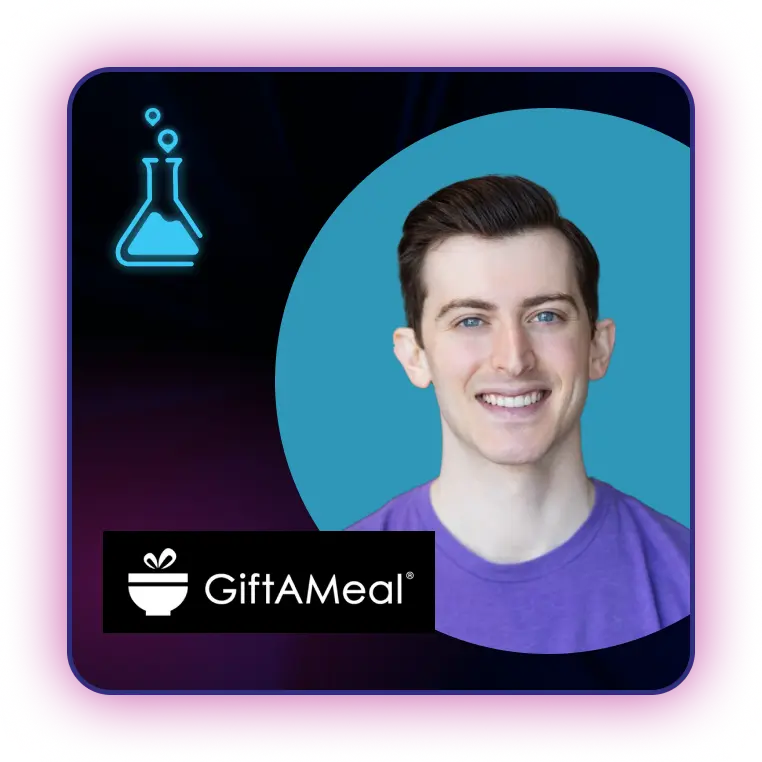
Are you tired of lackluster loyalty programs that fail to boost customer spending? In this episode of the Local Marketing Lab, Matt Smolin, co-founder and CEO of Hang, reveals how next-gen loyalty programs are revolutionizing customer engagement. With a background in finance and a passion for problem-solving, Matt shares groundbreaking insights on creating loyalty experiences that drive real results, including the potential for 3X higher customer spend.
Reimagining loyalty for the digital age. Traditional point-based systems are out, and personalized, gamified experiences are in. Matt Smolin explains how next-gen loyalty programs leverage AI and machine learning to deliver tailored rewards that resonate with individual customers. By focusing on engagement rather than transactions, brands can create emotional connections that drive long-term value.
Omnichannel engagement is key. Next-gen loyalty programs break free from single-channel limitations. Matt emphasizes the importance of connecting customer interactions across in-store visits, online purchases, social media engagement, and even third-party platforms. This holistic approach allows brands to reward customers for all touchpoints, creating a seamless and more valuable loyalty experience.
Measuring true program impact. Gone are the days of comparing loyalty members to non-members. Matt introduces a more accurate method for evaluating next-gen loyalty programs: measuring incremental spend increases per user. This approach provides a clearer picture of program effectiveness and helps brands optimize their loyalty strategies for maximum ROI.
Matt’s innovative perspective on next-gen loyalty programs offers invaluable insights for businesses looking to boost customer retention and drive revenue growth. Whether you’re a local retailer, restaurant owner, or e-commerce brand, this episode is packed with actionable strategies to transform your approach to customer loyalty.
Key Takeaways
Here are some topics discussed in the episode around next-gen loyalty programs:
- The limitations of traditional, points-based loyalty programs
- How to create engaging, gamified loyalty experiences
- The importance of personalization
- Strategies for connecting loyalty across multiple channels
- Using machine learning to optimize rewards and offers
50 years ago, loyalty wasn’t about a discount. It was the barista behind the counter knowing your name and your order and smiling at you and just making you feel good.
MATT SMOLIN

Resources
- Connect with Matt Smolin on LinkedIn.
- Learn more about Hang, a brand loyalty and membership platform.
Other shout-outs
- Boba Guys, Roam Burgers, and Ulta Beauty for their successful loyalty programs.
Transcript
Justin Ulrich
What’s up everyone, and welcome to the Local Marketing Lab, where you get real-world insights from industry pros to help you drive local revenue and local for growth. This podcast is brought to you by Evocalize – digital marketing tools powered by local data that automatically work where and when your locations need it most. Learn more at evocalize.com.
What’s up? And welcome to the Local Marketing Lab. Joining us in the lab today is a guest with experience across many industries. He’s an entrepreneur, has a passion for problem solving, and is the co founder and CEO of Hang. Matt Smolin, Thank you for joining us in the lab, my friend.
Matt Smolin
Yeah, thanks so much for having me.
Justin Ulrich
You bet. So, you know, we talk a lot on this show about acquisition marketing, and, you know, you specialize in the loyalty space. 100% is a component of marketing. I thought it would be good to get you in the lab and talk a little bit about loyalty, you know, from your perspective.
But before we do that, maybe we could just, you know, get a little bit about your background so we can have an understanding where you come from and what Hang is all about.
Matt Smolin
Definitely. So, you know, the long, short story of it all is started my career more on the finance side, was working at a bank as a trader there. Eventually moved over to a company out in the Bay Area where I was working at this larger fund, investing into mainly, like, private equity, venture capital funds. And through that work, realized that I always had these own ideas of my own, so why not start something?
And so I had a passion. I have a passion for a few different things. I initially started this company in the live ticketing space just with my passion for live events and all the issues I had buying tickets kind of parlayed with just what I would see every day as a trader where the systems looked a lot more efficient, actually thought could be really beneficial to bring that to that market. Started that company, it was doing pretty well.
It was killed by Covid to a certain degree, right as we were launching, like, our newest app and stuff like that, and so spent over a year kind of trying to figure out what was next. You know, we had raised some money and had money in the bank and had to let go a bunch of people and close our office down. And soon enough came up with this other concept that kind of played off of what we were already doing. And a year later, that really became what was Hang.
And so Hang really started at the end of 2021, understanding that in a world where acquisition costs become so much more expensive for brands, for a number of reasons, it’s really, really important for marketers to find ways not so much to offset or not so much to reduce CAC because it’s almost impossible, but instead offset it.
And as a result, like so many brands have looked to loyalty solutions and other customer engagement solutions that can just, like, get more value of the customers that they already do have. But I would tell you that I think when measured correctly, very rarely do these solutions actually significantly lift lifetime value or at least lift it enough to make up for this increase in acquisition cost.
And so we thought that there’s a huge opportunity to come in here and create something that, you know, not only was really beneficial from a brand perspective in regards to bottom line, but actually just fun and engaging for an end user.
Justin Ulrich
Yeah. What, so what is it that’s, that’s fun and engaging about Hang, you know, relative to other loyalty solutions that are out there?
Matt Smolin
Well, I think the question is what, what is nothing engaging and what is wrong with the other solutions? And, you know, as the CEO and co founder of this company, people think I’m this big points nerd guy, where I count up all my points, I’m in every program, all these things. Like, I belong to very few loyalty programs, if any. Cause I think they’re all miserable.
If you look at any loyalty program on earth, and it’s not just a restaurant thing, I think it’s just like generally across number industries, they’re basically all the same exact thing. And, you know, I’ll definitely answer your question, what makes ours more fun and exciting? But I, I think the starting point here is like, when you look at these other programs out there, they really are all the same and they really haven’t advanced in years.
I think, like, it’s wild to me when I go to these conferences and I see, I never find new technology in the space or anything that’s actually like kind of next gen and how we can help brands and customers engage. And I think, you know, there’s three core areas that need a lot of improvement.
One is the fact that these are super transactional programs. It’s always the same. Spend money, earn points, get reward over and over and over again. It takes forever for customers to level up. And very rarely do users know what points even mean. We’ve surveyed over a million customers. No one ever has any understanding of how many points they have in their accounts and what those points are going to mean to them.
And no one since the beginning of time has ever gone to a restaurant, shopped at an e-commerce store, made a purchase, and as they went to make that purchase, they said, oh, if I spend an extra $7, let me pull out my calculator, see how many points that equals and what that’s going to mean to me. It’s just not how we operate. Right. And if you look at categories that are really good at engagement, mobile, gaming, social apps, things like Duolingo. They all follow two core rules.
One, no customer will ever read instructions, and two, no customer is not going to do math. And these are platforms where you level up in seconds and minutes, not weeks and months, and you get dopamine hits through animations and rewards that are valuable or usable in a game. I think especially for local businesses and restaurants, you only have so much margin to give up and so it’s very limiting in the rewards you can offer.
When you look at these sorts of very popular mobile games, they’re great at creating reward sets that have a high perceived value but low cost. Unlocking a new level you can play. Status, community, entertainment. The OG of this is totally McDonald’s Monopoly. Everyone and their sister would get Park Place if you like, for four days. You’re about to become a millionaire. And even though you never got it, it didn’t matter. That was fun.
And so there’s a few other pieces on, like, how we think about changing loyalty from like one size fits all to fully personalized, as well as just like a more omnichannel experience. But from an engagement perspective, which I think is what you initially asked, I think those are the biggest issues that face loyalty today.
Justin Ulrich
Yeah, it makes total sense. So if I’m a business and I’m trying to drive loyalty, I need to do a good job of understanding the different customer segments that I have, knowing what they value and trying to establish like an emotional connection with them.
So a tool like this is a great way to establish that connection at a deep level and give them something that they like to do that they find entertaining, whether they’re in your store, you know, in restaurant or in retail, whatever it might be, or outside. Right. It gives them something to do is stay tied to the brand. And it’s not just the brand from corporate pumping out brand assets and content and, you know, commercials and stuff like that, it wires them to your brand.
Matt Smolin
Yeah, definitely. I think, again, you know, there’s this whole thing where people…the word loyalty, I think at this moment in time has been, it’s tired. I think people just expect it to be a crappy program. Like after, as a consumer, after I’ve been a part of 15 different loyalty programs where I’ve gotten very little value, I’m not going to remember the next program or I’m not going to want to be a part of it.
And so you have to actually have to capture that user from day one and really excite them and get them in. It’s kind of like making sure that you have the right sort of progression loop in place to just keep them engaged. And I think like we’re, it’s an uphill battle because everything out there is so bad. But once you get them in, it actually becomes quite easy because you’ve been able to delight them in a way that maybe they haven’t seen before.
And to your point, you know, beyond just the core engagement side, which we can go into really deep, it’s also about being personalized. You know, we live in a world now where my YouTube account knows more about me than I know about myself. And so much of my life through technology is fully personalized. But when you look at most brands, they’re going to ever given every customer the same exact offers, rewards and experiences.
And if you don’t tailor the experience of me as an individual, as a brand, one, you’re going to spend too much money and two, you’re going to not have as effective of a program. And so we use things like machine learning to be really smart about giving each user unique experiences, offers of rewards based on their preferences and history. And we can do that in a scalable way.
And in doing that, we found that when a brand, for example, puts out a traditional brand promotion and they test it against our personalized brand promotions, they’re seeing an increase in conversion of 3X, whilst seeing a reduction of cost on the same exact offers by 30%. And the truth is, when a brand sends every customer the same offer, or even every customer in one segment the same offer, they’re just over serving users.
Because each of those people, if you can choose the thing that they actually want, I promise you, you can find something that’s cheaper, that will be more effective than the thing that you’re giving them. And so we’ve tried to scalably do that in a way where now brands can really keep in touch with their customers in a meaningful way. And yeah, that’s going to be great from an efficiency standpoint in regards to marketing costs, but it also just makes the customer feel like you know them.
Back in the day, 50 years ago, loyalty wasn’t about a discount. It was the barista behind the counter knowing your name and your order and smiling at you and, and just making you feel good. And I think like creating more personalization or using personalization to create just like a better customer experience is pushing back to kind of those old days.
Justin Ulrich
Yeah. What are some examples of how you bring personalization into your loyalty programs that you provide for your clients?
Matt Smolin
Yeah. So again, like, well, one thing is we do power full-stop loyalty, but we’ve built this platform in a very modular way, which I think is pretty unique for this industry. We have like a headless solution. The brands can choose between a variety of different features that they want. So theoretically, a brand could already have a loyalty program and just use us for mini games or just use this for personalized offers. You don’t have to use this for everything, honestly.
Like, obviously, I think, like, the best move would be to use us for everything, but understanding that some brands might have like two years left on a contract or it just is a headache to move off of their existing system for a bit and so they start that way. But I, you know, more directly, to answer your question around personalization, there’s a few core areas.
One is in regards to the rewards that we actually offer, you know, in our programs. Like, one of our big features is, and you can still build a program where it’s like a very basic point solution, but we’ve created like this new type of earning mechanic through what we call like mystery boxes. So in gaming it’s called a loot box mechanic, which is the number one driver of actionable games, where it’s like you came back to the app, you beat the boss, you took the action, you open this little treasure chest and it’s like a slot machine.
You get one of many rewards. We do this for loyalty. So you shop at your favorite brand, you go there in person. The more money you spend, the bigger the box gets. When you make that purchase, you can unlock it. It’s one of many rewards. A cool thing though is we have on the back of a model that’s constantly operating, where the probabilities of what you’ll get in that box will shift based on how the program is operating as well as what your unique preferences and histories are.
So some people might be more, you know, more likely to redeem a reward that is a discount. And it doesn’t need to be discounts, but in this case, a discount that is dollars off versus percentage off, things like that. So that’s one area where like, we’re really personalizing the rewards themselves to each user to make sure that we have, you know, we’re really effective in getting them back.
With quests and challenges, different customers can get different quests or challenges depending on their unique preferences and histories, where they’re likely to post on social media, what type of item they’re likely to buy when they’re likely to come to the store.
And then just generally across, like, offer management and promotions, I think that’s a big area where we’re seeing a big lift where, you know, in many cases as a brand, you’ll choose a segment of customers to send a promotion to. Maybe it’s users who haven’t been to our business in the last three months, but a month before that, they all bought this one thing. So it’s another offer. In that case, you might be sending, to keep the math simple, you might be sending 100 people the same offer.
Our system would enable you to set to choose 100 offers and the system will choose the right offer for the right person at the right time and again, like, it just is a scalable way to be far more curated and making each customer feel special and as a result, get them to take the action that you really care about.
Justin Ulrich
Yeah, and it’s not necessarily just through one app, as I understand it. Like, you tie multiple channels of information in. So it’s creating an experience outside of an app. And it’s, you know, like you said with social, if they want to, you’re pulling in information about them. Are they sharing how they’re doing within the program? Like, maybe dive in a little bit there?
Matt Smolin
So, yeah, that’s, that’s actually the third tenant of, like, what’s wrong with loyalty today? So essentially, like, the other piece is that loyalty programs, I think customer engagement in general is single channel today. And that might have made sense 50 years ago. When you’re a one location store in mom and pop shop in some neighborhood, all your business is going to come through that one door.
And as a result, having a loyalty program, for example, that just attributes actions at your POS in person makes sense. But today, your customers are buying, engaging with you across number of channels. There’s third party channels for a restaurant, maybe it’s Uber, it’s a Doordash for an ecommerce brand. It’s Amazon. There’s people posting all across social media, and there’s more social media platforms coming up every year. It could be reviews.
Whatever it might be, there’s a number of actions that just aren’t being covered. A lot of restaurant businesses, for example, might have like a Shopify store where they’re selling merchandise or different CPG products and vice versa. How do you actually attribute that? And so what we’ve done is we’ve connected all these channels and created a solution where that user can really earn and be rewarded across all those channels with just this one single account identifier, which maybe that’s an email, in many cases that’s a phone number.
And as a result, we’ve now connected the entire customer experience, which lets brands really push the user towards whatever they care about, whenever they care about it. And so it’s been pretty cool for a quest or challenge now, it could be post this review, you know, do this thing on TikTok, make a purchase in store, and as a result, it just, you know, creates more opportunity for the brand and the customer to kind of connect with each other.
And some of them really impactful. I think like for restaurants specifically, in a post-Covid world, you know, 30% of orders or 20% to 30% orders come through platforms like Uber Eats and DoorDash, who would never give that data to a brand. And we found a way to enable users in loyalty to now earn based on third party platforms.
And from a brand’s perspective, they can find ways to get that user back to their first party channels. They just have better data and they can be much more efficient with their marketing once they know that that customer is purchasing through third parties.
Justin Ulrich
Yeah, exactly. It’s difficult to identify all the things that someone’s doing, but if you’re able to guide them there and track the data, you could much more intelligently market to them and segment your audiences. And like you said, like fully personalize the offers that you’re driving to them.
Do you have an example of maybe one of your clients that they’re doing this really well or they’ve done some of the tactics really well that you want to maybe give a shout out to?
Matt Smolin
I think that any customer using our full offering has seen really great results. I can speak to a few more specifically. I think generally one stat that we’re really proud of is just like, when you look at the program entirely, we see like the best performance in market. I think the truth is, the way that loyalty is evaluated today, the main metric that most brands use is this kind of concept of how much more are your users in your loyalty program spending than your users who are not.
That’s like the core industry metric. That’s what all the big providers use. That’s what McKinsey uses. And McKinsey will tell you that the best programs in market increase spend. The top quartile programs increase spend by 15% to 25% for users in loyalty versus users who are not. Now we 3-4X that stat, but I’ll be the first one to tell you, I think this is a terrible way to think about loyalty because it’s not incremental.
Loyalty needs to be incremental. What this is telling you is pretty biased because typically your best customers are already going to be the ones who sign up for loyalty. And so when you’re only looking at users in loyalty versus users who are not, the users in loyalty are always going to be increased. Whereas for us, loyalty needs to be incremental. If you’re going to give out rewards, you need to make sure that for every dollar that you spend in rewards, you have a return.
When you use that stat, you’re not going to figure that out. For us, what we do is we actually evaluate our programs based on each user that joins a loyalty program. What we’re looking at is how much more are you as a user spending once they’re in loyalty versus how much you were spending before you were in loyalty. And we do a number of things to be able to understand on the data side, to really understand customers before they even join a loyalty program through credit card tokenization, matching and a number of other features.
And so we have a really great sense of like your entire business, not just the users who joined the loyalty program. And when we run that, what we find is that on average, each user that joins loyalty again, on average, increases spend net of reward costs by about like 56%. So from what we can tell, that’s like the best performing programs out there.
I think, like when you look at some of our programs, I think, you know, Boba Guys is a great example of a company that has been around that number. I think on average they’re increasing spend for users by like 50%. Roam Burgers, they I think are closer to like 100%.
And then, you know, from a mini game perspective, like Ulta Beauty is one of our customers as well. And what we found with them is for their users who play our mini games, 86% of those users will come back to their app the following week. And so just like a number of great stats between both engagement and actual revenue that I think are pretty interesting.
Justin Ulrich
No, those are very interesting. And for our listeners, you operate across…you’re industry agnostic basically, right? Any industry at all that engages with a customer base?
Matt Smolin
Yeah, we do work with brands in a number of industries. Some of those do include ecommerce, retail, even professional sports teams. But in regards to our go-to-market focus, we definitely have more of a focus in the restaurant space. We’ve only been doing a true go to market motion for a few months now. Everything up until then was kind of inbound that came to us. And as we focus these efforts, we are pushing loyalty for the restaurant space.
Justin Ulrich
Yeah, very cool. So switching gears a little bit, and you can correct me if I’m wrong, but I’m getting a sense that you’re somewhat of a nerd like me and that you like…what type of genre of movies do you like? Because I tried digging around for you online and finding some personal information for the audience, and I could not find anything. So what would be a nugget? Like, what type of movies do you like?
Matt Smolin
I think I have really good taste. I’m a little bit biased, but, you know, I do love good movies and TV shows. I’m not really, like, an action movie person. I love a good comedy, even if it is kind of stupid. But really, like, you know, if I’m gonna sit down and watch, like, really get into, like, excited for movie, I do, like, a lot of, like, really, really well made thrillers and some Sci-Fi stuff and things and just, like, really good dramas and stuff like that.
So typically, I’ll like, there’s directors that I like that if they have a new movie coming out, I’ll be excited. Probably the same ones that most people like, but I do like a good stupid comedy as well. I’m just not, like an action person or, like, you can pay me to go see a, like, Marvel movie or anything like that.
Justin Ulrich
Well, I may or may not have missed the mark. Cause, as you know, I like to dig in the background and create AI images of guests, but this one’s not Marvel. But I figured because you’re so into loyalty, it might be good to show you as Samwise Gamgee, because he’s, like, one of the most loyal characters in any movie.
Matt Smolin
Yeah, I mean, I’m not the biggest Lord of the Rings person, but…
Justin Ulrich
Huge miss.
Matt Smolin
Interesting image. Yeah, no, it’s all good.
Justin Ulrich
Well, if you want, we could go ahead and send me some facts about yourself, and I’ll create another image that’s actually worthwhile. We’ll get that out there in social. But it was a ton of fun. Yeah, it was a ton of fun having you on. Before I let you go, though, how do we. How do our listeners follow you? Follow Hang?
Matt Smolin
Yeah, definitely. You can find hang.com, find me on LinkedIn. Just Matt Smolin, or just Hang on LinkedIn. And then my Twitter is estimatted with two t’s.
Justin Ulrich
Oh, very cool. Well, you heard him. If you follow Matt on LinkedIn, he’s got lots of insightful content around loyalty, as you heard in this, you know, episode. He’s got a different approach, different philosophy behind it. So he’s got some great insights that he shares pretty often there.
If you’re looking for a different, engaging approach to loyalty, check out Hang. Thanks so much for listening today, Matt. Like I said, ton of fun having you in the lab.
Matt Smolin
Thank you so much. Great to be here. Really appreciate it.
Justin Ulrich
You bet.
As always, thanks for joining us in the Local Marketing Lab. This podcast was sponsored by Evocalize. To learn more about how Evocalize can help you grow your business, visit evocalize.com.
If you learned something from today’s episode, don’t forget to subscribe on your favorite podcast platform and follow us on LinkedIn and Facebook @Evocalize. That’s Evocalize and on X at Evocalize.
And remember, keep innovating and testing new things. You’ll never know what connects with your customers best unless you try. Until next time. Thanks for listening.
Show More Show Less