To target real estate buyers with Facebook ads, you work inside Meta’s Special Ad Category for housing: every real estate ad must be declared as housing, which locks age to 18–65+, includes all genders, replaces ZIP codes with a minimum radius around a city or address, and removes lookalikes and most detailed targeting. What still works is your own data (past clients, website and listing-page visitors), local creative that tells people the ad is for them, and steady optimization of creative, placements, and budget.
Plenty of older advice on Facebook ads for real estate still tells agents to target by ZIP code, age, income, or life events like “recently engaged.” None of that is available for housing ads anymore, and ads set up that way get rejected or forced into the housing category. This guide covers what you can actually do in 2026, from setting a goal to targeting, creative, and optimization.
Key Takeaways
- Every real estate ad on Facebook and Instagram must run under Meta’s Special Ad Category for housing, including brand and open house ads.
- Housing ads can’t target by age, gender, ZIP code, or detailed demographics, and lookalike audiences aren’t available.
- Location targeting still works, but at the city or radius level, with a minimum radius around any address or pin.
- Your own audiences (customer lists, website visitors, people who engaged with your page or videos) are the strongest targeting you have left.
- Because targeting is broad, the creative does the targeting: local details, the right offer, and video are what reach the right person.
- Optimize one variable at a time (creative, placement, then budget) and judge results on the action you want, not on clicks.
What are Facebook’s rules for real estate ads?
Meta requires any ad about housing to be declared under its Special Ad Category for housing. That covers listings, open houses, home valuation offers, mortgage and refinance offers, and even brand ads from agents and brokerages. The category exists to keep housing ads from excluding people based on protected characteristics under fair housing law, and the rules are strict.
Under the housing category:
- Age is fixed at 18–65+. You can’t narrow it.
- Gender includes everyone and can’t be edited.
- Location works by country, state, city, or a radius around an address or dropped pin, with a minimum radius. ZIP code targeting and location exclusions are not available.
- Detailed targeting by demographics and behaviors is removed, and only a limited set of interests remains, if any.
- Lookalike audiences can’t be used.
Meta has adjusted these rules several times since 2019, so check the current settings in Ads Manager before you launch. Organic housing posts face their own changes, covered in why Meta is removing housing posts.
How do you target real estate buyers on Facebook?
The audience tools that still work for housing ads all start with your market and your own data:
- Location. Pick the cities or the radius around a listing or office that match where your buyers want to live. A radius around a listing is the most natural fit for a property ad.
- Customer lists. Upload your past clients and sphere so you stay in front of the people most likely to refer you or move again.
- Website and listing-page visitors. Retarget people who looked at a listing, a landing page, or your home valuation offer. These are the warmest prospects you have.
- Engagement audiences. Reach people who watched your videos, engaged with your page, or opened a lead form without finishing it.
Since you can’t tell Facebook who the buyer is, the ad has to tell the buyer it’s for them. Write to the motivation instead of the demographic. A first-time buyer responds to “What does it take to buy your first home in [City]?”, and a move-up buyer responds to “Room for a growing family, 10 minutes from [Neighborhood].” Both phrasings are open to everyone, which keeps you within fair housing rules while still drawing the right reader.
Ask yourself:
- Who is this listing or offer best for, and what problem does it solve for them?
- Which neighborhoods, schools, or commutes matter to that buyer?
- What would make them stop scrolling: the price, the photos, a payment estimate, or the open house date?
For the bigger picture on turning that attention into clients, see our guide to lead generation for real estate agents and mortgage loan officers.
What goal should a real estate ad have?
Start with one goal per ad, because the goal decides the format, the audience, and how you’ll judge it. Common real estate goals:
- Find motivated sellers in your area
- Attract qualified buyers for a listing
- Fill an open house
- Grow your sphere with a market report or home valuation offer
- Send traffic to a listing page that captures contact details
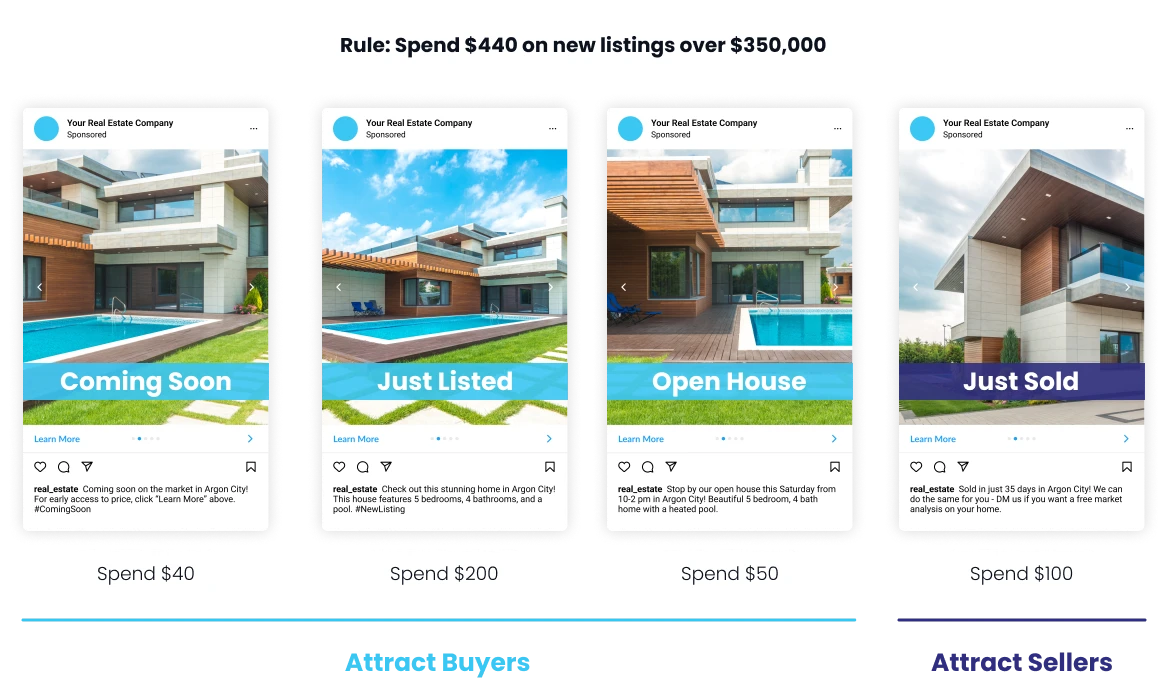
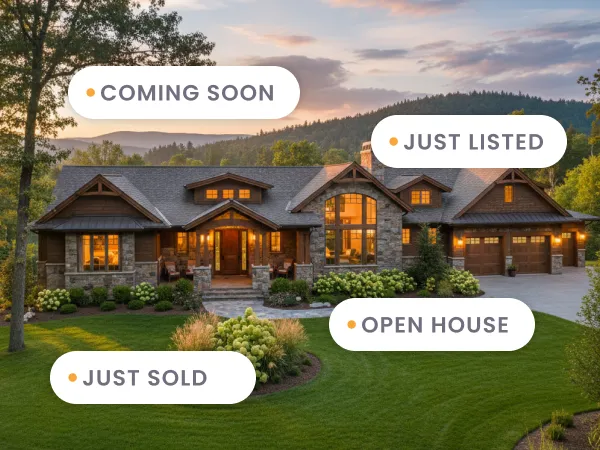
A listing ad aimed at buyers needs photos and a clear next step. A seller ad needs an offer worth trading an email for, like a home valuation. Mixing goals in one ad usually means neither works.
How do you write Facebook ads for real estate?
Keep the copy tight. Meta truncates long text, so the first line has to carry the message:

- Copy length. Aim for about 125 characters of primary text, a 40-character headline, and a 25-character description so nothing gets cut off. Lead with the most compelling detail: the neighborhood, the price, or the date.
- Calls to action. Match the button to the goal. “Learn more” suits a listing, “Sign up” suits an open house or market report, and “Get quote” suits a home valuation. See Meta’s call-to-action options.
- Images. Use high-quality photos with natural light, and lead with the room or view that sells the home. Keep text on the image short.
Make it hyper-local
Local detail is the targeting you control. Name the city or neighborhood in the headline (“New in [Neighborhood]”), show recognizable landmarks, parks, or schools in the visuals, and tie ads to local events when they’re relevant. An ad that reads like it was made for one neighborhood beats a generic one, and it reaches the right people even when the audience settings are broad.
Use proven persuasion principles
A few principles of persuasion consistently lift real estate ads:
- Social proof. Client reviews, recent sales, or homes sold in the neighborhood.
- Reciprocity. Give something first, like a free home valuation or a buyer’s guide.
- Authority. Your local expertise, years in the market, or awards.
- Liking. Friendly, plain language and a real face from your team.
- Commitment. Start with a small step, such as a market report signup, before asking for a call.
- Scarcity. Honest urgency, such as an open house date or a price change.

Use video and motion
Motion stops the scroll better than a still photo, and video unlocks placements like Reels and Stories. Short listing tours, animated slideshows built from listing photos, and simple moving text all work. Keep it under 30 seconds and put the key detail in the first three seconds. Tools like ListingMotion turn the listing photos you already have into video automatically.

How do you optimize Facebook ads for real estate?
Treat every ad as a test, and change one thing at a time so you know what made the difference:
- Creative. Test different photos, headlines, and video against each other. This is where most of the gains are, especially when targeting is broad. Meta explains how to run A/B tests in Ads Manager.
- Placements and formats. Compare feed, Stories, and Reels, and single image against carousel and video.
- Location. Try a tighter radius around a listing against a wider city-level area.
- Budget. Give an ad enough budget and time to exit the learning phase before you judge it, then move spend toward the ads that produce the result you want.
- The landing page. A great ad that sends people to a slow or generic page wastes the click. Send them to a page about that listing or offer, like a SmartSite.
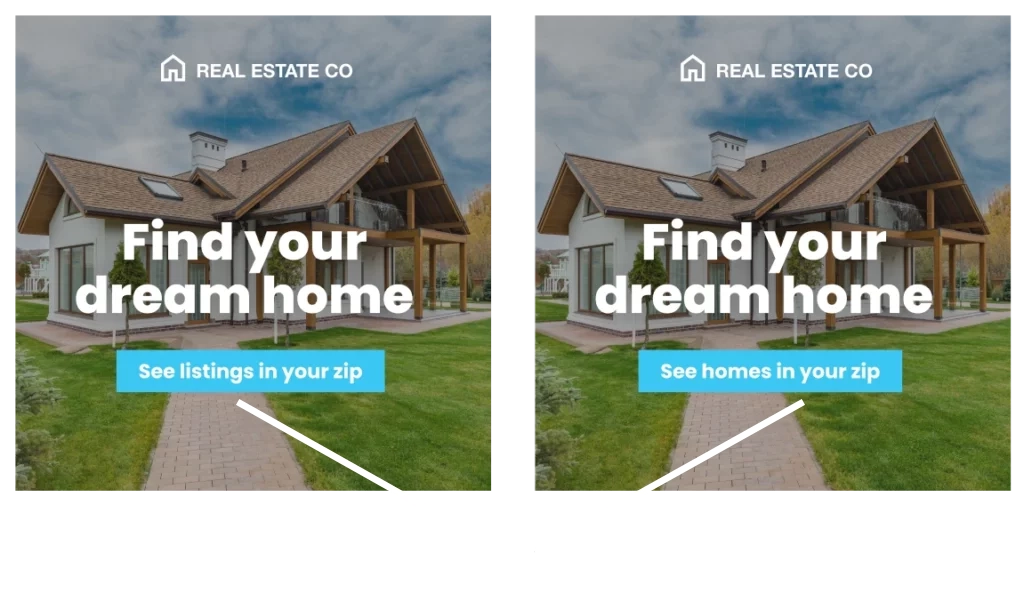
Judge each ad by the goal you set: showings booked, open house signups, or valuation requests, not clicks or likes.
Should real estate agents use only Facebook?
Facebook and Instagram are strong for listings and sphere marketing, but they work best as one channel among several. Google Search reaches people actively looking for homes in your area, YouTube and TikTok reach people through video, and a landing page and fast follow-up turn interest into conversations.

The agents who get consistent results run a plan across channels instead of one-off posts on one platform.
Frequently Asked Questions
Can you target by ZIP code in Facebook real estate ads?
No. Ads in Meta’s housing category can’t target or exclude ZIP codes. You can target countries, states, cities, or a radius around an address or pin, and Meta enforces a minimum radius.
Can you target by age or life events in real estate ads on Facebook?
No. Housing ads are fixed at ages 18–65+ and all genders, and detailed targeting by life events, demographics, and behaviors is removed. Use local creative that speaks to the buyer’s situation instead.
Do real estate brand ads need the housing category?
Yes. Meta’s housing category applies to any ad about housing, including agent and brokerage brand ads, open houses, and home valuation offers. Running a housing ad without declaring it can get the ad rejected or the account restricted.
What audiences still work for real estate Facebook ads?
Your own data works best: customer lists of past clients and sphere, website and listing-page visitors, and people who engaged with your page, videos, or lead forms. Combine those with city or radius targeting around your listings.
How much should a real estate agent spend on Facebook ads?
There’s no single right number. Start with enough daily budget for an ad to exit Meta’s learning phase in your market, run it long enough to judge it against your goal, and then move budget toward the ads that produce showings, signups, or valuation requests.
Let Evo run it for you
Everything above is real work: picking the goal, staying inside the housing rules, writing local creative, making video, testing, and moving budget. Evo, your AI marketing director, does it for you. Tell Evo what you want to promote, like a new listing, and it builds the plan, creates the video and landing page, runs it across Facebook, Instagram, Google, and more within each platform’s housing rules, and keeps improving it with every result.